

Books of 2025 from Aspects of History

Zeb Baker-Smith
Editor of Aspects of History
 Seven Rivers by Vanessa Taylor explores how humanity and waterways have shaped one another across millennia, offering vivid historical portraits of the Nile, Danube, Ganges, Thames, Niger, Mississippi and Yangtze. While today’s attention often centres on pollution and preservation, Taylor argues that understanding rivers’ pasts is essential to confronting their present crises. Each of the portraits unfolds in three thematic movements, tracing how civilisations used rivers for trade, belief, identity, warfare and survival; how empires rose along their banks; and how environmental interventions – from the Tennessee Valley Authority to China’s great dams – reshaped entire landscapes and communities. Blending myth, literature and meticulous research, Taylor sweeps through global history, her study a vital reminder that rivers are living forces whose futures depend on learning from their pasts.
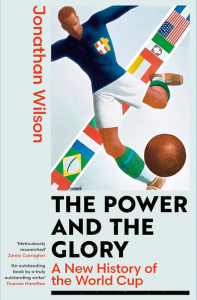 Jonathan Wilson’s The Power and The Glory is a masterful chronicle of the World Cup that blends tactical insight, geopolitical context and vivid storytelling. As the 2026 tournament approaches, Wilson traces the competition’s evolution from Uruguay in 1930 to Qatar in 2022, revealing how football’s grandest stage mirrors global politics and power struggles. He navigates the influence of administrators like Havelange, Blatter and Infantino, while celebrating the artistry and drama that define the sport’s mythologised moments – from Carlos Alberto’s iconic 1970 strike to the enduring legend of Diego Maradona, the quintessential pibe, whose four tournament appearances encapsulate both genius and turmoil. Wilson’s scope is vast yet precise, weaving together human stories, historical detail and on-the-ground reportage with remarkable fluency. The result is a rich, compelling tapestry of triumph and controversy, a rekindling of the excitement and anticipation that the World Cup continues to inspire.

Alan Bardos
Author of Hunter Class
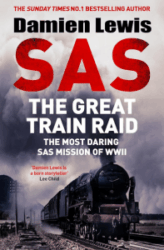 SAS The Great Train Raid: The Most Daring SAS Mission of WWII by Damien Lewis recounts the incredible actions of 2 SAS Regiment behind enemy lines in Italy during the Second World War. The centrepiece of the book is Operation Loco, an audacious raid on the Pisticci concentration camp to free its inmates – the only time an Allied unit ventured behind enemy lines to liberate a concentration camp. Lewis then goes on to discuss the role played by the SAS in assisting escaped Allied POWs trapped behind German lines. This is a unique book that brings to light some truly extraordinary men who, with little more than sheer guts and determination, carried out the impossible, and whose achievements are now largely forgotten.
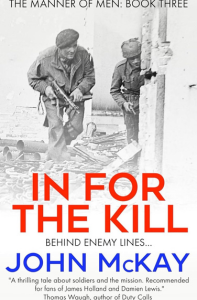 In For The Kill is the third book in John McKay’s The Manner of Men series. Sergeant Sean Harris and his men are ordered to destroy a secret Nazi base where research is taking place that could transform the V-2 rocket and change the course of the war. The book has all the elements readers have come to expect from McKay’s work: solid research, strong, relatable characters, and raw, realistic action.
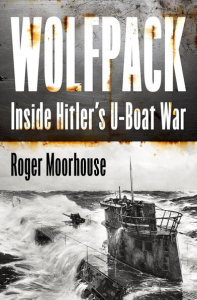 Wolfpack: Inside Hitler’s U-Boat War, by Roger Moorhouse, is a gritty and absorbing exploration of the Battle of the Atlantic from the German perspective. Three quarters of the U-boat crews who went to sea did not come back, suffering the highest casualty rate of any service in WWII, and Moorhouse does not shy away from showing the horror and hardships that these crews endured.

Michael Barritt
Author of Nelson’s Pathfinders
 Andrew Lambert has now provided a stunning case study to complement his classic works Seapower States and The British Way of War. It was truly rewarding to be researching one facet of the naval history of this period at the same time that this work was in gestation and to benefit from Andrew’s incisive grasp of strategic context. No More Napoleons explains how Britains’ traditional seapower strategy prevented the emergence of a dominant continental power, and also underlines how this grasp was lost in the run-up to 1914. His analysis of British statecraft from Waterloo to World War One is fresh and compelling, with its focus on European security providing salutary reading for statesmen and service advisers today.
 I came belatedly to this second book, The British Air Power Delusion: 1906-1941, first published in 2023, providing another stimulating perspective on a controversial period in British history. Neil Datson’s forensic analysis of arguably the greatest error in British strategy, the creation of a separate Air Force, inherently insecure and uncooperative, adds to studies of government defence policy between the two World Wars, the choice of strategies, and the resultant cost in 1939-45. Fascinating episodes include the creation in 1917-18 of a successful command and control system for the air defence of London and the South East, mirroring that finally ‘re-invented’ in the next war. The verdict on the malign impact of airpower enthusiasts is compelling.
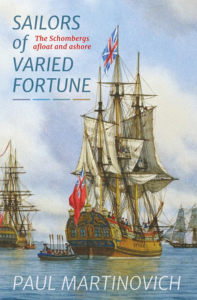 Paul Martinovich has applied his sleuthing skills in the archives in another biographical study of officers of the Georgian Royal Navy, Sailors of Varied Fortune. His choice of three members of the Schomberg family, of immigrant Jewish descent, provides a window into the social, administrative and operational history of the Royal Navy during its rise to dominance in the latter part of the long 18th century. Between them, the three men, all of whom rose to the rank of post captain, took part in many of the major campaigns and battles of the period. It is perhaps a reflection on the current naval historical scene that the author has had to self-publish. This has, however, given him freedom to fashion a most pleasing book design and to include a large selection of fine and unusual illustrations. These are more than worth the slightly higher price.

Elizabeth Buchan
Author of Bonjour, Sophie
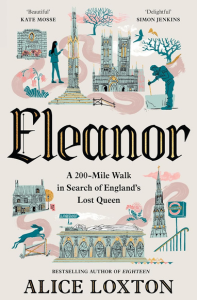 Eleanor: A 200 Mile Walk in Search of England’s Lost Queen by Alice Loxton traces on foot the route of Eleanor of Castile’s last journey. Married to Edward I, she is one of our less well-known queens but, contemporary accounts suggest, a woman to be reckoned with. Her grief-stricken husband commissioned twelve stone crosses to mark where the funeral cortege halted on the way to London from Harby in Lincolnshire. Only three survive but the history and the author’s imagination intersect winningly on a pilgrimage which provides a snapshot into the medieval past.
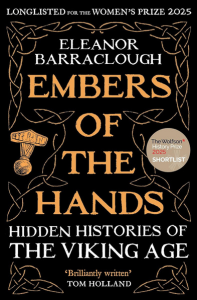 Longlisted for the 2025 Women’s Prize for Non-Fiction, Eleanor Barraclough’s Embers of the Hands: Hidden Histories of the Viking Age had me riveted. The Vikings have a recognisable reputation and mythology but, in her detailed scrutiny of the everyday artefacts that are extant, she digs deep down. From a bead, a rune stick, a piece of material and a carving and much else, she coaxes the voices and lives of women, slaves, storytellers, farmers and warriors into existence. Written with a passion and a joy in her subject.
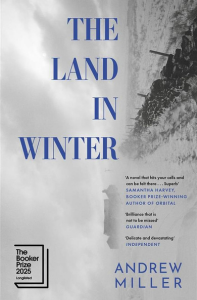 Andrew Miller’s beautifully lyrical Booker-shortlisted The Land in Winter is the reward I am currently giving myself at the end of the day. The lives of two couples in 1960s intersect in a rural community with profound consequences. With its careful depictions of the physical surroundings, deeply emotional and truthful, it manages to convey an England before the swinging sixties has really happened.

Phil Craig
Author of 1945: The Reckoning
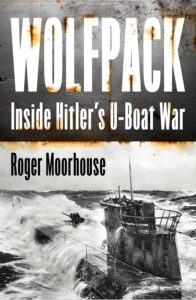 Wolfpack: Inside Hitler’s U-Boat War is a fresh new take on the critical battle of the Atlantic, reinterpreted and made more complete by a switch in narrative perspective. Telling the story almost entirely from the German POV, Moorhouse captures the tension and discomfort that defined every submerged hour: days spent in deathly silence, rags muffling bootsteps, and nights filled with frenetic activity – engines humming, meals hurriedly prepared, and torpedoes meticulously greased. The relentless reliance on coffee and adrenaline, the glow of weak electric bulbs, clothes that never dry. You can almost feel the sweat and condensation.
There’s the big picture too: the importance of convoys and Allied arguments about how best to deploy them; the technical and intelligence arms race (and why the Allies win it); changing ideas on whether survivors should be rescued (by either side); and the occasional tragic mistake that dooms civilians – even evacuee children – as liners come to be deemed ‘legitimate targets’. A deeply researched and fascinating book.
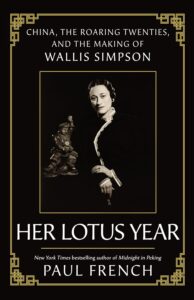 A revelatory and largely sympathetic account of Wallis Simpson in China in the 1920s. Paul French takes you deep into an exotic and dangerous world in Her Lotus Year, an original and highly entertaining book that makes you think of one of history’s supposed villains in an entirely new way. It’s also a window into the exotic, dangerous but also deeply alluring lifestyle of the rich and not-yet-famous in the cosmopolitan enclaves of Shanghai, Hong Kong and Beijing in the age of jazz, opium and revolutions both political and sexual.
 A story you think you know, but oh the details… Anyone who cares for honest reporting and the health of the BBC should read Dianarama, by Andy Webb. On one level it’s the definitive account of the BBC’s disastrous Martin Bashir saga and its consequences, by the man who exposed it all. It’s also a gripping saga of deceit, cover ups and that very British habit of punishing the whistle-blower while promoting the time-serving hacks.

Saul David
Author of Tunisgrad: Victory in Africa
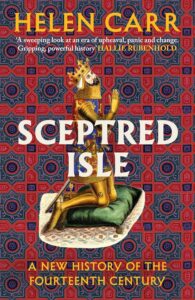 First off, Roger Moorhouse’s brilliant Wolfpack: Inside Hitler’s U-Boat War by Roger Moorhouse is an exhaustively researched and compelling account of the only campaign that really scared Churchill from the unusual perspective of the German submariners. Damien Lewis’ SAS: The Great Train Raid provides yet another thrilling Special Forces’ tale from the master of World War Two behind-the-lines raiding. Sceptred Isle by Helen Carr is a superb account of the trials and tribulations of 14th Century by the author of The Red Prince.

Mark Ellis
Author of Death of an Officer
It’s two non-fiction history books and one dose of fiction as my choices for 2025:
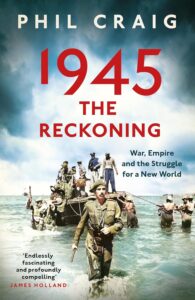 1945: The Reckoning: War, Empire and the Struggle for a New World, by Phil Craig. This wonderful book is definitely my history book of the year. The story of the end of empire told from a number of fascinating perspectives but with a particular focus on the Far East. Filled with compelling characters and revelations, I cannot recommend it highly enough.
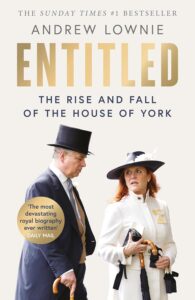 Recent history but still history. Entitled, by Andrew Lownie, has had so much publicity it’s hard to think of anything new to say about it. If anyone’s been in a cave for a year, let me inform you that this is a detailed dissection of Andrew Mountbatten-Windsor, as he now is, and his family from the cradle to, well, his current state of limbo. There are a host of jaw-dropping episodes and sometimes I have to say the principal characters can prove wearing, but notwithstanding I zipped through the book very rapidly. I’m not surprised it’s been a huge bestseller.
 Smoke and Embers, by John Lawton. My fiction choice is this terrific novel by one of my favourite authors, John Lawton. This is the ninth in his celebrated Inspector Frederick Troy series. Troy, whom we first meet in the series in the early days of WW2, is a Scotland Yard detective with an unusual background – his father was a Russian emigré newspaper mogul. The books veer back in forth in time, most set during the war, or in the immediate post-war years. This one does likewise. In it there’s murder, espionage, Holocaust history and most particularly the riveting tale of three characters whose lives intertwine.
Richard Foreman
Author of Calais: Men-At-Arms
Wolfpack: Inside Hitler’s U-Boat War, by Roger Moorhouse, one of the most anticipated WW2 history books of the year, delivers. Moorhouse is able to fuse both grand strategy with the claustrophobic detail of life on board a U-boat. There is far more grime than glamour in the service. The chief revelations of Wolfpack is the fact that the U-boat campaign was not as successful as we might have imagined. They were short on numbers of vessels, their torpedoes were often faulty and the attrition rate was high. Written with style and pace. I’m glad the book has been a bestseller and not gone under the radar.
 As bloody and entertaining as ever. Sharpe – along with Wellington and the British army – invade France. Sharpe’s Storm is not the best starting point for the series, but those of you who have read other novels will not be disappointed. The action scenes are written with the usual aplomb. Even those who are familiar with the period will find out something new. Here’s hoping that Sharpe and Harper march on.
Eleanor: A 200 Mile Walk In Search Of England’s Lost Queen is an entertaining and illuminating journey through the country today – and medieval England. Loxton’s enthusiasm is infectious as she recounts the history of the Eleanor Crosses through the prism of one of the great royal love stories, between Edward I and Eleanor of Castile. A wonderful idea, which is brilliantly executed.

Fiona Forsyth
Author of Death and the Poet
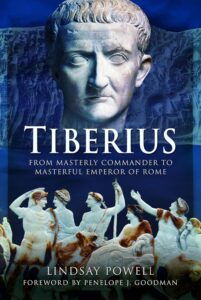 Lindsay Powell’s Tiberius: From Masterly Commander to Masterful Emperor of Rome is a new and much-needed biography of a difficult figure. The Emperor Tiberius comes so poorly out of the unsympathetic Roman sources that he has been condemned as grumpy, unsympathetic and wart-covered – not to mention the unsavoury sex life. It was time someone looked at his life before the Principate as well as the years in power and Powell does so calmly and thoroughly, and with an understanding of the complex biases of Tiberius’ ancient chroniclers. It’s a readable as well as a scholarly work.
 David Wishart, my favourite author of Roman historical mysteries, has brought out a new Marcus Corvinus novel and Dead in the Water is as much a joy as ever. Corvinus is a terrific creation, an astute political observer who has always refused the Roman ladder of office yet cannot resist the chance to iron out corruption and injustice. He is bright, foul-mouthed, drinks too much and is happily married. It’s a great combination.
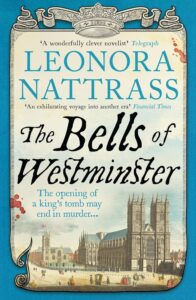 In Leonora Nattrass’ The Bells of Westminster, Susan Bell sees a great deal from her perch as the spinster daughter of Dean Bell of Westminster Abbey, more than she realises. The opening of a royal tomb in the Abbey by a group of curious eighteenth century antiquaries starts a tragic series of mysteries which Susan is determined to unravel, all while sizing up potential candidates for her hand in marriage and protecting her father from a predatory widow. Cuthbert the parrot also stars.

Sarah Gristwood
Author of The Tudors in Love
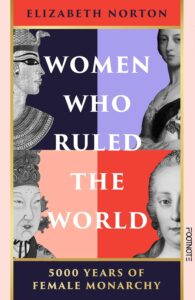 Let’s say at once that I’m leaving any Tudor (o.n.o) books off this list – because I’ve already discussed them on a special Aspects of History podcast! Luckily, this year has been distinguished by several books whose strength is to push beyond the boundaries of any one particular dynasty, or often country. First up is Elizabeth Norton’s Women Who Ruled the World: 5000 Years of Female Monarchy, which indeed runs from Athaliah of Judah to the Rain Queens of the Balobedu, and the Nawab Begums of Bhopal to the reigning empresses of Japan, passing by some more familiar figures along the way. The word ‘groundbreaking’ may be much overused – but if ever a book deserved it, Norton’s does.
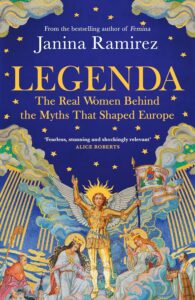 Legenda: The Real Women Behind the Myths That Shaped Europe likewise takes a deliberate decision to confront the old with the newer. In her chapter on France, author Janina Ramirez compares Joan of Arc to Charlotte Corday: in Britain it’s Lady Godiva and Queen Victoria. Both Ramirez and Norton are clearly committed to making us look at history through a new lens – which paves the way for my third choice.
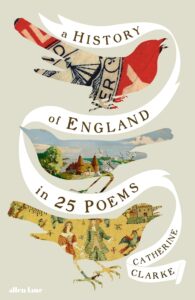 Catherine Clarke’s A History of England in 25 Poems, like the others, declares itself as ‘a kind of manifesto’, seeking to broaden the ways we interrogate our past. Fresh, lively and beautifully-illustrated, it gives a context for works from the eighth to the twenty-first centuries.
Pirate Irwin
Author of The Redeemed Detective
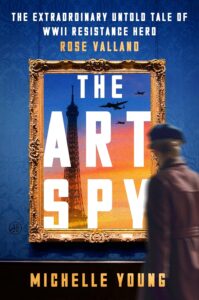 The Art Spy, by Michelle Young, is a brilliant book written with panache, wit and artistry – WW 2 resistance hero Rose Valland would no doubt approve. Born into a modest household in provincial France this is a tale of a remarkable woman, who in times when females were treated with far less respect than they deserved and foreign to these days she somehow rose to become one of the great art experts of the era. The art world owes her an unquantifiable debt for her efforts in successfully restoring thousands of artworks sent to Nazi Germany — both in the West and behind the Iron Curtain — to their rightful owners and galleries post war.
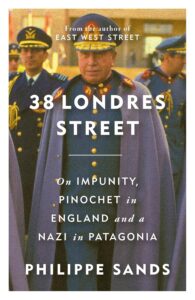
38 Londres Street: On Impunity, Pinochet in England and a Nazi in Patagonia is another masterpiece by Philippe Sands. The Ratline was outstanding and shocking but, in my humble opinion, this outstrips it. It makes for grim reading. Two less appealing indeed appalling central characters one would do well to find than General Augusto Pinochet — how he made it to general without ever firing a shot in anger against an invader or a foreign enemy is beyond me — and Walther Rauff the ‘inventor’ of the gas vans that accounted for the murders of nigh on 100,000 Jews.
Many of the disappeared in Chile – it was the Spanish citizens among them that resulted in Pinochet being arrested and charged in England – were tortured in the house which is the title of the book, formerly the Socialist Party HQ… intentionally so as Pinochet was not known for his irony.
Sands does a wonderful job of cracking open the mystery of Rauff and did he or did he not help the Pinochet regime whilst he performed his day job of running a fish canning factory..instead of overseeing cramming humans into gas vans he was overseeing cramming crab and hake into tins. Equally excellent is his account of the Pinochet legal wrangles. His ability to track down those involved in the horrors perpetrated under Pinochet is first rate though there are some really shocking images to rattle the reader.

Keith Lowe
Author of Naples 1944
As a Second World War historian, I’m always on the look out for books that bring a new perspective to our understanding of the war. In this respect, there were three books that really stood out for me this year. The first is Roger Moorhouse’s Wolfpack, a history of the U-boat war from the point of view of the men who sailed in these ‘iron coffins’. I must declare an interest here: Roger Moorhouse is very involved in Aspects of History, and he’s a friend of mine. But his book is the first in English for more than 30 years to really get inside this war. And it is so well written I simply had to include it.
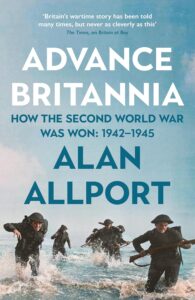 Alan Allport’s Advance Britannia is also exceptional. It is the second volume of his history of Britain during the Second World War and like the first, Britain at Bay, he brilliantly captures not only military and political events but also the way that British society was transformed by this epic conflict.
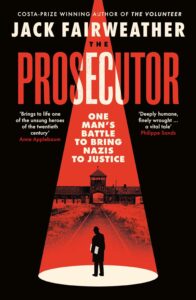 But I think my favourite book of the year is probably Jack Fairweather’s The Prosecutor. It tells the story of Fritz Bauer, a Jewish lawyer who became the postwar attorney general in the German city of Braunschweig. At first glance a book about a minor figure in a relative backwater shouldn’t be exciting – but Bauer’s crusade to bring former Nazis to justice during the 1950s and 60s was so significant to German history that this story absolutely demands attention.

Miranda Malins
Author of The Rebel Daughter
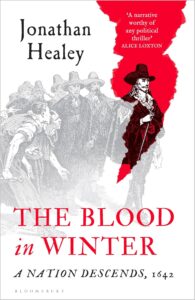 As a civil war historian I am always thrilled to read new works on this most fascinating period by colleagues and friends. The best of these this year has been Jonathan Healey’s The Blood in Winter which unfolds like a thriller to tell the dramatic story of how England collapsed into civil war in 1642. In his trademark clear and compelling style, Healey mines rich research for vivid treasures to give us narrative history at its finest.
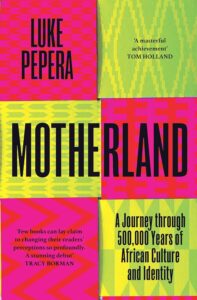 If you are after something more contemplative and thematic, I recommend dipping into Luke Pepera’s Motherland which explores 500,000 years of African history from prehistory to Black Panther with a personal approach and thoughtful style. Pepera’s storytelling is epic yet intimate, inclusive and revelatory and I learned a great deal about this most remarkable and misunderstood continent in this enjoyable book.
 Finally, for the most erudite escapism over Christmas, you won’t do better than Richard Holmes’ wondrous new biography of Alfred Lord Tennyson, The Boundless Deep. This is a marvel of a book, unfolding layer upon layer to reveal the young, beautiful and brooding Tennyson as he develops his poet’s voice in conversation with the miraculous scientific discoveries of the Victorian age.

 Barney Campbell’s The Fires of Gallipoli is a splendidly old-fashioned novel about men in war, written by an officer who served with the Blues & Royals served in Afghanistan. Covering the Dardanelles expedition and its aftermath, it demonstrates clear literary talent and a superb ear for dialogue. Coleman also dips his toes into the murky world of the secret service post-war that offers a delightful tease about the fate of Lord Kitchener in 1916.
 John Martin Robinson’s History of the Beefsteak Club is a model of club histories, a notoriously difficult genre. How does once capture a place’s allure and charm, let alone its historical importance, with the documents available? A club’s life emanates from ephemeral moments at lunches and dinners that often go unrecorded, which a mere recitation of members’ names cannot recapture. Yet Robinson overcomes this problem to produce a first-class piece of clubland history.
 Minoo Dinshaw’s Friends in Youth examines the way that the friendship between Bulstrode Whitelocke and Edward Hyde, later the Earl of Clarendon, unsurprisingly failed to survive the profound strains and stresses of the English Civil War. An astonishingly assured debut book; I suspect we will be hearing much more of Mr Dinshaw in the years to come.

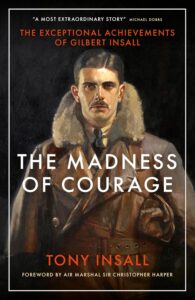 One of my favourite books of the year was The Madness of Courage, the intriguing and highly apt title of the biography of Gilbert Insall, a First World War Royal Flying Corps “air ace” who won the Victoria Cross after being shot down on the Western Front and escaping three times from German prisoner-of war camps. He tunnelled out of the first camp but was recaptured. He hid on a horse-drawn cart to get out of another but was caught again. Finally, he managed an ingenious escape from a third and made his way to the Dutch border. Written by Insall’s great-nephew, it’s a riveting story of madness or courage. Take your pick.
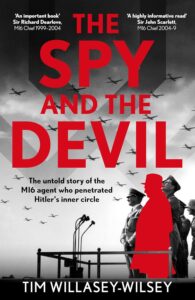 Tim Willasey-Wilsey’s The Spy and the Devil tells the story of Bill de Ropp who astonishingly managed to infiltrate himself into Hitler’s inner circle on behalf of MI6. Although he was himself German, de Ropp married an English woman before the First World War and fought for Britain on the western front before becoming an MI6 agent. De Ropp was the mysterious “Captain Black of British Intelligence” who commissioned the Daily Mail’s fake Zinoviev Letter tying the then Labour Government to Moscow, still regarded by some as the reason Labour lost the October 1924 election. But his greatest coup, in what Willasey-Wilsey, who worked for “the Foreign Office”, calls “a master class in espionage”, was to become so close to Hitler that the German leader asked him to be his personal adviser on British policy.

Peter Stothard
Author of Horace: Poet on a Volcano
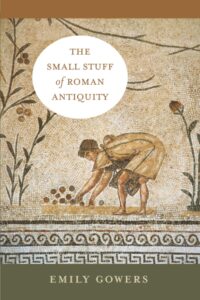 There have been two highly enjoyable books on classical history in 2025, one Roman and one mostly Greek. In a year of news that seemed full of grandiose public claims – from how to make AI intelligent to how to stop genocidal wars – it was a relief to read The Small Stuff of Roman Antiquity by Emily Gowers, in which modest subject matter, snails, hiccups and itchy eyes, reveal more about the past than many a tome on the origins of politics.
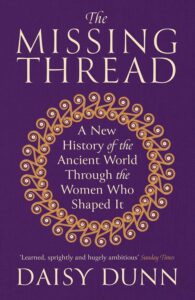 My book of mainly Greek history is The Missing Thread by Daisy Dunn, subtitled as A New History of the Ancient World through the Women who Shaped It. Dunn is especially successful at bringing women into the foreground without claiming that the men never mattered. Revisionism without rage. A model of its kind.

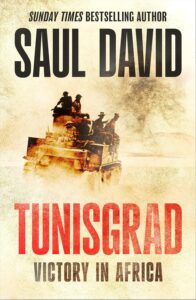 A mixed bunch this year. First of all Saul David’s Tunisgrad: Victory in Africa. As always with David, this tome is a rivetting read from start to finish, filled with fascinating details, illuminating snapshots, yet all the while expertly maintaining a view of the overall picture. It covers the North Africa campaign in the Second World War, and redresses the balance between the Eastern and the Western fronts. David successfully demonstrates that the taking of Tunis by the combined Allied forces (American, British and Commonwealth) marks the ‘Stalingrad moment’ on the western front, which ended with Operation Strike and the surrender of Generaloberst von Armin. From now on the way was open for the Allies to land in Sicily, and then begin to fight their up through the Italian peninsula.
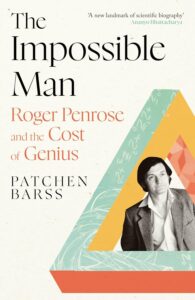 Next comes The Impossible Man: Roger Penrose and the Cost of Genius by Patchen Barss. This highly illuminating biography of our greatest living theoretical physicist and cosmologist manages to paint a garish picture – warts and all – yet at the same time hold our sympathetic interest. The warts are considerable, but then so is the man. We learn of his partnership with Stephen Hawking, his startlingly orginal discoveries, and his final obstinate clinging to his own unorthodox ideas. In particular, we learn of his ‘conformal cyclic cosmology’, as well as twistor theory – the latter proposed as an alternative to the ever more fantastic minutiae of string theory. This work also explores Penrose’s intimate life in its considerable confused detail. Where his relations with women are concerned, he comes across as something of an innocent ogre. The toll on the partners in his life is heavy, and justified only by his persistent naivety and scientific achievements (which could not have been possible without his muses, as he freely confesses).
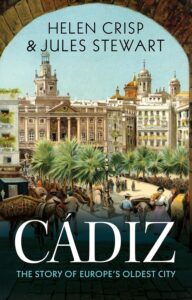 Third is a history of a much neglected major port city, which is deeply Mediterranean in all but its location. Cadiz: The Story of Europe’s Oldest City by Helen Crisp and Jules Stewart is crammed with fascinating figures, illuminating facts, and forgotten history. The authors make a justifiable claim for Cadiz as Europe’s oldest continuously inhabited city. We start with ‘the enigmatic souls we have come to call the Phoenicians’ to the arrival of Hannibal and his elephants on his long march from Carthage towards the Alps and Ancient Rome. The subsequent roll call includes the ambitious young Caesar, a hapless Columbus, the impudent Drake, who arrived to singe the King of Spain’s beard, as well as the usual suspects of history’s assorted rogues and worthies. This work is an ideal accompaniment to a visit, as besides deftly placing the city’s history in its alleyways, grand vistas and vast harbour, it also recommends a knowledgable list of bars, restaurants and shops. Jerez is just up the road, and tipples from all the best wineries are here to be sampled, as you turn the pages discovering tales of everything from flamenco to the Duke of Wellington.

Jane Thynne
Author of Appointment in Paris
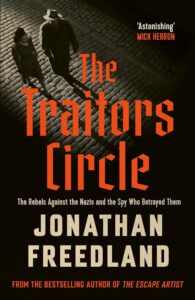 Historians have long argued over how far ordinary Germans were complicit in the Nazi regime. In The Traitors Circle, Jonathan Freedland shines a welcome light on a group of citizens, mavericks and establishment figures who risked their lives to overthrow the regime and were eventually betrayed as the result of a tea party. Among them was Countess Maria von Maltzan, sister-in-law of Hitler’s youngest Field Marshal, Walter von Reichenau, who sheltered Jews in her home, and fell in love with one of them, Hans Hirschel. She had him write a suicide note so the police recorded him dead. When the Gestapo arrived to search her flat, she hid Hans in a sofa bed and refused to open it, instead inviting the police to shoot through it with their guns. Freedland is a thriller writer, and this is evident in his tense, pacy structure, oscillating between key characters as he builds up to the moment of their betrayal.
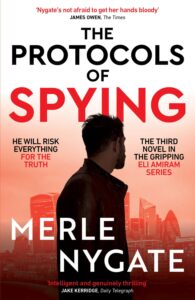 Merle Nygate’s The Protocols of Spying, set in the aftermath of 7th October, is a third outing for Mossad’s London Station chief Eli Amiram, and explores the complexities and moral choices that abound in the new era. It’s a gripping portrait of contemporary espionage, with vivid characters and details that are incredibly up to date. I learned a lot.

Oliver Webb-Carter
Former Editor at Aspects of History
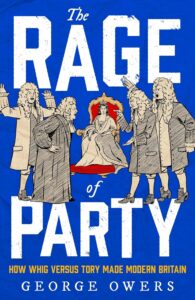 For many schoolchildren history stopped with the end of the Tudor dynasty, before resuming with the Atlantic slave trade, then disappearing again until the rise of the Nazis. If only the long 18th century in Britain and Europe were part of the curriculum, I’m sure we’d see an increase in GCSE and A-Level students. The Rage of Party, by George Owers is a tremendously entertaining account of the period 1685 to 1715 which was packed with seismic events: the Glorious Revolution; Jacobite Rebellion; the War of Spanish Succession; the Act of Union and plenty more. We read of these through the prism of Whig and Tory as the two parties are born and take their first unsteady steps. Most importantly Owers has an eye for the absurd, and obscene, to craft a quite brilliant narrative history that Bridget Phillipson will hopefully have on her reading list…
I suppose cynically speaking an alternative title for The Power and The Glory by Jonathan Wilson could have been A History of FIFA Corruption, but Wilson’s book on the World Cup is a hugely fascinating and rewarding read. He takes each tournament as a chapter, and so we read of Argentine, Cameroonian or Yugoslav contemporary history, along with the players, football and the host nation itself. You can probably tell which era I turned to first, but the Uruguayan victories in the 1930s mean the book starts as it means to go on. There is an almost nostalgic reflection on Sepp Blatter’s time as FIFA president (1998-2015), from where we are now with Saudi Arabia winning ‘the process’ for 2034.
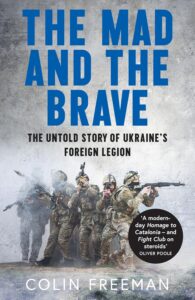 Ongoing struggles for Volodymir Zelensky as he faces multiple enemies domestically and in the form of Putin and Trump, but there is one book on the conflict that is a must read: The Mad and the Brave, Colin Freeman’s thrilling account of Ukraine’s Foreign Legion – those volunteers from abroad who answered the call for help and headed to Ukraine by hook or crook to face the Russian onslaught. Freeman describes the terrible reality of modern warfare as horrifying drone attacks kill or cause life-changing injuries. But, there is a calm and professional competence to many of the soldiers Freeman has spoken with, despite the early days of the war when men joined the fight hopelessly unprepared, armed only with enthusiasm. Now there is a highly organised unit of foreign fighters, and they will need to be to deal with relentless and brutal Russian attacks.
Books of 2025 from Aspects of History


