

Summer Reads from Aspects of History

Zeb Baker-Smith
Editor at Aspects of History
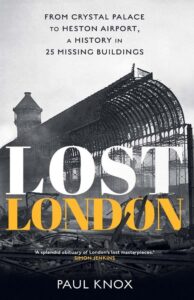 Paul Knox’s Lost London offers a captivating itinerary of 25 buildings which are no longer, but whose lifespan shaped the capital’s architectural story, revealing how the perennial cycle of demolition, redevelopment and reinvention have left their mark on the modern metropolis. Wealthy in detail yet digestible, this is a provoking and much-needed reminder that London’s incessant and transformative churn is nothing new, that lost landmarks continue to feed into the essence of the city today.
Cold War Football is far more than sporting history.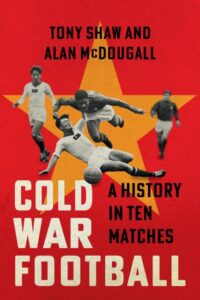 Through ten matches, Professors Tony Shaw and Alan McDougall reveal how football reflected – and sometimes transcended – the ideological divides of the 20th century. From Dynamo Moscow’s turbulent 1945 tour of Britain to North Korea’s unlikely bond with Middlesbrough and the only meeting between East and West Germany in 1974, this is a penetrating account of ‘the beautiful game’ in an age of global tension.
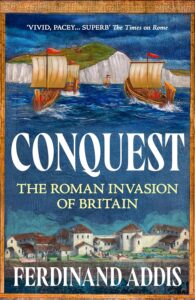 Conquest is a sweeping and evocatively told history of Roman Britain that takes readers far beyond legions and emperors. It demonstrates a sophisticated pre-Roman world and the enduring legacy of Rome’s occupation. Ferdinand Addis blends archaeological innovation, classical sources and a Macfarlane-esque ability to depict the landscape, challenging familiar myths and tracing how conquest, collaboration and cultural exchange fashioned Britain from Caesar’s first landings to today.

Alan Bardos
Author of Hunter Class from the Daniel Nichols Spy Thrillers
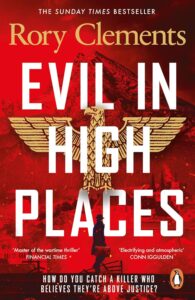 Evil in High Places continues Rory Clements’ new crime series featuring Detective Sebastian Wolff, set in pre-war Nazi Germany. This is a captivating murder mystery, with an enigmatic espionage plot running through it. It’s extremely well researched, the writing is crisp, and the characters never fail to engage. Clements continues to ask the essential question – how can a good man serve an oppressive and murderous regime, and bring justice in a corrupt system?
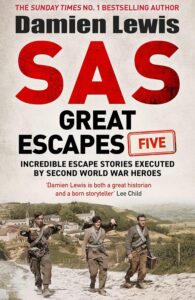 SAS Great Escapes Five is another gripping instalment in Damien Lewis’ acclaimed series, combining his accustomed and meticulous research with pulsating storytelling to celebrate the the courage, resilience and ingenuity of the SAS behind enemy lines in the Second World War.

Elizabeth Buchan
Author of Woodspring
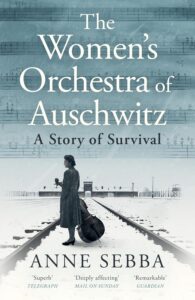 I am a huge admirer of Anne Sebba’s courageous and fascinating books and in The Women’s Orchestra of Auschwitz: A Story of Survival she writes about difficult moral choices and the struggle to retain humanity in the vilest conditions. In 1943, German SS officers at Auschwitz-Birkenau ordered the creation of a female orchestra to give concerts and play marching music to inmates. The brutality and evil of the camps was ‘an outrage beyond explanation’ and beyond most capabilities to imagine but the will to survive is powerful. With meticulous attention to detail, the author pieces together the story of these women.
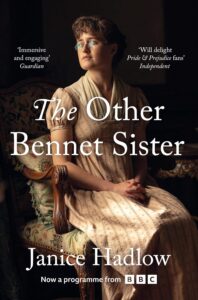 Holidaying in deepest Umbria, I found myself captured by Janice Hadlow’s The Other Bennett Sister. Our national obsession with Jane Austen continues and it was such a clever idea to swoop down on Mary Bennet who most remembered as the dreary advocate of Fordyce’s sermons. Here she is given a convincing interiority and an enchanting love story. Over and above, the novel debates what constitutes the good and happy existence and hints at the transition between the Enlightenment’s rationalism and the individualism and romanticism that took its place.

Saul David
Author of Tunisgrad: Victory in Africa
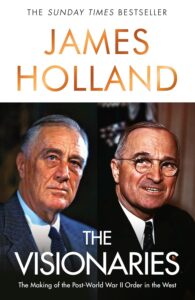 The Visionaries: The Making of the Post-World War II Order in the West by James Holland is a brilliant study of the two American presidents – FDR and Truman – who did much to deliver the sustained period economic and political stability that the West enjoyed for the rest of the 20th century. Katja Hoyer‘s superb Weimar: Life on the Edge of Catastrophe focuses on a cross-section of characters in a single German town in the inter-war years to help us better understand the rise of
 Nazism. Edward Abel Smith’s A Hateful Decision: Churchill’s Darkest Hour and the British Attack on the French Navy is the dramatic and forensic retelling of Operation Catapult, a tragic yet sadly necessary action against the French fleet in 1940.

Mark Ellis
Author of Death of an Officer from the DCI Frank Merlin series
 I have read and very much enjoyed historical fiction by this Anna Legat before. Her protagonist in this terrific historical mystery, A Pact With The Devil, which I understand to be the first in a new series, is the Polish astronomer and scientist Nicholas Copernicus when a young man. The book is set in late 15th century Krakow and the plot revolves around the murder of Dr Faustus (yes that one!). Very atmospheric and a thoroughly engaging and gripping read.
Wolfpack by Roger Moorhouse is a terrific history of the U-Boat war in WW2. The author brilliantly evokes the dangers and tensions of the extraordinarily perilous exploits of men and machines which caused such huge damage to the Allied cause.
 As with Wolfpack, I am guessing I shall be far from alone here in making this recommendation. In Antonia Senior’s Stalin’s Apostles, a magisterial history of the Cambridge Five, she captures them all vividly in all their monumental self-regard and unforgivable disregard for the countless lives destroyed or ruined by their treachery.
Richard Foreman
Author of Calais: Men-At-Arms
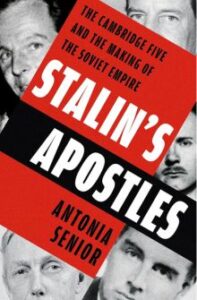 Although it is only June, Stalin’s Apostles may be considered a Book of the Year. Scholarship is married to an engaging, entertaining style. Antonia Senior shines a light upon the dark deeds and conceits of Kim Philby and his fellow traitors. A game-changer of a book about game-changing spies.
 The Black Death: A Global History is a bleak but illuminating book. Asbridge shows us how the plague touched and tore through not just Europe. As devastating as the scourge was, it was almost miraculous how society didn’t suffer a total collapse. Faith and humanity endured. A must-read for anyone interested in medieval history.
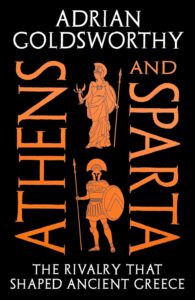 Athens and Sparta: The Rivalry that Shaped Ancient Greece is a one stop shop for the story of the two city-states. The author is particularly strong on the key battles against the Persian empire, as well as the Peloponnesian War. The book conveys how the cultures of two big-hitters still resonate today.
Fiona Forsyth
Author of Written in Blood from The Publius Ovidius Mysteries
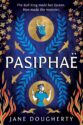 Pasiphae by Jane Dougherty – if you liked Mary Renault’s The King Must Die, then this is for you. One of the nastier Greek myths is given a complete re-examination and re-telling, resulting in a new and believable tale of the tragic Queen of Crete who gave birth to the Minotaur.
 I reviewed Berenice: Queen in Roman Judea by Bruce Chilton for Aspects of History and was struck by its scholarship and readability. Chilton achieves the perfect balance of objectivity and warmth in this biography of a woman whose own thoughts and words were deleted by history.
 Shadow of Madness by D.V. Bishop, the latest Cesare Aldo historical crime novel, comes out this summer and it is a treat, already long listed for the CWA Gold Dagger. The setting – a monastery inhabited by both nuns and monks – is fascinating and beautifully-described, and the writing is infused with a brutal wintry cold that seeps out of the pages, contributing to the tension.
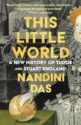 It’s always a pleasure to view a familiar world through a new lens, and that’s exactly what Nandini Das provides in This Little World: A New History of Tudor and Stuart England. In her skilled hands, Shakespeare’s sea-bound ‘sceptr’d isle’ takes its proper place as home to a horde of colourful visitors and migrants, and the home from which English men and women sailed on voyages far stranger than the hoary old ‘seadog’ tales.
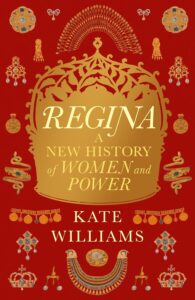 The next two books might seem at first to tackle the same topic, but in fact take radically different approaches. Kate Williams’ important Regina is subtitled A New History of Women and Power and powerfully tracks our perceptions, across three thousand years, of the royal women required to embody so many of our common fantasies.
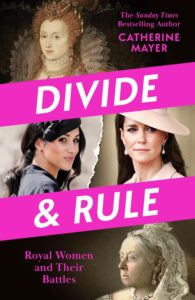 Catherine Mayer’s gripping Divide and Rule: Royal Women and Their Battles goes behind palace walls to explore eight figures from British history and trace the often-painful patterns that link, say, Anne Boleyn to Meghan Markle. Both books convincingly make the point that their subjects matter – both as individuals, and as a supposedly axiomatic reflection on the way we continue to see women today.

Gautam Hazarika
Author of The Forgotten Indian Prisoners of World War II: Surrender, Loyalty, Betrayal and Hell
After Courting India, I’ve become a fan of Nandini Das. Her latest book, This Little World: A New History of Tudor and Stuart England, shows us how global Tudor and Stuart England was, through the lives of those from far across the seas who made their life here and, in turn, Englishmen who made a mark thousands of miles away. Full of incredible vignettes, it’s a delightful read.
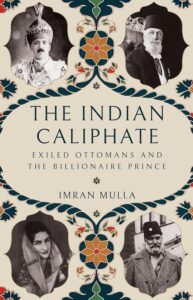 When the last Ottoman Emperor, Abdulmejid II was dethroned, he tried the resurrect the Caliphate in a novel way – he had two of his daughters married to the sons of the preeminent prince of British India, also the richest man in the world, the Nizam of Hyderabad. Imran Mulla tells this ambitious tale in his gripping book, The Indian Caliphate: Exiled Ottomans and the Billionaire Prince.
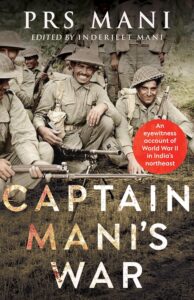 In a rare account of WWII by an Indian, the despatches of the correspondent Captain PRS Mani have been published by his son Inderjeet. Through them we live through the Battle of Burma, the liberation of Singapore and the Indian Army’s arrival in post-war Java. Don’t miss Captain Mani’s War.

Leanda de Lisle
Author of Henrietta Maria: Conspirator, Warrior, Phoenix Queen
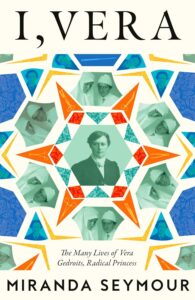 Miranda Seymour possesses an enviable gift for finding lives that seem almost too extraordinary to be true. Vera Gedroits, the subject of I, Vera, was a Russian princess, battlefield surgeon, poet, academic, and one of the first women to break decisively into a male-dominated profession. She was also a woman who loved women, wore men’s clothes, moved among poets and aristocrats, treated the Romanovs, and survived revolution – only to be crushed by the regime that followed.
This is a story that has long fascinated me, and Miranda Seymour proves the ideal biographer for it. She anchors Vera’s narrative in the turbulent history of late imperial and revolutionary Russia, offering a portrait of an age seen through the eyes of a singular observer and participant.
Vera herself is impossible not to admire. Brave, intelligent, self-dramatising, and occasionally unreliable, she emerges as one of those rare historical figures who seem even larger than the world around them. Seymour is alert to her contradictions and resists turning her into either a heroine or a victim.
Above all, this is a work of historical recovery. The Soviet state all but erased Gedroits from memory after her death in 1932—and more recently, the bombing of Ukraine has destroyed further source material. Seymour has rescued her from obscurity and reminds us that history is often best understood not through institutions or ideologies, but through the lives of exceptional individuals who refuse to conform to their times. Vera Gedroits was such a person, and Seymour has given her the biography she so richly deserves.

Keith Lowe
Author of Naples 1944
Of the many history books that have landed on my desk over the past six months, three have grabbed my attention. The stand-out book has been Antonia Senior’s history of the Cambridge Five, Stalin’s Apostles. Full disclosure, Antonia is a friend of mine, but I would be recommending this book enthusiastically even if I’d never met her. She paints a brilliant portrait of each of these five British traitors, and then unleashes an unflinching condemnation of the appalling damage they caused not only to national security but to the lives of desperate people in eastern Europe. As Gore Vidal once said, whenever a friend succeeds, a little something in me dies – but when it comes to recommending Antonia’s beautifully-written, compelling book, a little death is worth it.
 Rana Dasgupta’s After Nations was also utterly captivating. It asks the sort of questions most of us never think of. What are nations? Why do we even have them? What would the world look like without them?… because such a world might soon be upon us.
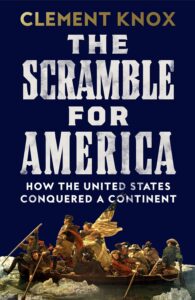 Finally, I have to mention Clement Knox’s recent book, The Scramble for America. It charts the building of the United States as a colonial project, much like the building of the British and French empires at exactly the same time. Strong research and really good writing makes this a compelling read.

Robert Lyman
Author of Victory to Defeat
There are not enough good regimental accounts of the Battle of Kohima. Christopher Jary has just given us a superb account of the 2nd Dorsets in Who’s Afear’d?. His account talks brilliantly of the two weeks during which the Dorsets slowly unpicked the Japanese hold on the tennis court, leading to Serjeant Waterhouse’s antics with the Grant tank on 13th May. It was the first time in the Burma Campaign that Japanese soldiers were seen running away from the battlefield, proof enough that even Bushido could not defeat a well trained West Country regiment with its tail up.
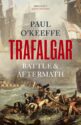 Paul O’Keeffe’s Trafalgar rivals my other favourite telling of this battle, that by Tim Clayton and Phil Craig, by focusing his story on the people who fought in this naval slaughterhouse, as well as accounting for the news of the great victory and the loss of the nation’s great hero – Nelson – in the weeks and months that followed. This is really gripping stuff.
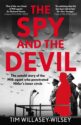 Tim Willasey-Wilsey, has undertaken history a great service by telling the story of Baron Bill von de Ropp in The Spy and the Devil. His account is important for revealing the source of seventy percent of British intelligence about Germany between 1930 and 1939, and for demonstrating how M16 intelligence was lifted from the prosaic to that of political analysis. De Ropp, though born a Baltic Russian, proved to be a great British hero, a man who helped protect Britain at a time when others (about which Antonia Senior has recently written) were egregiously undermining it.
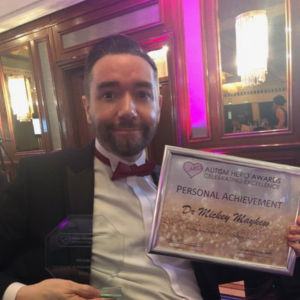
Mickey Mayhew
Author of The Romanovs Under House Arrest
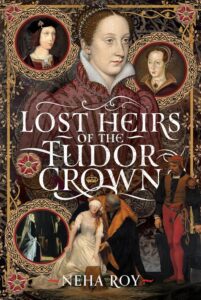 Lost Heirs of the Tudor Crown, by Neha Roy, lays out a convincing series of capsule portraits of some of the various great ‘what ifs’ of Tudor history; for instance, what if Mary Queen of Scots or Lady Jane Grey had indeed ascended to or remained on the throne of England?
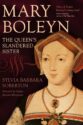 Mary Boleyn: The Queen’s Slandered Sister, by Sylvia Barbara Soberton, expands on the work deftly laid out by Alison Weir in her unfortunately titled 2011 release. This exemplary work serves to set out Mary Boleyn more properly in her own space, free to flourish without the shadow of her sister looming ominously over her. Possibly, this is the definitive Mary Boleyn biography
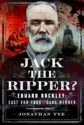 Jack The Ripper? Edward Buckley: East End Thug and Gang Member, by Jonathan Tye: amid the glut of suspects there merges – occasionally – one that appears a little more convincing than most. Tye does a convincing job of laying out of the particulars of Buckley’s candidacy in regard to the mantle of Jack the Ripper, and ties the tale rather deftly back various crimes committed before the atrocities of 1888.

Giles Milton
Author of The Stalin Affair
Hot on the heels of her previous success, Beyond the Wall, Katja Hoyer has pulled off another triumph. Weimar: Life on the Edge of Catastrophe tells the story of the city that gave its name to the doomed German republic, formed in the aftermath of the First World War. The book’s strength lies in its vivid cast of characters, including socialists, fascists and innocent bystanders, whose lives were about to be consumed by Hitler’s dictatorship. Hoyer has delved deep into the German archives to paint a vivid and compelling picture of a city that had dreamed of democracy but ended in darkness. A great read.
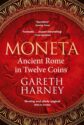 Now out in paperback, Gareth Harney’s Moneta: Ancient Rome in Twelve Coins tells the story of Rome’s rise and fall through its unique and always fascinating coinage. Julius Caesar, Mark Antony and Octavian are just a few of the classical world’s many giants brought vividly to life in this idiosyncratic and superbly informative account of Ancient Rome. Harney transforms each of his chosen coins into a mini-storyteller, conjuring the past to life.
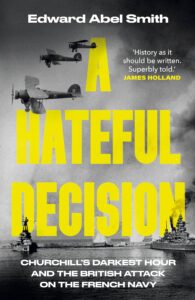 Thought you knew everything there was to know about the Second World War? Edward Abel Smith’s new book, A Hateful Decision: Churchill’s Darkest Hour and the British Attack on the French Navy, recounts the story of Operation Catapult, one of the war’s least-known missions.

Roger Moorhouse
Author of Wolfpack
I’ve been very impressed by some of the books that have crossed my desk so far this year. From the brilliance of Black Cross, by Alexander Pluskowski, to Robert Service’s magisterial The August Coup, there have been many titles that are well worthy of praise, and of the spike in sales that this column will inevitably bring them. Two books, however, stood out for me. The first is Weimar by Katja Hoyer, which follows up on the author’s previous book Beyond the Wall by giving us a humane and profoundly sympathetic history of the Weimar Republic, demonstrating the neuroses, the passions and the human failings that would propel that polity to disaster. Totally absorbing, it is highly recommended.
The second stand out, Stalin’s Apostles, by Antonia Senior is thoroughly remarkable. It is one thing, perhaps, to take an obscure subject or a neglected chapter of the history and write the definitive volume on it, but it is quite another to take a subject that is as well known as the Cambridge Five and then systematically dismantle everything that we thought we knew about it; in the process, creating a new standard narrative, which future scholars will find impossible to ignore. This Senior has achieved, and, to boot, has achieved with humour, with trenchant convictions and with a wry eye for the absurdities of her subjects. Watch out history world, there is a new kid on the block!

Andrew Roberts
Author of Churchill: Walking with Destiny
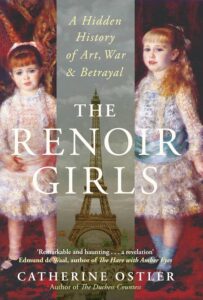 Catherine Ostler’s superbly researched and beautifully written The Renoir Girls: A Hidden History of Art, War & Betrayal is ostensibly about the intertwining lives of five rich and highly cultured French Jewish families in the Belle Epoque. Beneath all the taffeta and tulle, horse-racing and opera, lay the monstrous anti-Semitism of the Dreyfus Affair, which found its ultimate expression in French administrative support of the Holocaust half a century later, in which one of the little girls in the eponymous portrait painted by Renoir perished.
 The Holocaust also looms over Victor Sebestyen’s utterly gripping Weimar Germany: Death of a Democracy, although it is part of the genius of the book that he presents the story without constantly referring to the nightmare of what came next, which is what almost every other historian would have done.
 By the period that Natalie Livingstone covers in her groundbreaking and powerful The Nuremberg Women, the Holocaust had already been uncovered and was being punished. By concentrating on eight hitherto largely unknown female participants in the Nuremberg Trials, Livingstone pours fresh light on an important period of global history. At a time of rising anti-Semitism in this country, all three books contain a powerful message for our culture and would-be civilisation.

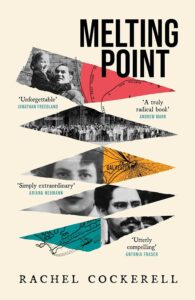 I very much enjoyed Rachel Cockerell’s Melting Point: Family, Memory and the Search for a Promised Land, a remarkable and deeply relevant book about a group of Jewish exiles who settled in Galveston, Texas, at the turn of the twentieth century. Part family memoir – the author’s great-grandfather, David Jochelmann, was one of the driving forces behind the plan to relocate thousands of Jews from the Russian Empire to the Gulf Coast – and part account of a little-known chapter in the history of early Zionism, Melting Point is original and compelling. What is particularly striking is its form. Dissatisfied with the conventional non-fiction narrative of her first draft, Cockerell removed her own authorial voice altogether and allowed her sources to tell the tale. Drawing on family interviews, newspaper reports, letters, and the writings of historical figures, she constructs a story entirely out of a polyphony of quotations. The result is both bold and effective: the past seems to speak for itself, while the characters and events emerge with great immediacy and vitality.
 I would also highly recommend Gordon Corera’s The Spy in the Archive: How One Man Tried to Kill the KGB, a timely and utterly absorbing book about the quiet yet fiercely determined KGB archivist Vasili Mitrokhin, who spent years secretly copying the contents of the thousands of files in his care. His extraordinary story – including the dramatic exfiltration of himself and his family to the United Kingdom in 1992 – offers an illuminating lens through which to view the complexities and contradictions of Soviet history and the long shadows it casts over Vladimir Putin’s Russia.

Antonia Senior
Author of Stalin’s Apostles: The Cambridge Five and the Making of the Soviet Empire
 It is August 1991, and Mikhail Gorbachev is in his Crimean dacha preparing for a looming political tussle over his modernisation plans, when uninvited visitors turn up. Before long, the dacha is in lockdown, and Moscow is in the hands of a committee driven by the KGB chairman, Vladimir Kryuchov. The August Coup, by Robert Service, is narrative history at its best – rich in detail and backed by rigorous analysis.
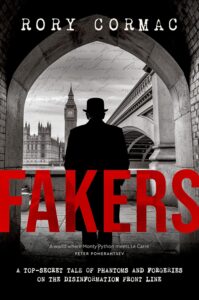 In Fakers, an engrossing and deeply researched history, Rory Cormac tells the story of the Information Research Department (IRD), Whitehall’s secret propaganda arm during the Cold War. Drawing on some 8,000 files, he reconstructs a world of forgeries, fake organisations, planted stories and whispered rumours, deployed in a global battle for influence.
 In 1766, a lump of gold turns up in a remote Canadian outpost, and the settlers mount an expedition across a frozen wilderness to find its source. McGuire has an unflinching eye for hardship and human flaws in White River Crossing. Through Indigenous and Inuit eyes, the Englishmen often appear bewildering creatures, driven half-mad by their lust for gold. One character feels its pull as “a deep, silent calling”. Dark, unsettling and compulsively readable.

Peter Tonkin
Author of Shadow of a Queen from The Queen’s Intelligencer series.
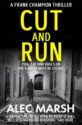 Alec Marsh’s Cut and Run is set during the First World War. Not only in the trenches but also the ruined towns immediately behind the lines, where arrangements are made for the ‘comfort’ of the senior officers of the Allied High Command, with their own exclusive brothels and ‘anything goes’ parties. Into this shockingly decadent milieu Frank Campion, is thrust when he begins to investigate the murder of a girl from one of the officers’ brothels in the British garrison town of Bethune.
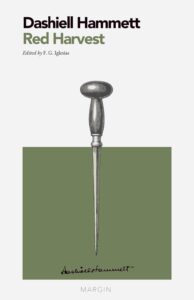 Dashiell Hammett’s Red Harvest is an astonishing work, set in ‘Personville’ a mid-West town run by various ‘mobs’ including the Police Department. The gangster era is brought vividly to life as the ‘Continental Op’ sets out to clean up the town by setting one group of thugs against the other. The resulting mayhem, narrated in Hammett’s hard-boiled style, is both shocking and gripping.
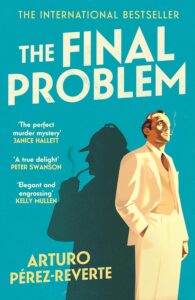 Arturo Pérez-Reverte’s The Final Problem is a Sherlock Holmes story set on a small Mediterranean island. A storm cuts off all communication and the murders start. But Holmes is one of the guests – or, rather, an actor who has built a career playing Holmes. Reluctantly, sinking into character, he goes about solving the crimes. This is a treat for film-buffs as ‘Holmes’ peppers his deductions with tales of his meetings with the great stars of Golden Age cinema. Perez-Reverte has used Basil Rathbone as his Holmes so anyone with a quick eye will recognise all his other great roles in classic Hollywood films.
Steven Veerapen
Author of Witches: A King’s Obsession
 Miranda Malins‘ House of Cromwell is a comprehensive examination of the Cromwell dynasty (including but not limited to the famous Thomas and Oliver) is set to become one of the year’s must-read history tomes. Offering fresh insight based on original research, it’s a masterclass in sympathetic storytelling. One to pre-order immediately!
 A sweeping and provocative study of the involvement in the British political elite’s close involvement in (and profit from) the slave trade, Brooke N. Newman’s The Crown’s Silence, is a much-needed, highly-readable history exposes the way in which an entire class system and society was built on the back of human misery and injustice (with deference and selective ignorance covering up the links for decades).
Sylvia Barbara Soberton’s Mary Boleyn once again delves into the House of Tudor and – once again – shows us that there is still fresh material to be mined. By returning to original sources and questioning long-accepted Victorian translations of foreign-language material, she discovers that the truth about Henry VIII’s discarded lover – and Anne Boleyn’s much-storied sister – is far more interesting than we’ve been led to believe.

Oliver Webb-Carter
Presenter of the History Book Club Podcast
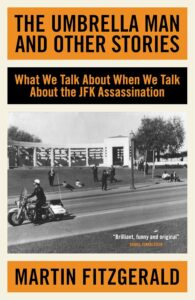 If you think there cannot possibly be anything new to say about the assassination of JFK, then pick up The Umbrella Man and Other Stories by Martin Fitzgerald. He’s found many of the witnesses to the murder, and they’re a fascinating bunch ranging from the mercurial protestor to the amateur videographer via the disinterested and the rather odd. Lots of fun.
Thomas Asbridge’s The Black Death is a global history, the first such of the devastating pandemic. Estimated to have killed 100 million people, the book shows it’s effects across the medieval world as Islam and Christianity dealt with it in different ways, with varying lack of success. A remarkable piece of work.
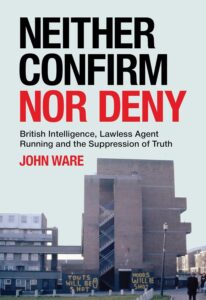 Neither Confirm Nor Deny by John Ware is a compelling investigation into the two British agents during the Troubles, Brian Nelson within the UDA and Freddie Scappaticci, aka Stakeknife in the IRA. The spymasters during this conflict make those in Le Carré’s circus seem hopelessly naive. There are more spies within the republican movement to be revealed, and so perhaps worse is to come.

