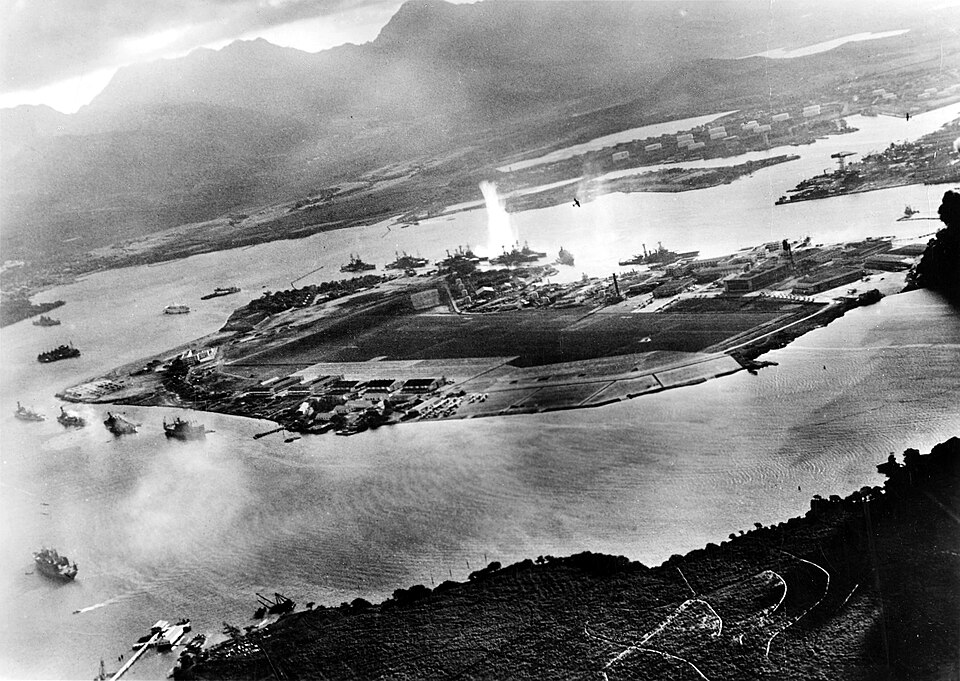
The Japanese Imperial Navy conducted extensive intelligence gathering in Hawaii as part of its preparations for the 1941 attack on Pearl Harbor, using a spy attached to their consulate named Takeo Yoshikawa.
Yoshikawa meticulously gathered vital intelligence on the movements of the US Pacific Fleet and Hawaii’s defences. The reports he sent to Tokyo were invaluable to the success of the Japanese surprise attack. However, this constant supply of information almost gave the game away.
Yoshikawa spent his days travelling between various observation points around Hawaii, reconnoitring airfields and tracking the movements of the US Pacific Fleet. Throughout the day, he would change his clothes several times, blending in as anyone from a tourist to a Filipino American labourer. Yoshikawa even took geisha girls as cover on sightseeing flights over Pearl Harbor. Postcards he supplied were later found in the cockpits of Japanese aircraft shot down over Pearl Harbor. Crucially, Yoshikawa is said to have discovered that Sunday mornings were the best time to attack, as the Fleet was at home from manoeuvres.
The Japanese spy communicated this information regularly to Tokyo through commercial American telegraph companies. In the run up to the attack Tokyo’s need for information increased steadily, to the extent that Yoshikawa was reporting the US Fleet’s movements on a daily basis, leaving a large paper trail of his activities.
The number of cables he sent had not gone unnoticed, and Robert L. Shivers, the FBI’s Special Agent in Charge in Hawaii, tried to persuade the cable companies to share the coded messages with him. However, they refused, not wishing to break federal law.
American intelligence had broken the Japanese diplomatic codes and were regularly intercepting and decrypting Japanese diplomatic traffic as part of a programme codenamed Magic. This used a machine codenamed Purple to decode these messages, which were then translated manually.
Faced with an overwhelming amount of decrypted information, they focused their efforts on translating the signals between Tokyo and the Japanese Embassy in Washington. This eventually provided a warning of an impending attack, but it did not specify where it would take place.
Yoshikawa’s telegrams to Tokyo provided precisely this information, but as Hawaii was considered a diplomatic backwater, they were left untranslated in the “deferred” pile until a bored newbie in the Naval Cryptographic Section decided to look at them.
Mrs Dorothy Edgers, a former schoolteacher in Japan, had been working as a translator for two weeks when she found herself in the office on a Saturday morning. With nothing to do, but eager to be involved in this strange new world of signals intelligence, she began translating the Hawaii decrypts.
She struck gold immediately and recognised the significance of the correspondence between Yoshikawa and Tokyo. Mrs Edgers began translating telegram after telegram, which revealed her country’s secrets — from the real-time movements of its battleships and the lack of torpedo nets protecting them, to the positions of the airfields responsible for their defence. This was clearly more than the routine reports of a sidelined diplomat in a backwater; it was intelligence intended for a full-scale attack.
Mrs Edgers reported her findings to her immediate supervisor, Chief Ship’s Clerk Bryant. He recognised their significance, but as it was Saturday and they were finishing at 12:00, he told her it would have to wait until Monday.
Undeterred, Dorothy Edgers continued translating more decrypted messages, remaining in the office until the Translation Branch Chief, Captain Alvin Kramer, returned from delivering the latest high-priority Magic intercepts. Mrs Edgers briefed Kramer on her findings, but was reprimanded for her trouble.
Tired and with a number of other conflicting priorities, Kramer was annoyed that she had worked late after the office had closed and was dissatisfied with the quality of her translation. He dismissed her in no uncertain terms, and she was told once again that it would have to wait until next week.
Ordinarily, Bryant and Kramer would have been correct, but on this occasion, it was the Saturday before Sunday 7th December 1941; the day of the Japanese surprise attack on Pearl Harbor.
Had Yoshikawa’s reports been examined more closely, an alert could have been sent in time for the Fleet to put to sea before the surprise attack. Admiral Kimmel, the Commander-in-Chief of the Pacific Fleet and the man blamed for the attack, categorically argued that, had he been aware of the Hawaiian decrypts, he would have been better prepared to counter the surprise attack. This was certainly the finding of a subsequent congressional investigation.
Alan Bardos is the author of historical fiction set around the World Wars. His latest novel is Hunter Class.