Home » Roman Britain

Roman Britain

Iceni: The Year of Sacrifice, by Stephen D. Owen

Iceni: The Year of Sacrifice, by Stephen D. Owen

An atmospheric novel that brings Boudica’s story to life, which explores the brutality of Roman rule, the struggle between loyalty and identity, and the growing tribal unity that foreshadows rebellion across Britannia.
Holly Aston

In Iceni: The Year of Sacrifice, the reader is vividly transported back to Roman Britain, where rebellion is on the horizon. Stephen D. Owen sets the scene beautifully for the trilogy that will follows. In 60 AD, King Prasutagus dies, prompting the Romans to arrive in...

Stephen D. Owen on Iceni: The Year of Sacrifice

Stephen D. Owen on Iceni: The Year of Sacrifice

The author discusses his longstanding fascination with Roman Britain, the historical sources and archaeological evidence behind Boudica's Revolt, the challenges of bringing the Iceni and Romans to life through historical fiction.
Stephen D. Owen

Welcome to Aspects of History, Stephen. Did you have a personal interest in Roman history before writing Iceni: The Year of Sacrifice? I have had a passion for Roman history for many years. I first became interested in Roman Britain and the Iceni Revolt during...

The Mystery of Lindow Man: Druids, Sacrifice and the Golden Twist

The Mystery of Lindow Man: Druids, Sacrifice and the Golden Twist

The novelist discusses the theory that the Lindow Man was a high-born druid sacrificed during the Roman conquest of Britain, and considers a connection to Boudica, the Iceni and the ‘Golden Twist’.
Stephen D. Owen

Nearly 2,000 years ago, during the early years of Roman Britain, Boudica, victim of Roman injustice, raised the Iceni in rebellion against Rome. During August 1984, a mysterious link with the Iceni Revolt may have been uncovered. The remnants of a male peat body were...

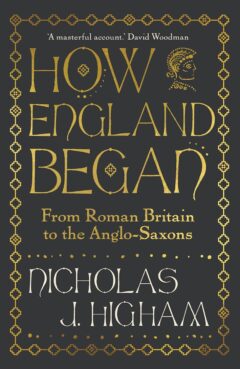
How England Began: From Roman Britain to the Anglo-Saxons, by Nicholas Higham

How England Began: From Roman Britain to the Anglo-Saxons, by Nicholas Higham

How England Began work steers away from one-dimensional approaches, focussing on exploiting multiple sources of information, without necessarily giving one more priority or credence over another. What we are left with is a detailed, yet accessible analysis of the years from the late 4th century to the 6th century. 

Back in the (late) 1980s when I was at university, it was the period leading up to and following AD 410 that most filled me with trepidation. Almost nothing in the way of contemporary written sources, combined with archaeological findings that were only really just...

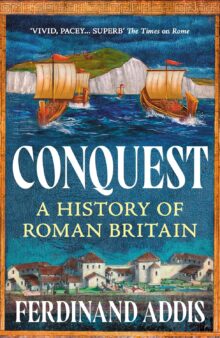
Conquest: A History of Roman Britain, by Ferdinand Addis

Conquest: A History of Roman Britain, by Ferdinand Addis

A reappraisal of a much-researched topic reveals how diplomacy, trade and cultural exchange were and still are as fundamental to Rome’s conquest of these islands, our landscape and British identity today as military force.

There is a lot that has been said, written and mulled over when it comes to Roman Britain, and, consequently, a reader glimpsing Ferdinand Addis’ Conquest on the shelves might be forgiven for thinking it another interpretation of those well-trodden stories and a...

How England Began

How England Began

How Britain broke away from the Roman world is as essential to understanding the rise of the English language and a national identity as Germanic migration, subsequent conflict with native Britons and conversion to Christianity.
Nicholas Higham

The western Roman Empire collapsed so long ago that we might well ask ‘why should that matter to us now?’. Yet, in multiple ways, our lives are conditioned, still, by those events. Take language, for example. Mostly, the western Empire spoke Latin. Despite substantial...

Caesar’s Gaulish King: The Double Lives of Commius the Atrebatan

Caesar’s Gaulish King: The Double Lives of Commius the Atrebatan

The stirring career of a one-time trusted ally, sometimes determined enemy, of Caesar reveals the complexities of loyalty and political manoeuvring in operation behind Rome’s invasions of Britain and Gaul.
Ferdinand Addis

55BC, as Sellar and Yeatman knew, is “the first date in English history”. Caesar led his legions across the sea and gave the Britons a thrashing. This, of course, was “a Good Thing, since the Britons were only natives at that time.” Caesar could hardly have put it any...

Nicholas Higham on How England Began

Nicholas Higham on How England Began

During a wide-ranging conversation, the historian contemplates his new study of Late Roman Britain and early Anglo-Saxon England and recent evidence and perspectives found in the period that sits uneasily between the two.

First of all, Nicholas, congratulations on the publication of this endlessly fascinating and absorbing work. In the introduction, you describe the book as a fresh look at the subject rather than a rehash of your earlier work, Rome, Britain and the Anglo-Saxons, some...

John Pitts on Carausius and Allectus

John Pitts on Carausius and Allectus

The debut author discusses his tale of rebellion, two usurper emperors and the historical clues that inspired his novel.
John Pitts

John Pitts – welcome to Aspects of History. Your book, Carausius and Allectus, is set amid uprisings in late Roman Britain. Talk us through how the idea for a novel came about? During the first Covid lockdown in 2020 I discovered a family history chart belonging to my...