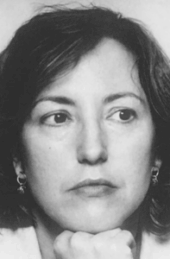

John Pitts – welcome to Aspects of History. Your book, Carausius and Allectus, is set amid uprisings in late Roman Britain. Talk us through how the idea for a novel came about?
During the first Covid lockdown in 2020 I discovered a family history chart belonging to my wife that took her family back to the 13th century. This was a time of thieves, rebels and knights of the realm and as my own ancestors were agricultural peasants with no previous history before the 1700s, I was fascinated by this. It was relatively easy to confirm that it was true, and then with the power of the internet and historical colleagues that I gathered along the way, the story went back and back through fourteen consecutive rulers of Dyfed to the very establishment of early south-west Wales from the fusion of descendants of Menapian colonisers, a dispossessed Irish Deisi prince together with a genetic input from a future emperor of Rome. Through this, the peripheral story of this little-known but significant rebellion emerged. It has been portrayed twice in literature in very different ways, in 1957 by Rosemary Sutcliff’s children’s story, The Silver Branch, and in 1969 by John Gloag in Caesar of the Narrow Seas.
What were the challenges of writing it as a novel?
I have considerable experience of writing scientifically and objectively with research papers, a masters dissertation and a PhD thesis, and while this helped me with background research, writing a novel for the first time was very different, involving imagination, creativity, and leaps of faith to bridge the parts of the story where history is silent. I have always loved novels by authors such as Bernard Cornwell and Simon Scarrow who create accounts of historical events around fictional narrators and participants. The difference here is that my two central characters were real and I had to create fictional ones as the glue to hold the story together. As events developed some of these came to underpin and challenge my protagonists to enhance the drama. All became very familiar to me.
Introduce us to the characters of the title then. Carausius ruled as Emperor of Britain for seven years in the late 3rd century AD with apparent stability and support. Do you see him as a rebel, a pragmatist, or as a genuine would-be reformer of Roman Britain?
The historian in me knows that this man gained a military reputation fighting in Gaul, and was put in charge of creating a naval force to deal with marauding Saxon pirates at the time that the Roman Classis Britannica fleet was fading from existence. After his success, he was accused only attacking the pirates after they had raided, and of keeping the loot and so his arrest and execution were ordered. At this point he rebelled against Rome with great support from the army and navy.
The novelist in me uses the example of Julius Agricola of taking a son of a tribal ruler into the service of Rome, partly as a hostage, and partly to inculcate them into the power of the empire. This allows Carausius military success and his Menapian seafaring and trading background gives him the necessary skill to build and use small warships.
The historian must be neutral about the pirate issue, but the sailor in me knows how the closing speed of small sail and oar-driven ships is very slow, and a pursuit could take many hours. Furthermore, after time to identify the raiders, attacking a laden ship with a tired crew does strike a note in support of realism.
Carausius was a charismatic skilled and respected leader, and a cinematographic image would portray him as the handsome hero. I see him as forced by circumstances to take his role as a usurping emperor.
Allectus is often overshadowed by Carausius. Did writing this novel change your view of him, and do you see him as villain, opportunist, or a more complicated figure than that?
Little is recorded about Allectus. With barely his name, and generic titles like pirate and rebel, only the fact that he assassinated Carausius and was defeated in his last and possibly only battle is clear. The Allectus in my novel is therefore largely my creation, and as a physically slight, introspective and only son of a dominating father, I have placed him in London with the financial controller behind the empire. He has been referred to as Carausius’s ‘minister of finance’ and this explains his abilities as a second-in-command’.
As events turned against them and control of the English Channel was lost, he realised that a further invasion (after the first failed attempt) would be inevitable. Financial pressures of defence built up and the level of support wavered. Goaded by his fears and angered by the continued optimism of Carausius, he dramatically assassinates Carausius in York. After disguising his role, despite his limitations and lack of military respect, his council conceded that he could lead as the new emperor, with conditions that he must listen to advice. Stronger personalities and his own self doubts come into play and he tortures himself with the consequences of his action in killing the man he most admired.Things get steadily worse. I see him as more complicated than an opportunist or villain, more forced into circumstances that he did not have the skills and attitudes to deal with.
To my horror, after completing the novel and recognising my own tendency to obsession when dealing with a task, together with a drive to achieve created by a perpetually disappointed father, I saw some of myself in the character I had created, except that I don’t think I would be capable of murderous jealousy. But then again…
As you say, the novel challenges some established interpretations – particularly around Menapia and the Snowdonia grave marker. Is there a balance to strike begween proposing alternative readings of the evidence without straying too far from scholarly consensus? What do you, as a non-historian, bring to this discipline of writing historical fiction?
While historical analysis is a very rational approach, I think I bring an element of lateral thinking into my research. For example the Welsh Menapia at Whitesands Bay is referred to as ‘the great port’. Today, it is an open exposed beautifully sandy beach above which lie the buried ruins of the Iron Age town. As a sailor I can see that it is the most unlikely place for a safe harbour. Exploring back though, there are many sunken forests off the coast of Wales and in the 14th century Gough map, Cardigan Bay did not exist. Postglacial rebound as Scotland recovers from the last Ice Age and the south of Britain sinks has caused coastal boundary changes. Off Whitesands Bay a peninsula of land containing the remains of many trees plus animals such as deer and aurochs have been found. Playing with tints using Google Earth reveals clearly the remains of this land which would indeed have produced a sheltered lagoon more suitable for its description.
Similarly there is an unexplored Romano-Celtic fort just inland overlooking the river Alun which comprises a rectangular walled compound attached to a typical circular iron age structure with a ring ditch that can be seen today. As this area is referred to as the Roman Menapia station guarding the harbour this would suggest perhaps a degree of cooperation, which fits with the level of acceptance of Roman rule that existed in south-west Wales.
Finally the grave marker in Snowdonia which is so easily dismissed, (despite the acceptance of all other carved Roman stones) has a five line extended-Latinate inscription and is from sandstone, a rock not found in that region but from the southern parts of Wales. This would suggest that creating it in the south and transporting it to the edge of the Sarn Helen Roman Road in the north represented a gesture of great respect.
What’s next for you and the book?
I have just turned 77 and this is my first and only novel. When I discovered this story, my first thought was that it had the potential to make a dramatic film with ingredients of land battles, sea battles, storms, rivalries, betrayals, jealousies and assassination, with an added smidgen of romance as it grew as an idea in my head. My wild attempt at writing a script was not good, although an independent reviewer stated that the story had ‘great dramatic potential’. Having approached the major film companies and noted producers and failed to break through the ‘we do not accept unsolicited submissions’ barrier, I decided to write the whole story as a novel. This allowed me to create (and dispose of, when necessary) my supporting cast to allow the emotions and interactions within the novel to be expressed. If anyone from that industry reads this, I am open to the role of executive producer!
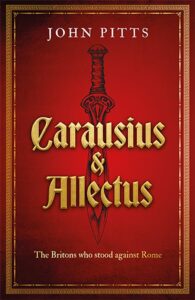
John is a retired doctor and an author based in Wales. Carausius and Allectus is his first novel.