I was very interested to see Archduke, as I have spent years researching and writing about the assassination of Archduke Franz Ferdinand. The Royal Court warned me that the play was not entirely historically accurate. So it would be bad form to list all the historical inaccuracies, but there are one or two I will have to mention.
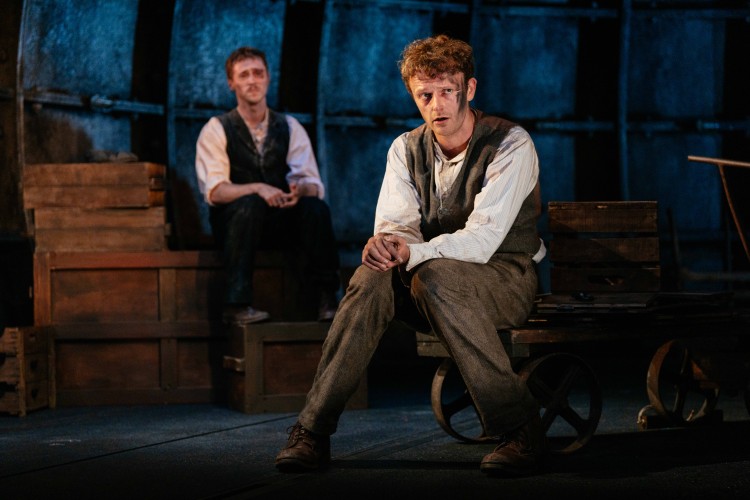
The play tells the story of how three 19-year-old men are manipulated into assassinating Archduke Franz Ferdinand. Rather than offering a faithful retelling of the assassination plot and the people involved, Archduke focuses on how desperate and gullible young men can be recruited into extreme groups to carry out acts of terror, demonstrating that history is often shaped by vulnerable individuals swept up in currents they barely comprehend rather than by grand designs.
In the case of the assassins of Archduke Franz Ferdinand, this is both historically accurate and inaccurate. The assassins certainly didn’t plan to start a world war, but they were radicalised long before they became involved with the assassination plot, influenced by the environment they grew up in—something the play doesn’t take into account. It’s told very much from the perspective that the assassins were ordinary teenagers picked up off the street and manipulated by a Fagin-like character.
If Joseph wished to tell this kind of story, it could be argued that it might have been more effective to invent fictional characters rather than attach such broad comic types to real historical figures. The three assassins are written as stock-comedy characters, leaving little sense of who they were or why we should care. That said, the performances themselves, from Chris Walley, Abraham Popoola and Stanley Morgan, are sharply judged. All three actors bring real energy and comic timing to some killer one-liners.
However, Marc Wootton as Dragutin ‘Apis’ Dimitrijevic stole the show with a beautifully bombastic performance that even managed to squeeze some pathos out of his portrayal of Apis. It was a shame that Janice Connolly as Apis’ housekeeper did not appear more often. She had a great scene that has changed how I will think of cherry brandy forever.
If you like your historical drama quirky and in a similar vein to The Great or SAS: Rogue Heroes, framed with slapstick and farce and a touch of Beckett, then this play is definitely one for you.
There is much to be commended in the play: it is wonderfully quippy and fast-paced, but my main issue is that there was no third act. It simply stops with the idea that “maybe the world don’t have to end at all. We can just get off the train… go get a sandwich.”
There is an obsession with sandwiches throughout the play, which I suspect comes from the urban legend that Gavrilo Princip was coming out of a sandwich shop when he shot the Archduke and his wife, Sophie. He was certainly standing in front of a delicatessen, but whether or not he’d actually bought a sandwich is lost to history.
This feels like a classic Marmite production—one audiences will either love or hate.

Alan Bardos is a writer of historical fiction set around the World Wars and the author of The Assassins, the first in the Johnny Swift Thrillers series, published by Sharpe Books.
For more information, visit Archduke.