
I’m frequently asked how much of my novel Sawadika American Girl is drawn from real life. A work of historical fiction, it is the story of a 17-year-old American woman coming-of-age in 1968 Thailand when the country served as a major US military outpost for America’s war in Vietnam. Although Piper, my main character, is older than I am, like her, I spent my formative years living in Bangkok. My father worked for USAID, first in Thailand during the 1960s and then, in the early 70s, he served multiple tours in Vietnam.
My novel’s plot is fiction. However, the narrative elements I drew upon to create the storyline happened in some version to me, someone I knew, or were based on stories that circulated in the American community. Whether it is the US Embassy or the American Teen Club or the ruins of Phimai, the settings are all true to the period.
I come from a large family and was never interested in telling the facts of my own life. My intention was to construct a representative narrative that conjured the ‘little America’ that arose in Bangkok during the war years. It was a strange convergence of Thai culture and sensibilities, the US Military, and 1960s counterculture.
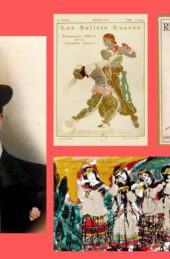
The characters that populate my novel are all loosely based on actual individuals or composites of people I knew. For example, in the second chapter you meet Piper’s piano teacher who is a Thai Prince. In high school, I studied classical piano with a Thai Prince who, just as in my novel, was a protégé of the great Chilean American pianist Claudio Arrau.
Piper’s father Neil is vastly different from my own. However, the fictional father specializes in the same kind of rural development work as my own father. I was fortunate to inherit his papers, journals and letters. They helped me understand his zeal for the work, the scope of his ambitions, his impatience with the bureaucracies at play and his eventual disillusionment with America’s involvement in Southeast Asia.
Starting in the early sixties, my father began travelling upcountry, especially to Isaan. Increasingly, part of his work in that northeast area of Thailand focused on delivering aid projects to rural border communities–irrigation implementation, road building, agricultural projects. The goal was to dissuade villagers along the border with Laos from joining up with communist groups like the Pathet Lao. At one point Piper accompanies her father on one of his trips to Isaan just as I did. That part of the novel is drawn from my own experience taking trips with my father.
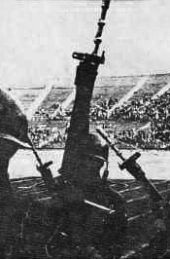
In 1965, the US military began combat operations in Vietnam. That marked a turning point for Thailand. In exchange for establishing more than eight military bases throughout the kingdom, the US poured huge amounts of military and economic aid into the country. Almost overnight, Bangkok started to change. There was a building boom. Apartment complexes blossomed. Shopping centers opened. Thais came to Bangkok from the countryside looking for work. Many klongs and rice fields were filled in with concrete. As a little kid, I vaguely clocked these shifts. What made the biggest impression on me was the rise of the hotels, bars and massage parlors catering to American GIs on R&R. By 1968, nearly 5,000 were arriving every month.
It was important to me to represent Bangkok’s rise as an R&R destination in the novel. The names of the hotels and bars mentioned are accurate with one exception. There is one hotel I made up the name for. That is because I knew I couldn’t remember the details of its interior precisely enough. Coming up with a new hotel name that reflected the vibe enough to ring true struck me as a good solution. The GI bars, like the strip on Phetchaburi Road, or the Thermae Bar on Sukhumvit Road near the International School of Bangkok – the America-accredited high school – are described pretty much as they were.
Prior to America’s entry into the Vietnam War, Thailand, like Myanmar (Burma) and Laos, was part of the opium drug trade. However, the presence of American GIs in Thailand fueled its growth. The drug adventures of GIs as well as American teenagers quickly became a thorn in relations between the United States and the Thai government. The pressure to behave and fall in line applied as much to military personnel as it did to American teenagers. Weed and LSD were easily available. It was the sixties and lots of kids indulged. The consequences of getting caught could be severe. A father’s job could end or a teenager could get sent home to live with relatives. Families fractured under the stress. That aspect of life in Thailand is part of the narrative.
Nested into my novel’s volatile atmosphere is a love story. My main character meets a GI who, like her, is still a teenager and searching for a sense of belonging in a place they know they shouldn’t be. The existential and emotional challenge of not belonging is one that nagged at many young Americans who lived there.
My hope is that, through the darkness of the war and big changes that came to Bangkok thanks to American dollars, readers of Sawadika American Girl will feel the love Piper had for Thailand, its culture and people. That emotion is absolutely true to my life.

Daria Sommers is a writer and filmmaker, and the author of Sawadika American Girl.