
Philip Larkin in his poem Annus Mirabilis highlighted the year 1963 as a time of momentous transition. The end of the Lady Chatterley ban, the rise of The Beatles, the beginnings of the sexual revolution, all seductive ingredients for me, an author writing a novel about psychological change. On a more frivolous note, I could not resist the 1960s aesthetic, a visual colour-pop of Babycham, prawn cocktails, Tupperware parties, mini-skirts, Carnaby Street boutiques, paisley swirls, and the Mod fashions of London’s youth culture.
Looking back to when I first had the idea for The Model Patient, I remember wanting my novel to be set at a time of significant change, and for this change to be reflected in the psychoanalytic discoveries that my character, Evelyn Westbrook, makes throughout the book. She has come of age in the 1950s, married in 1961, and, in 1963 when the novel is set, she is grappling with conflicting pressures: the desire to become a modern woman embracing the new freedoms of the decade and the expectation to be a model wife fulfilling the traditional role of making a home. The ‘Swinging Sixties’ had not yet arrived and the conservatism of the 1950s with the continuing weight of post-war rationing and austerity continued to impact the lives of many. But change was in the air, and I felt the power of that change when I was exploring the intergenerational conflicts that would have stormed through households across the country.
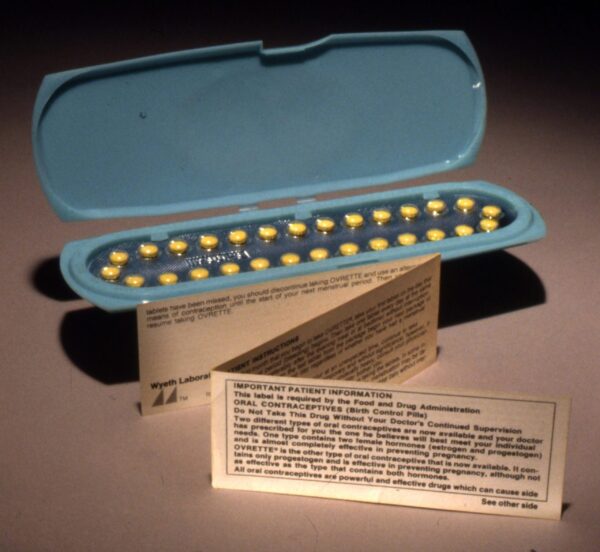
The most significant factor in my decision to set the novel in the early 1960s was the contraceptive pill. In December 1961, after much parliamentary debate, the contraceptive pill became available on the NHS. However, there were significant restrictions: the pill was only to be given to women whose health would be put at risk if they were to get pregnant, and this was at the doctor’s discretion. The reality was that married women were far more likely to be given the pill, but even then some family planning clinics required the permission of a woman’s husband before prescribing. The National Archives provide an interesting summary of government reports from that time. There was a notable lack of female voices in the discussions about access to this medication, as well as anxieties that the pill would encourage a sexually promiscuous society. While there is no doubt that the contraceptive pill was revolutionary for women and their ability to have autonomy over their bodies, it took another five years before the pill became widely available.
While writing The Model Patient, I kept finding myself drawn to Sylvia Plath, her poetry collection Ariel, her novel The Bell Jar, and the circumstances of her death in February 1963. The Bell Jar, a semi-autobiographical novel, was published one month before her suicide, under the pseudonym of Victoria Lucas. In this novel she explores the contradictions of womanhood, the inadequate treatment of mental illness, and the sexual double standards for men and women. Plath captures the impossibility of reconciling sexual desire with social expectations of women, a bind that slowly began to shift for some women in the 1960s. It interested me that it was being fitted for the diaphragm, a form of contraception that gave women some control over their reproductive rights and sexual agency, that helped Esther Greenwood in The Bell Jar to find psychological health. In The Model Patient, Evelyn describes her little pot of pills as a safety net, a way to hold on to herself and her bodily autonomy when her husband asked her to stop using the diaphragm. Although access to contraception was controversial and steeped in prejudice in the 1960s, I was struck when writing The Model Patient by how this controversy has reared its head again today. The conservative ‘trad-wives’ community, as well as other right-leaning groups paint hormonal contraceptive methods as a sinister feminist conspiracy, not so different to the fears about the pill more than 60 years ago.
The Model Patient centres around a woman in psychoanalysis. This led me to explore mental health provisions in 1963, and the way women’s mental health was perceived by the medical profession. While on the one hand, the Minister for Health, Enoch Powell, was advocating for the closure of asylums and inhumane long psychiatric hospital stays with a shift instead to community care, the reality for many people with mental health conditions was that there was little support. Psychotherapy was only available for those who could afford it. While psychoanalysis was a place for women and men to explore conflicting desires, I was interested in the many cases I discovered where a therapist’s treatment method worsened symptoms. At the time The Model Patient is set, therapists were often patriarchal and authoritative, assuming that they could heal their female patients’ neuroses through guiding them towards accepting the reality of their feminine roles of wife and mother. Phyllis Chesler in Women and Madness writes compellingly of the ways therapy during the 20th century was frequently ‘a mirror of the female experience in patriarchal culture’. Rather than helping women fight against a system that limited them, psychoanalysis with paternalistic male therapists often took the role of persuading women they’d be happier and healthier if they gave up on their ‘hysterical’ desire for change, and instead accepted their ‘natural’ role in the home.
While many women continued to live traditional lives, the early 1960s saw the beginnings of the sexual revolution, a youth culture and growing freedoms for women. The developments of fashion are reflective of these changes. Boutiques such as Mary Quant’s Bazaar and John Stephen’s fashion stores for men on Carnaby Street were changing the way people shopped, with a move towards accessible fashion. The mods and the rockers were asserting their identities and with them came a confidence to dress boldly and to rebel against the conventions and restrictions of the post-war decade. However, even the King’s Road boutiques had their rules, a continuation from the traditional fashion houses, and the miniskirts, shift dresses and Peter Pan collars were not for everyone. In The Model Patient, Evelyn is a former fashion model, well-placed to witness and experience the transition from 1950s conservatism to 1960s rebellion. However, the reality of her modelling work, and the experience for many models in the 1950s, was far less cutting-edge. The advertising industry presented a domestic ideal that reinforced traditional gender roles, the imagery showing middle-class women as perfect mothers who cared for the needs of their family. Or they were sexualised and entirely dependent on men, as in car advertisements from the time that used women as decorative objects.
Reading modelling manuals and memoirs, it is fascinating to see how this tension played out for models. The number of women working as models in the 1960s rose into the thousands, and the agent and model Cherry Marshall explained in her book The Cat-Walk that ‘behind the well-known faces were a small army of girls earning a lot of money without attracting attention… models who were in constant demand for advertising a thousand things from breakfast cereals to contraceptives.’ It is interesting that the models we remember from the 1960s – Twiggy, Jean Shrimpton, Peggy Moffitt, Pattie Boyd, Brigitte Bardot – were the fashion models who reflected the freedoms of the 60s, not the traditional family values that much of advertising promoted. But advertising was changing, and the 1960s saw a shift in advertising iconography towards creativity, the rise of a liberated youth culture, and independent, fashionable women.
While sexual politics, contraception, and women’s mental health were the driving subjects of my research when preparing to write The Model Patient, it was an unusual weather event in the winter of 1963 that provided the palette for the setting of my novel. Readers growing up in the UK in the 60s will likely remember the Big Freeze of 1963, when snow began to fall on Boxing Day of 1962 and the temperatures did not go above freezing until early March. The festive excitement of Christmas snow transformed into a feat of endurance as homes across the country suffered through extreme cold. The nation’s infrastructure ground to a halt and there were frozen and burst water pipes, the inside of windows stuck with ice, and sheets of thick ice across rivers, pavements, and parks. A rare white Christmas period became months of struggle, particularly for the elderly and vulnerable. Giant snow drifts closed roads and deliveries of coal were often delayed, exacerbating the conditions in homes. The FA Cup was halted and the British routine of Saturday football fell apart as pitches froze solid. When the snow did begin to thaw at the start of February, there was heavy flooding, rivers bursting their banks as the snow melted too quickly. On 11th February, the snow returned and a weary nation had to endure another three weeks of cold before the country started to return to normal.
In The Model Patient, it is as the ice melts and the ground softens that Evelyn Westbrook begins to shake the roles she has been playing, roles that confine her: a good wife, dutiful daughter, model patient. The snow disappears and Evelyn steps away from the conservatism of the 1950s and towards the new freedoms of the Swinging Sixties.

Lucy Ashe is a novelist and the author of The Model Patient.