
Yale University Press

Death to Order: A Conversation with Simon Ball

Death to Order: A Conversation with Simon Ball

Assassination rarely achieves its aims, the academic maintains, but it endures as a useful tool to shape behaviour the international stage.
Simon Ball

Hello Simon. Your book, Death to Order, suggests that assassination is as much about signalling as it is about elimination. How important is the message sent by a killing compared to the actual removal of a target? It depends on the kind of assassination campaign. The...

Has 2026 Changed the World of Assassination?

Has 2026 Changed the World of Assassination?

A timely inquiry proposes that assassination today remains a fixture of statecraft as recent targeted killings continue to pervade the geopolitical sphere but rarely deliver clear strategic success.
Simon Ball

States have already pushed assassination even further to the fore since the publication of Death to Order: A Modern History of Assassination in the summer of 2025. However, if we look underneath the headlines, then the trends which had been well established for over a...

Nuremberg: The Translator’s Tale, by Helen Fry

Nuremberg: The Translator’s Tale, by Helen Fry

An account of Howard Triest, a Jewish interpreter at the Nuremberg Trials, lays out the personal toll of psychologically examining the perpetrators of the Holocaust

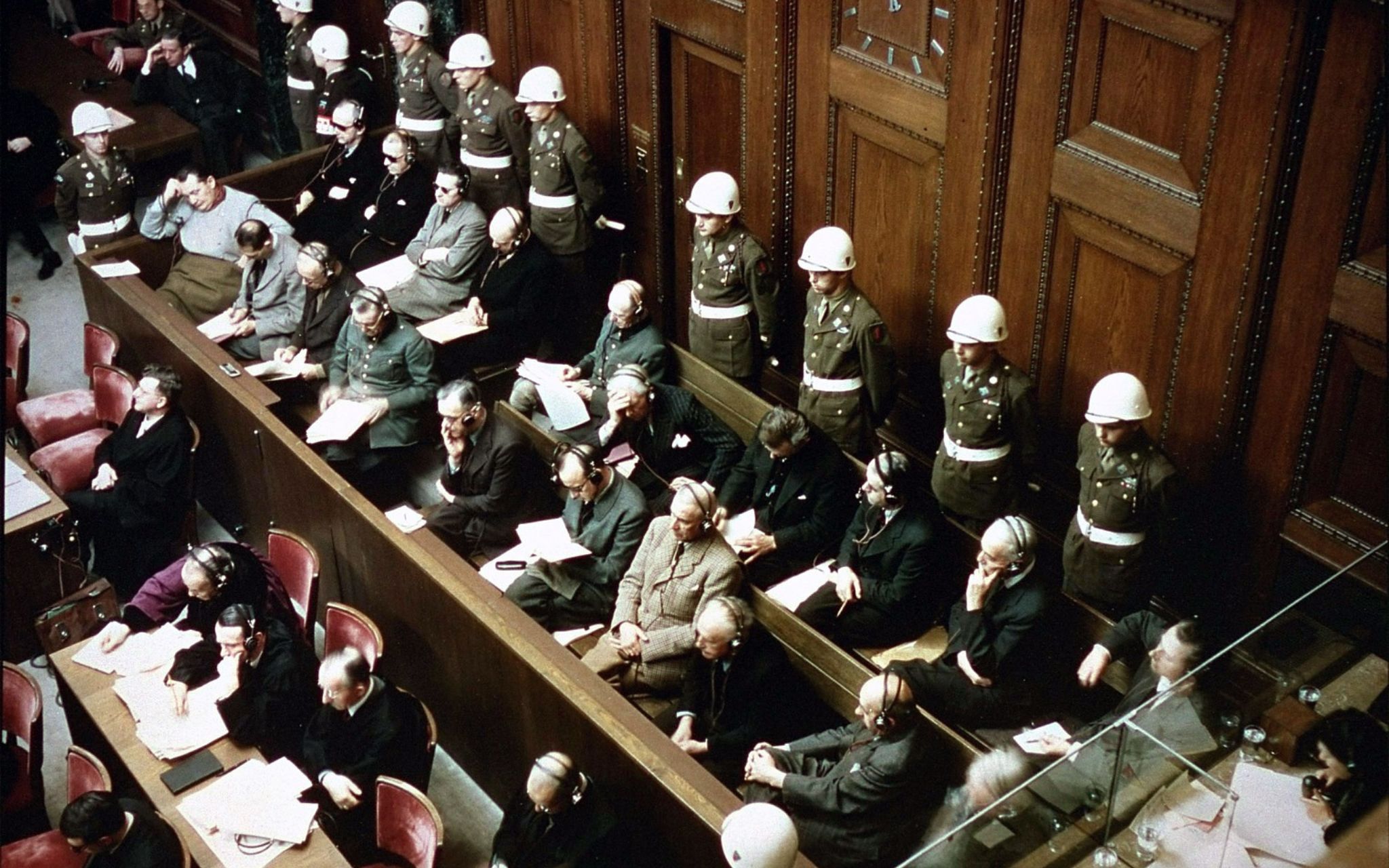
80 years ago, one of the great courtroom dramas of the 20th century took place in Germany: the Nuremberg trials of the top Nazi leaders. But while the whole world was focusing on events in the court room, a second, less well-known drama was also taking place in their...

Nuremberg: A Witness to Justice

Nuremberg: A Witness to Justice

An account of the Nuremberg Trials through the experiences of Howard Triest, a German-Jewish refugee and translator who confronted the leading figures of Nazi Germany as justice was brought to bear.

On 20 November 1945 twenty-one defendants flanked by US guards were brought along the covered walkway from the prison cells, up the stairs, through a door behind the prisoners’ box and into the courtroom. This was the opening day of the Nuremberg Trials, where the...

Who Will Rescue Us?, by Laura Hobson Faure

Who Will Rescue Us?, by Laura Hobson Faure

An affecting and meticulous study of Jewish child refugees during World War II is based on personal testimony.

This is the story of the Jewish children who fled to America and France on the eve of WW2, thus avoiding incarceration or death in the Holocaust. Based around oral and written testimonies, Who Will Rescue Us? traces the efforts of networks of relief workers and aid...

Wartime Letters: London and Moscow 1941-1945, by Kathleen Harriman

Wartime Letters: London and Moscow 1941-1945, by Kathleen Harriman

Edited by historian Geoffrey Roberts, the American's letters open up the workings of Allied diplomacy and reveal optimism as she navigates the turning points of the 20th century.

We don’t think of ‘the Harrimans’ as we think of, say, the Kennedys. But maybe we should. For serious students of Anglo-American relations there’s W. Averell Harriman, the diplomat (politician, financier; himself the son of a famous railroad baron) tasked with...

Nicholas Higham on How England Began

Nicholas Higham on How England Began

During a wide-ranging conversation, the historian contemplates his new study of Late Roman Britain and early Anglo-Saxon England and recent evidence and perspectives found in the period that sits uneasily between the two.

First of all, Nicholas, congratulations on the publication of this endlessly fascinating and absorbing work. In the introduction, you describe the book as a fresh look at the subject rather than a rehash of your earlier work, Rome, Britain and the Anglo-Saxons, some...

No More Napoleons: How Britain Managed Europe from Waterloo to World War One, by Andrew Lambert

No More Napoleons: How Britain Managed Europe from Waterloo to World War One, by Andrew Lambert

As debate intensifies over Britain’s role in world security, Andrew Lambert offers a timely reassessment of the country’s 19th-century grand strategy.

It seems apt that the paperback edition of Andrew Lambert’s gripping analysis in No More Napoleons should be published as Britain’s contribution to the preservation of the security of the continent of Europe, and indeed the wider world, is under debate and our very...

No More Napoleons: Andrew Lambert Interviewed

No More Napoleons: Andrew Lambert Interviewed

In examining the 'Wellington System', the naval historian challenges the traditional view of complacent British diplomacy in Europe during the 19th century and up to WW1.
Andrew Lambert

Andrew Lambert, in No More Napoleons, you describe Britain’s strategy between 1815 and 1914 as “book-ended by existential total wars”. What prompted you to reconsider the 19th century not as an age of complacency, but instead a hundred years of vigilance? The tendency...