
States have already pushed assassination even further to the fore since the publication of Death to Order: A Modern History of Assassination in the summer of 2025. However, if we look underneath the headlines, then the trends which had been well established for over a decade continued, albeit with more publicity.
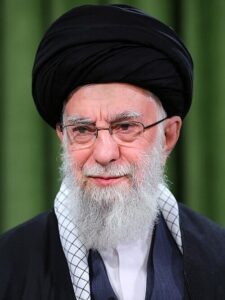
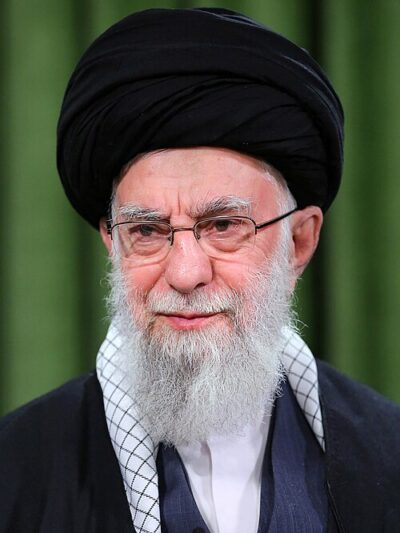
Ayatollah Khamenei, the former leader of the Islamic Republic of Iran, in 2024 (Source: Khamenei.ir)
One of the core arguments of Death to Order was that assassination will remain the preserve of states. Even if states are not behind assassination, it is the reaction of states to assassination that shape international politics. Israel remained in the forefront of states carrying out assassinations. In late February 2026, the Israeli armed forces killed the Supreme Leader of Iran, Ali Khamenei, and then went on to assassinate most of Iran’s other national and security leaders. These killings were part of a co-ordinated Israeli-American offensive aimed at crippling Iran as a force in global and regional politics. In the words of Israel’s defence minister, Israel Katz, speaking after the assassination of Ali Larijani, the de facto leader of Iran for a fortnight after Khamenei’s death, the goal was to ‘continue hunting the leadership of the regime of terror and oppression in Iran, to repeatedly lop off the head of the octopus and prevent it from growing back.’ Celebrating the assassinations President Donald Trump commented, ‘we’ve had regime change, if you look already, because the one regime was decimated, destroyed. They’re all dead. The next regime is mostly dead. And the third regime, we’re dealing with different people than anybody’s dealt with before … It’s a whole different group of people’.
Operationally, decapitation strikes made clear that top-end assassination is passing out of the age of the drone. The IDF launched its main assassination attempts from manned aircraft. The aircraft launched advanced guided missiles, capable of climbing to a great height then plunging on their target, thus penetrating hardened bunkers. As before, nevertheless, high-end assassination relies not only on accurate weapons but an immense infrastructure of signals, geo-spatial and human intelligence. Only states which make assassination a high resource and time priority can build such an infrastructure. It is not achieved by extemporisation but with careful planning over multiple years. This, as much as the strike itself, means that assassination has become an important feature of statecraft.
Indeed, other states who possess the correct intelligence infrastructure can push on with assassination campaigns with much lower tech means. The assassination struggle between Ukraine and Russia continued into 2026 at much the same intensity as previous years. The intelligence services of the two powers carried out these tit-for-tat assassinations in the main with small arms and car bombs. In February 2026, assassins shot the deputy head of Russian military intelligence, Vladimir Alekseyev in a Moscow apartment block. The Russians also retained the knack, as they have since the late 1950s of commanding western headlines through their use of poison. In February 2026, the British foreign secretary, Yvette Cooper, used the platform of the Munich Security Conference to announce that the Russian government had murdered the dissident Alexei Navalny with epibatidine, the poison of the South American dart frog. She spoke on behalf not only the British government but those of France, Germany, Sweden and the Netherlands.
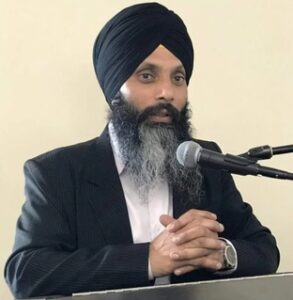
Canadian Sikh activist Hardeep Singh Nijjar
Such developments merely reinforce the argument that the asymmetric ability of highly protected political leaders to kill on demand risks making them less strategically imaginative. As yet, there is little indication that the USA and Israel will enjoy a strategic success in Iran, despite their impressive ability to assassinate. Equally, it is unclear if assassinations are having much impact on the course of the Russia-Ukraine war.
Despite the headlines it remains true that although assassination always involves death, it often does not involve drama, at least for states as opposed to individuals. At the same time as Israel was assassinating the leadership of Iran, the prime minister of Canada, Mark Carney, was in India for a friendly meeting with Narendra Modi, the prime minister of the world’s largest democracy. Carney’s presence in India was a volte-face, since for the previous three years Canada had been trying to hold the government of India responsible for ordering its external intelligence service, RAW, to assassinate Hardeep Singh Nijjar, a Canadian citizen living in Canada. Nijjar was assassinated in British Columbia in 2023. Canada expelled six Indian “diplomats”, including the High Commissioner, for direct involvement in the assassination. In 2024, the Canadian government named the Indian Minister of Home Affairs, Amit Shah, as the procurer of the assassination. That has now been abandoned. One very frequent recourse of democratic states has been to downplay or ignore assassinations. Carney was merely returning to the standard playbook.
Death to Order argued that the current epoch of assassination would only end when western powers tried to change the assassination security system that they had developed since the 1980s. There does not seem to be much evidence of a will to do so. Politicians still see security as a mark of élite status and wish to widen its net in favour of themselves. In Germany, the president of the Bundestag, Julia Klöckner, is brokering an all-party deal which will greatly increase the security afforded members of the body and provide funding for the air defence of the building itself. In the USA, frequent increases in security spending are a little remarked feature of inter-party amity. As a US senator, Markwayne Mullin claimed that, ‘I operate right now with a tremendous amount of death threats on us. I mean, if you go to my house, I have bulletproof glass on the bottom part of my house. … We have cameras everywhere. We have security dogs … It is, unfortunately, the reality we live in.’ In March 2026, Mullin was confirmed as Secretary for Homeland Security and will now have full protection from the US Secret Service, the best-known element of the ‘federal protection community’ which encompasses over 100 security forces. In Britain, the seemingly never-ending argument about the level of protection to which Prince Harry should be ‘entitled’, continues. More recently this controversy has been joined by a political argument about security for Nigel Farage MP, the leader of Reform. Assassination has become just as much about the definition of a national and trans-national élite as it is about death.

Simon Ball is a professor at the University of Leeds and the author of Death to Order: A Modern History of Assassination, published by Yale University Press.