In 1942 Hitler turned on Stalin and drove towards the Caucasus, aiming for the oil that would sustain the German advance. If he succeeded, the balance of the war could tilt. To hold them at bay, Stalin needed supplies quickly; fuel, vehicles, and equipment. Britain and the United States agreed to provide them. The question was how. Many routes were blocked by German control.
One answer was the Persian Corridor: a route from the Gulf, through Iraq and Iran, and up to the Soviet Union. Ships brought matériel to the south. From there it travelled north by rail and long convoys of lorries. On paper, it was straightforward. A line across a map. A solution to an urgent problem.
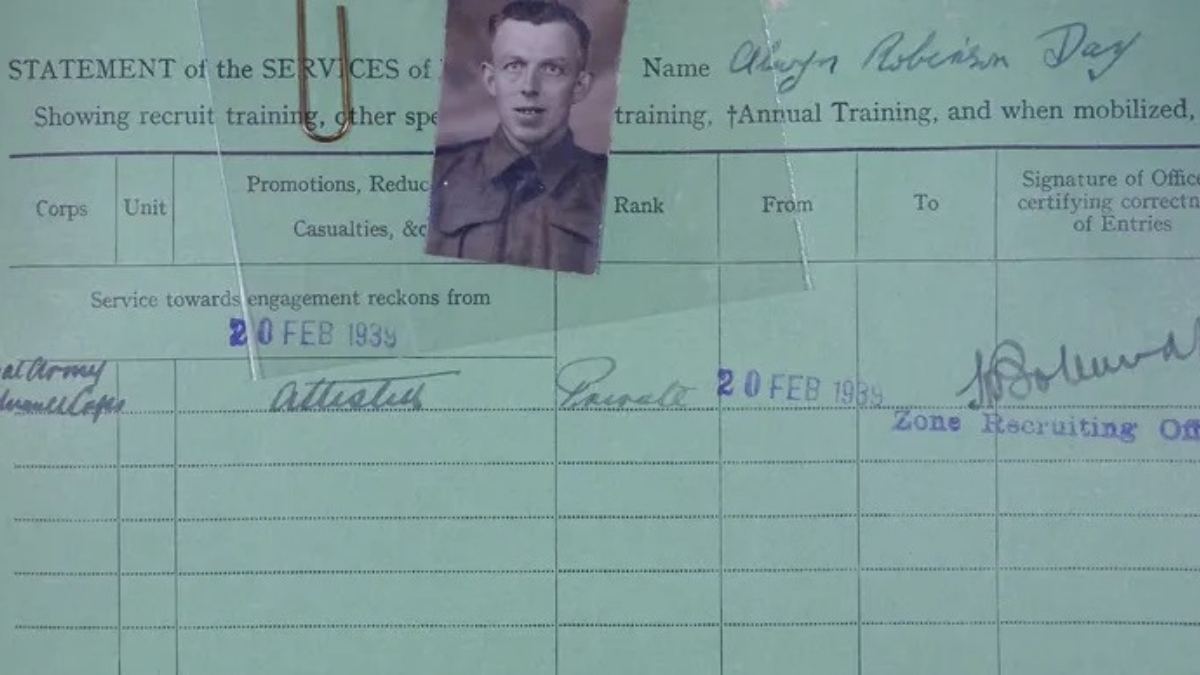
On the ground, it was very different. On 24 August 1942, in the middle of a sandstorm, Corporal Alwyn Day and his unit struck camp in the Shaiba Desert and boarded a train for Baghdad—“one of the most uncomfortable journeys I have ever travelled”. They had already crossed five hundred miles in extreme heat. The wind through the carriage windows was “as hot as the blast from a furnace”, driving sand and dust into the compartment.
This was what the plan looked like in practice.
Day belonged to a British Army unit tasked with keeping vehicles running and supplies moving. Their job was simple: keep the line open when it broke down. If equipment failed, it had to be repaired or recovered so that the flow could continue.
At the end of August, he left Baghdad in convoy and travelled north into Persia. The journey to Kermanshah took three days across the Shah and Pai-Tak passes. It was, he wrote, “not without some casualties… about five of our vehicles going over the side”. The convoy carried on.
From his camp outside Kermanshah, he noted the activity along the main road. “Thousands of lorries passed weekly on their way to and from Russia.” American matériel entered through the south in increasing volume. More traffic meant greater strain on roads, more wear on machinery, and more opportunities for failure.
Conditions worked against progress at every stage. Heat affected men and engines alike. Dust clogged equipment. Roads, especially in the mountains, slowed everything down. Vehicles broke down as a matter of routine. When they did, they had to be repaired or recovered before anything could continue. Delays followed. Then the line started again.
Storms added to the strain. One night, heavy rain flooded the camp. Tents, dug into the ground, filled with water as the wind shook the canvas. By morning, “75% of the tents… had been blown down”. The damage was cleared. Work went on.
Accidents formed part of the same pattern. One soldier fell to his death climbing the surrounding mountains. The entry appears alongside notes on food and daily duties. There is no separation between risk and routine.
Daily life adapted. Supplies were unreliable, so men supplemented what they could. Eggs and tomatoes were bought locally and cooked on a Primus stove. Facilities were basic. A visit to a N.A.A.F.I. might mean a twelve-mile walk.
Within weeks, Day was hospitalised with pneumonia. The illness appears as a break in the sequence. Treatment followed. He recovered and returned. The pattern held: something stops, it is dealt with, and the work resumes.
By October 1942, this activity was formalised with the creation of the Royal Electrical and Mechanical Engineers. In practice, little changed. Vehicles failed. They were repaired. The line continued.
As volume increased, so did the pressure. More matériel meant more breakdowns, more delays, and greater demand for repair. The flow did not become easier. It became harder to maintain. The route held because problems were dealt with as they arose.
There was no point at which the system settled into reliability. Distance worked against it, climate worked against it and volume added further strain. At every stage, something gave way. The only constant was the need to deal with it and keep the line open.
On a map, the Persian Corridor is a supply route. On the ground, it depended on ordinary men, mechanics, drivers, clerks, fixing what failed and getting it going again.
Day’s diary shows how. Vehicles broke down. They were repaired or recovered. Convoys stalled. They moved again. The pattern repeats because it had to.
Supplies reached the Soviet Union because enough of that work was done. Nothing in the system worked for long. It held because it was put right by men like Alwyn Day.
Philip James Day is the author of Empire’s Witness: A Soldier’s Secret War Diary 1942-5, available for preorder now.