If I had never been to Tibet, I might have found it difficult to understand the Tibetan riots that broke out in Lhasa in 2008. Nor would I have felt such a powerful urge to complete my novel, A Tibetan Girl Called Ata, a tragic cross-cultural love story that unfolds amid the political tensions and historical wounds of modern China.
During my travels across Tibet in the 1980s and 1990s, I witnessed and heard things that shocked me. They often remind me of the saying that while time moves forward, the past never truly disappears – it lives on in the present.
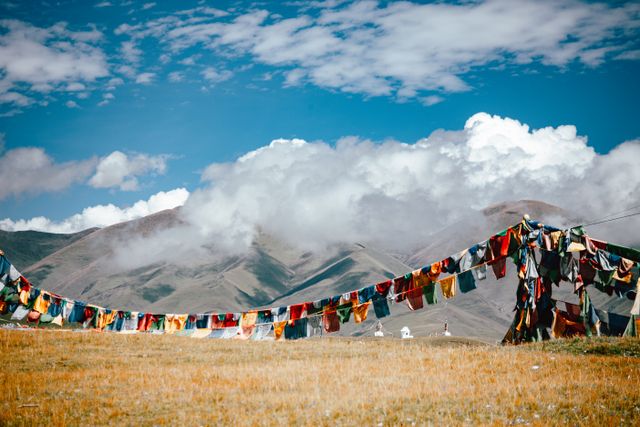
My strongest impression from my journeys through Tibet was the sheer ubiquity of monasteries. This is hardly surprising, given that more than 95% of Tibetans practise Tibetan Buddhism.
On one occasion, while visiting a newly rebuilt monastery perched on a mountainside, I met a young Tibetan man working at a nearby construction site. He volunteered the monastery’s “heroic history” of defiance against Communist rule. In the late 1950s, following the Communist takeover of Tibet, the authorities launched a large-scale campaign to crush Tibetan resistance. The monks and local villagers mounted a desperate defence, using the monastery’s formidable stone buildings as a stronghold from which they repelled repeated assaults by Communist troops. Frustrated by their failure to capture it, the army eventually resorted to aerial bombardment, breaching the defences. Once they overran the monastery, the soldiers exacted their revenge by setting it ablaze. They even broke open the sealed stupa of a Living Buddha who had died two centuries earlier, dragged his preserved body from its resting place, and cast it into the river.
While visiting the renowned Tashi Lhunpo Monastery in southern Tibet, I noticed 600-year-old murals that had been battered almost beyond recognition. A young Tibetan woman serving as my guide explained that they had been damaged during the Cultural Revolution. An elderly monk who happened to be passing stopped and described what he had witnessed. A mob had suddenly stormed into Tashi Lhunpo Monastery armed with sledgehammers and pickaxes, toppling and smashing every Buddha statue in its path. The ancient murals were likewise mercilessly defaced. The attackers denounced Tibetan Buddhism as “feudal superstition” and branded Tashi Lhunpo Monastery a “counter-revolutionary den” that had to be completely eradicated.
I asked the elderly monk, “It has been more than a decade since the Cultural Revolution ended. Why haven’t these murals been restored?” He answered without hesitation, “They must remain as they are, so that future generations will never forget what happened.”
Sometimes even the smallest detail can strike the deepest emotional chord. I remember visiting the Potala Palace when a fellow tourist asked aloud, “When did the Dalai Lama run away?” A monk standing nearby immediately corrected him: “His Holiness did not run away. He left.”
When the Lhasa riots broke out in March 2008, I was living in London; the news did not surprise me. After the Beijing Olympics that August, I returned to my hometown of Chengdu. What I saw and heard during that visit unexpectedly inspired the novel that was published in the UK this April.
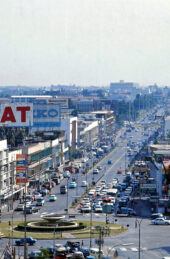
Chengdu, a metropolis of more than ten million people, sits on the doorstep of the Tibetan Plateau and is home to a vibrant community of hundreds of thousands of Tibetans. When the riots erupted a thousand miles away in Lhasa, people in Chengdu – whether Tibetan or Han – were profoundly affected.
One young Tibetan woman I knew had adapted to big-city life and was engaged to a Han Chinese man. She told me she had broken off the engagement. In the aftermath of the riots, Chengdu was gripped by tension. Some of her Tibetan friends were arrested after police discovered photographs of the Dalai Lama on their mobile phones during routine identity checks. She, too, was questioned. Her fiancé panicked and found an excuse to abandon her. She later became the inspiration for Ata, the central character in my novel.
The Lhasa riots had a massive impact on Chengdu, particularly on its Tibetan community, and I describe this in detail in my novel. In the eyes of the authorities, almost all Tibetans were regarded as untrustworthy, harbouring dangerous elements intent on splitting the country. To prevent protests, large numbers of soldiers and police officers were deployed, and Tibetan neighbourhoods were placed under tight security. Han Chinese could move about freely, while Tibetans were liable to be stopped and searched at any time. A well-known Tibetan-run bar popular with young Tibetans was repeatedly “visited” by the police, who questioned patrons and made arrests, eventually forcing the establishment to close.
Meanwhile, state television portrayed Tibetans as violent extremists who hated the Han Chinese, accusing them of murdering Han civilians and burning Han-owned shops. Such coverage further inflamed an already fragile relationship between the two communities. The internet was awash with hateful comments: “Those Tibetan barbarians want to kill us!” “Who says we killed too many Tibetans? We didn’t kill enough. We should exterminate the lot of them.” Rumours spread rapidly. One widely circulated message claimed: “Two Tibetans carrying explosives have sneaked into Chengdu – their whereabouts are unknown.” “They’re going to blow us up! They’re terrorists, just like the Taliban.” Panic swept through the city. Hotels across Chengdu were instructed not to admit Tibetan guests, and even taxi drivers became reluctant to pick them up. On one occasion, a Tibetan man wearing a loose-fitting robe boarded a bus, prompting passengers – who believed he was carrying a suicide bomb – to flee.
The impact of the Lhasa riots on remote Tibetan villages was very different. While conducting research for my novel in Chengdu, I met a Tibetan man from a remote village who told me that when news of the unrest reached his community, the villagers were stirred to a fever pitch. They gathered spontaneously to chant slogans and deliver speeches, convinced that if they united their efforts, the Dalai Lama could return to Lhasa. Neighbouring villages responded enthusiastically, mobilising thousands of people who marched together into the city to demonstrate. The authorities opened fire to suppress the protest, resulting in heavy casualties.
As the Tibetan man recounted the story, tears welled in his eyes and sorrow was etched across his face. Tears may fall, but they cannot drown out courage. Sorrow is not the same as despair.
Travelling through Tibet taught me that history is never confined to the past. It survives in damaged monasteries, in memories passed from one generation to the next, and in the quiet grief carried by those who lived through it. The events of 2008 revealed how unresolved historical wounds and deep political divisions can still shape the lives of ordinary people— shattering love, breeding fear and mistrust, and leaving scars that outlast the violence. That is why I felt compelled to write A Tibetan Girl Called Ata. It is not simply a tragic love story, but a reminder that behind every political conflict are human lives forever changed.

Xiao Hei is a Chinese-born British writer and translator, and the author of A Tibetan Girl Called Ata.