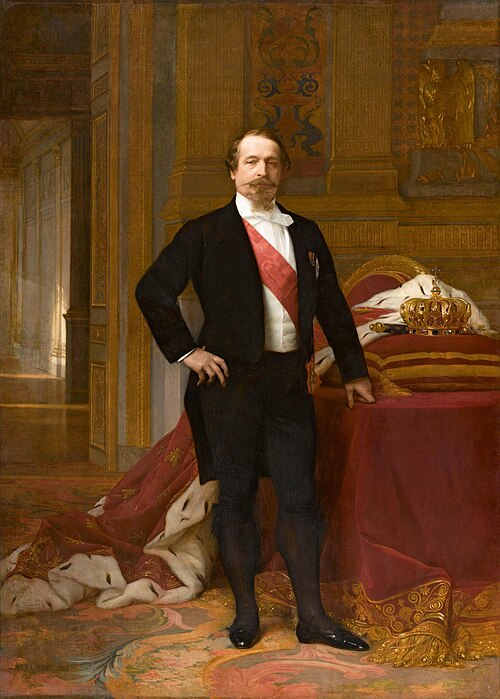
For Karl Marx, Napoleon III was a “grotesque mediocrity”; Victor Hugo lambasted him as “Napoleon the little”; Alexis de Tocqueville, in what was not the famed political theorist’s most sophisticated analysis, dismissed him as a “dwarf”. Yet these men underestimated Napoleon III, France’s first directly elected president and, later, as emperor, its last reigning sovereign. Driven, calculating and with the political instincts of a populist, he outmanoeuvred his opponents to create the Second Empire in 1852, a dream for which he had long been mocked.
Marx, Hugo and Tocqueville, along with most of the French political elite, found this ascension to power barely believable because, before he became president, Louis-Napoleon, as he was known then, was a joke – “the laughing stock of Europe” as one contemporary put it.
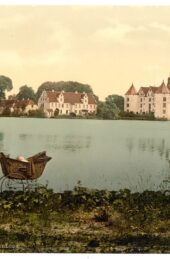
Born into imperial splendour as a Bonaparte prince in 1808, Louis-Napoleon, a nephew of Napoleon Bonaparte, grew up in exile after the (second) fall of his uncle’s Empire in 1815. He lived with his mother in a secluded chateau miles from the nearest town on the Swiss-German border. Obsessed with Napoleon Bonaparte, he memorised his uncle’s memoirs dictated before death in exile on the remote island of Saint Helena and daydreamed about restoring his Empire. This was an absurd reverie; however, when, the heir to the imaginary Bonapartist Empire, Napoleon II, died, Louis-Napoleon appointed himself the imperial pretender. He spent his formative years plotting in taverns, thick cigarette smoked swirling in the air, as he won over a ragtag bag of misfits, mercenaries and adventurers to his dubious cause.
He won over few others, and in 1840, after a second farcical attempt to topple the French government failed, he was imprisoned for life. For most men, this would have ended any further ambition to rule. Yet Louis-Napoleon had astonishing self-belief that not so much bordered on delusion as gleefully leaped across that frontier and went into a hinterland only the mad occupied. It was this self-belief that meant in 1846 he had the confidence to disguise himself as a workman, put a plank over his shoulder and walk out the front gate of the medieval fortress where he was confined and escape to London.
Then came the providential moment he had been waiting for, the 1848 February Revolution. In France, King Louis-Philippe was overthrown and a republic proclaimed. This was to be the largest experiment in democracy thus far in history, with the president directly elected by universal male suffrage. Louis-Napoleon entered the contest. Few thought he would win. The Times confidently trumpeted “that whoever” becomes president “his name will most assuredly not be Louis-Napoleon”. This was kinder than the French press. In his forty years, opined one representative editorial, Louis-Napoleon has shown only “levity, incompetence and stupidity”.
While elites on the left and right poured out vitriol on a man they considered nothing more than an imbecile and a failed adventurer, the French voters took Louis-Napoleon’s programme seriously. He presented himself as an outsider, a man who embraced democracy, but would also provide stability and order after the tumult of revolution. Crucially, he played on the nostalgia for his uncle’s Empire and promised to make France great again. He won the December 1848 presidential election by a landslide, receiving 5.5 million votes – more than all the other candidates combined.
The constitution prohibited Louis-Napoleon from standing for re-election in 1852. Having failed to have this legally revised, he launched a coup d’état on 2nd December 1851. Parliament was shutdown, opponents arrested and an uprising against him on the streets of Paris was crushed by the army.
But it was his next act that showed his political skill. He would put his actions to the people in a plebiscite. “There is no need to spill precious blood. It is sufficient to put a “no” vote in the ballot box,” ran the proclamation. More than 7.4 million Frenchmen voted yes; only 640,000 no. A year later, he held another plebiscite on whether the Empire should be restored. Again, over 7 million voted yes.
For opponents, this was merely robbery under law. Yet, though there was repression and censorship, it was a secret ballot and the vote was not rigged. What critics would not – or could not – accept was that the Empire was popular and authoritarian. “Do not fear the people. They are more conservative than you!’ was an aphorism attributed to Napoleon III. Harnessing the masses behind him was where his originality lay: conservativism could be popular in a world of democratic politics. He was Europe’s first populist.
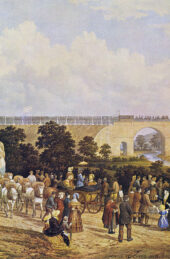
The Second Empire was an illiberal, managed democracy. But it was also a radical regime the likes of which had never before been seen. At its heart was the distinctly modern idea of economic growth. Rejecting the ideology of laissez-faire liberalism that prevailed at the time, the government backed railway expansion, opened up capitalism for the masses and, in the 1850s, the economy roared. Paris was the centrepiece. The transformation of the capital was the Second Empire’s most imperious feat of creative destruction. Medieval shacks were torn down, replaced by wide boulevards lined with spacious apartments, monumental train stations and the famous opera house.
Feted today as one of the world’s great urban landscapes, at the time Parisians did not thank the emperor. The capital became a centre of opposition, particularly as the economic boom of the 1850s gave way to regular downturns in the 1860s. Again, Napoleon III showed political skill. He did what recent French rulers had failed to do: reform to preserve. In 1870, he had liberalised his regime to the point that the British ambassador reported to London it was now more democratic than Britain. Once again going to the people, over 7 million Frenchman backed the so-called Liberal Empire in another plebiscite.
After twenty years in power, it was stunning political éclat. Seemingly secure, Napoleon III had governed France for longer than any ruler since Louis XV, who died in 1774. Just over three months later, however, the Empire fell, and Napoleon III was a prisoner.
Foreign policy was Napoleon III’s downfall. Here the only checks on the emperor were the limits of his imagination and what was possible. As he was a dreamer who frequently attempted the improbable, these proved weak restraints. The Crimean War was a rare success. Allying with Britain, he did what his uncle failed to do and successfully invaded Russia, forcing the Tsar to the negotiating table. At the 1856 Paris peace conference, in a fine peace of diplomatic trolling, a portrait of Napoleon Bonaparte looked down on the powers of Europe that had isolated Frace after the battle of Waterloo. France, it seemed, was once again the eminent diplomatic and military power of Europe.
This proved short-lived. Napoleon III’s foreign policy was a mix of the bold, the indecisive and the artlessly bizarre. For example, in 1862 he invaded Mexico. The Habsburg Ferdinand Maximilian, younger brother of the emperor of Austria, was sent to across the Atlantic to rule, but, despite pouring French men and money into the fight against republican opponents, the regime never consolidated. The French were forced into a humiliating withdrawal; Maximilian died before a Mexican firing squad.
Then there was Prussia. Otto von Bismarck manoeuvred Napoleon III into foolishly declaring an unnecessary war in 1870, thereby uniting the independent, southern and Catholic German states in an anti-French crusade, a crucial stepping stone to the creation of Germany. Convinced that his Napoleonic name meant he must command the French army, Napoleon III proved woefully ill-equipped to lead his men. Suffering from bladder stones which caused him agony, at one point on campaign the emperor was found at a nearby tree, resting his head against the trunk and digging his nails into the bark in a futile attempt to alleviate the pain.
The French lost one battle after another before Napoleon III found himself outnumbered and surrounded at the battle of Sedan. The emperor rode through the battlefield almost certainly looking for death. He did not find it. Instead, he found courage. Unlike Napoléon Bonaparte, he would not abandon his army as his uncle had done at Waterloo, nor would he insist on the suicidal resistance his commander-in-chief urged. Napoleon III put the lives of his soldiers before his honour. He surrendered. He was not thanked for it. Rather, he became the most vilified man in France.
When news reached Paris of the capitulation, the Third Republic was proclaimed. After the Franco-Prussian War, Napoleon III once again went into exile to Britain, finding refuge with his wife and son in Chislehurst, Kent. Here he died in 1873, haunted by the war. On his death bed, he turned to his friend and spoke his last words: “We were not cowards at Sedan,” he said, “were we?”.
Napoleon III’s historical reputation never recovered. “His terrible destiny was to begin with the black flag of massacre,” wrote Victor Hugo, referring to the 1851 coup d’état, “and to end”, at Sedan, “with the white flag of dishonour.” There was, however, more to the Second Empire than this. Just how radically new Napoleon III’s system was has been forgotten because it was copied so much it became commonplace. Up to that time, a regime that embraced technocracy, social reform and economic development through government intervention to manage a mass electorate based on universal male suffrage had never existed.
For many years, Napoleon III repaid the faith voters put in him as an elected monarch; but in foreign policy at least, he proved woefully inadequate to the task of single-handedly directing the French state. Rather than Hugo, it was another novelist, George Sand, who proved more perceptive in her analysis. She recognised that as an individual, the emperor had many good qualities, but, she wrote, “entrusting the destinies of all to a single person is the most culpable and most senseless act that a civilised people can commit”.

Edward Shawcross is a historian and the author of The People’s Emperor: The Unlikely Rise and Spectacular Fall of Napoleon III.