Home » History » Page 78

History

Huw J Davies on The Wandering Army

Huw J Davies on The Wandering Army

Huw J Davies discusses developments in the British Army after fighting the War of Austrian Succession.
Huw J Davies

Your book opens with the Battle of Fontenoy in 1745 when the British, despite superiority of firepower, were defeated by Saxe’s use of the terrain and positioning of his forces. The use of topography by senior officers would seem to be rather an obvious ‘innovation’ –...

Robin Prior on Conquer We Must

Robin Prior on Conquer We Must

The distinguished historian discusses the relationship between generals and politicians in the first half of the 20th century.
Robin Prior

In the First World War mass casualties were suffered in the sluggish trench warfare of the Western Front. Did we see enough involvement by the politicians to attempt to limit those losses? During the First World War British politicians made various but only sporadic...

Books of 2022 From Aspects of History

Books of 2022 From Aspects of History

Our authors and contributors recommend books they've enjoyed this year

Books of 2021 from Aspects of HistoryTimothy Ashby Author of Elizabethan Secret AgentAt the top of my favourites list of recent historical books is Leanda de Lisle´s Henrietta Maria. Although non-fiction, the book reads like a historical novel, with fascinating...

Cheers, Mr Churchill!, by Andrew Liddle

Cheers, Mr Churchill!, by Andrew Liddle

A new book covering Churchill's relationship with Scotland.

Winston Churchill refuses to die. Through film and television - not least The Crown and Darkest Hour - he reappears, chewing cigars and epitomising an imagined British bulldog spirit. He lives on, too, as an ogrish bogeyman, his appalling racial prejudices now freely...

Prince Rupert the Devil

Prince Rupert the Devil

Prince Rupert of the Rhine was portrayed harshly by the Parliamentarians, but was he really so bad?
Eleanor Swift-Hook

Prince Rupert the Devil In September 1642, a month before the first major battle of the English Civil War, twenty-two-year-old Prince Rupert and his younger brother Maurice arrived at Worcester to escort a convoy of valuables to their uncle the king. The princes were...

How the Redcoat Learnt the Art of War

How the Redcoat Learnt the Art of War

The lessons learnt in America led to victory over Napoleon years later.
Huw J. Davies

How the Redcoat Learnt the Art of War By May 1779, the American Revolutionary War had transformed from a regional civil conflict into a global war, and Britain faced French aggression in the West Indies and India. The British government was forced to redistribute its...

Britain in the World Wars

Britain in the World Wars

It was only towards the end of the Second World War that the British stumbled upon the ideal combination of general and politician.
Robin Prior

Three aspects of Britain in the world wars stand out. The first was the reluctance with which Britain entered both wars but then the implacable nature in which it fought them. In the First World War Britain was the last of the Great Powers to enter the war; in the...

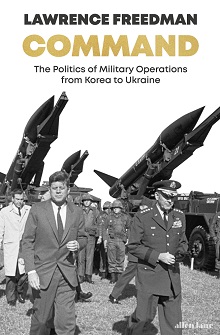
Command, by Lawrence Freedman

Command, by Lawrence Freedman

This is an admirable new study of high command.

Back in the bad old days of the – last – Cold War, NATO held an annual exercise when national leaders and senior military officers war gamed how they would handle a crisis. Called WINTEX, these exercises were constructed within the then tight protocols that governed...

Queens of the Wild, by Ronald Hutton

Queens of the Wild, by Ronald Hutton

A rich historical account of four Goddess-like figures who defy easy categorisation.
James Sewry

Ronald Hutton’s Queens of the Wild: Pagan Goddesses in Christian Europe examines four goddess-like figures from the medieval period to the present day: Mother Earth, the Fairy Queen, the Lady of the Night, and the Cailleach.  Packed with detail and insight – Hutton...

Alexander at the British Library – Reviewed

Alexander at the British Library – Reviewed

Alexander the Great: The Making of a Myth shows his influence, thousands of years after his death.
Oliver Webb-Carter

When Alexander reached the very edge of his vast new empire on the banks of the River Indus, he wept for there were no more worlds to conquer. Having visited the British Library’s new exhibition on the great man, he might have saved his tears because the visitor can...