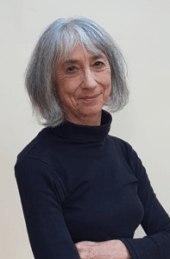
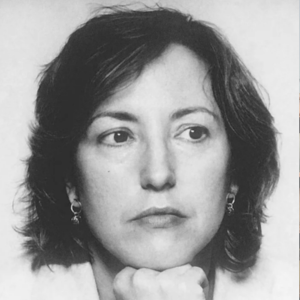
Welcome Daria. Congratulations on the publication of your first novel Sawadika American Girl. What made you decide to write a historical fiction inspired by your own experiences as a Third Culture Kid (TCK) in Bangkok during the Vietnam War?
Thank you so much. I’m excited to share Sawadika American Girl with the world.
Most people aren’t aware that, during the Vietnam War, Thailand served as a major US military outpost with over eight military bases scattered throughout the kingdom. In addition, thousands of American families lived in Bangkok with fathers who worked for the American Embassy, USAID, the CIA, the US Military and as private contractors; mothers who navigated their families through this overseas lifestyle; and kids who went to the International School. I was one of those kids. My father worked for USAID first in Thailand and then in Vietnam. The focus of his work was bringing aid to rural border communities to fight off communism. The experience of growing up in Bangkok in the shadow of the Vietnam War hasn’t really been told before. I always knew in my heart that I would tell it.
It is also an intense Third Culture Kid story. The year my novel takes place, nearly 5,000 GIs were pouring into Bangkok each month on R&R bringing their turmoil with them. Plus, there was serious pressure on American teenagers to behave and not put a foot wrong especially when it came to drugs. This was an impossible ask. These converging forces created an atmosphere that was complex and combustible and often at odds with Thai sensibilities and culture. I understood these underlying tensions and knew it was fertile ground for a novel and an important part of the history of America’s tragic misadventure in Southeast Asia.
Your novel takes a unique approach in showing a different perspective to ‘mainstream’ understandings of American involvement in Southeast Asia. What were you were hoping to convey to readers by approaching your novel in this way?
Making it a coming-of-age story with a 17-year-old female protagonist struck me as a powerful and unexpected way to shed light on the troublesome forces swirling in this overlooked pocket of history. I wanted to show Piper’s perspective because she’s an innocent and because the voices of young women matter. It wasn’t Piper’s choice to move there. It was her father’s. Part of her coming into her own is realizing that behind what appears to be an upscale life in Bangkok – the big house, the servants, the travel – was the war in Vietnam. The United States was pouring tons of money into Thailand so it could maintain its military bases which were critical to the war effort. Making sense of the world in that place at that moment in time was beyond challenging.
The title of your novel is fascinating as Sawadika means both hello and goodbye in Thai. By including this in the title, what were you hoping to convey to readers about Piper’s relationship with Bangkok, and Thailand’s relationship with families like Piper’s?
Like me, Piper is a Third Culture Kid. By the time we meet her in 1968, she has grown up in Thailand, a country and culture that is not her own. As much as it feels like home, she will always be an outsider. The only reason she’s there is because her citizenship country is fighting a brutal, unjust war nearby. Trying to process all that at seventeen was overwhelming. The place Piper grew up in, her ‘hometown’ so to speak, can never truly be hers. That is the point of the title. It is both hello and goodbye, emphasizing that Piper, like me and the other American kids who spent time there, were only visitors.
Why did you decide that it was important to share with readers that Jack had died from the beginning of the novel? Was there ever a version where you only revealed this at the end?
One reviewer wrote that my novel, at first glance, looks like a love story but that it “reads like a memory: humid, specific and quietly dangerous.” That was extremely gratifying for me to read because the novel is meant to be read like a memory. Stories that deal with or orbit around America’s war in Vietnam aren’t happy stories. They are about loss, surviving loss and living with one’s memories. Focusing the story on whether Jack lived or died seemed like a repetition of 100 other stories. Although there is a soldier in the novel, he isn’t the main character. He was a part of her experience. My novel is about Piper, what she went through and the memories that she lives with. So, there was never a version where Jack’s fate is only revealed at the end. In fact, the prelude which signals Jack’s fate is the first thing I wrote. It just poured out of me, and with minor changes, it has remained the same.
The way you write about music, particularly the piano, is deeply intimate and beautiful to read. For Piper, music is its own language and means of expressing herself and understanding the world around her. Are you a musician or do you have an art form that you experience in the same way?
The character of the Thai Prince who studied with the great Chilean American pianist Claudio Arrau is, in fact, based on a piano teacher I had. Music anchors Piper emotionally in a world that doesn’t make sense. The act of playing the piano becomes a private space where she works out her emotions. That aspect is part of my own story. There was a vibrant classical music scene in Bangkok at this time. Renown musicians had Bangkok on their concert tours. This made sense because the Thai King was a talented jazz musician and composed his own music. And as a young girl, the Queen studied classical piano in Paris. I love that thread of the story because no one expects it, but it is true. My life in Bangkok and much of my own interaction with Thai culture was through music.
You provide readers with such vivid descriptions of Bangkok, particularly the food, temples and bustling streets. As a TCK raised in Bangkok, what is something that you have fond memories of, or nostalgia for, that you wanted to include in this novel?
I have several sense memories that I cherish. The one I long to return to is of late afternoons before dinner spent alone in my room. My bedroom windows were tall with dark screens on them. I had an air-conditioner, but we only turned it on at night. The ceiling fan had a beautiful rhythmic creak to it. The light breeze it created made the heat deliciously comfortable. I remember laying on my bed and taking in all the sounds. The insects starting up. A street vendor’s call. Dogs barking. Snippets of Thai from people walking down the street. If I was lucky, I’d hear the first cry of the tokay that lived outside my window. That time was a refuge for me. It was soothing and both located me in the world and protected me. That is a moment I return to in my mind.
One of the pivotal moments in Piper’s character development is her realisation that there are people protesting the Vietnam War. This is largely realised through her reading of the Stars and Stripes newspaper. Why did you decide to introduce this media form to inform Piper?
Remember, at that time, there was no internet, no You Tube, nothing. As teenagers, we were, to a great degree, cut off from information. We had access to Armed Forces radio broadcasts, but that was under the control of the US Military. We got personal mail through the diplomatic pouch. Periodicals and magazines could take months to arrive. In stores around Bangkok, they weren’t widely available. We didn’t have access to programs like the CBS evening news with Dan Rather reporting from Vietnam. The Thai media was tightly controlled and not anything Americans watched, especially since it was all in Thai. We lived in an information vacuum to a great extent. The Pacific Edition of the Stars & Stripes Newspaper was unique. It was editorially independent daily, published in Tokyo and distributed to American forces in Vietnam and at official US locations throughout Thailand like the PX, the Army Medical Unit and the American library. It wasn’t a publication kids cared about that much but when I worked at the library, the Stars & Stripes came to my attention. I had easy access to all the recent issues and months of back copies. For me, as for my main character Piper, reading it was eye-opening. Not only did it have articles that questioned the war, once a week it published the names of all the soldiers who’d died. Because the Pacific edition was based in Tokyo, it wasn’t as American-centric as you’d think and included info about anti-war protests in the States and around the world.
What is one thing you would like readers to take away from reading Sawadika American Girl?
Until recently, the experiences of American women in Southeast Asia during the Vietnam War have been overlooked. Then in 2023 Alice McDermott’s novel Absolution (2023) – the story of the wives who accompanied their husbands to Vietnam in the early sixties – came out. It was followed by Kristin Hannah’s The Women (2024), a novel about the Army nurses who served on the frontlines in Vietnam War that drew on the memories of women who’d served. Sawadika American Girl adds an important narrative to the historical record. I want people to know that the ‘little America’ existed. It happened.
On a personal note, I’ve found that readers tend to find their own meanings in books. They are often different from what the author imagines. I love that and always look forward to reader responses. If you want to know what I imagine a reader might take away it is this. We live in a time of great turmoil in a country that seems like it is always going to war. My hope is that Piper’s story of a moral awakening and how she uses her music to deal with grief will inspire readers to reflect on their own journey through whatever hardships they are experiencing and perhaps turn to the arts for comfort and sustenance. But that’s up to the individual reader.
And have you started work on another project in the meantime? Anything to look forward to?
Yes. Here is what I can say. It is an uplifting story that unfolds during the summer of 2021 when the second Coronavirus strain was swirling, the George Floyd protests were underway and the US withdrawal from Afghanistan was imminent. Stay tuned!

Daria Sommers is a writer and filmmaker, and the author of Sawadika American Girl.
Ella Beales is a researcher, archivist and public historian.