
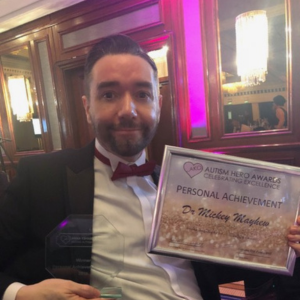
Hello Mickey, and welcome back to Aspects of History. Anne Boleyn has been written about aplenty, but, in The Anne Boleyn Bible, you bring together her historical life, religious beliefs and appearances in popular culture. What made you want to take such an all-encompassing approach in the run-up to writing the book, and what did you hope to add to the existing canon of books about her?
Anne Boleyn is one of those historical figures who seems to generate an almost inexhaustible supply of books, documentaries, dramas and arguments. Everyone has an opinion, and frequently that opinion has been formed long before they’ve encountered the historical evidence. She’s either a feminist icon, a scheming seductress, a religious reformer, a victim of Henry VIII, or some combination of the above. Occasionally, she’s all of those things before breakfast.
I wanted to look at Anne as a historical person, but also at the extraordinary life she’s enjoyed after her death. What did she actually believe? How much can we know about her final days? Why has she been portrayed so differently across the centuries? And how did a woman executed in 1536 become such a prominent figure in modern popular culture?
I didn’t want to write another book that simply recycled the familiar tropes. Anne deserves better than being confined to the same old collection of myths, accusations and romanticised narratives. Equally, I wasn’t interested in replacing one simplistic interpretation with another.
The Anne Boleyn Bible was an opportunity to bring together history, religion, biography and cultural history, while acknowledging that the evidence doesn’t always give us the neat answers we’d like. The result, I hope, is a book that encourages readers to question what they think they know about Anne.
Your PhD explored the online fandom surrounding Anne Boleyn and Mary Queen of Scots. What did you learn about Anne’s enduring appeal, and have readers’ responses to The Anne Boleyn Bible, surprised you over the last three or so years?
One of the most interesting things about historical fandom is that people don’t simply consume history; they actively participate in it. They debate, reinterpret, defend, challenge and sometimes passionately argue over people who have been dead for centuries. Anne Boleyn is particularly fascinating in this respect because she has become much more than a historical queen. She’s a symbol onto which successive generations have projected their own concerns about gender, power, sexuality, religion and the treatment of women.
Online communities can bring people together through a shared interest in the past, but they also demonstrate how personal our relationship with history can become. People aren’t necessarily interested in Anne for the same reasons. For some, it’s the Tudor court and its political intrigue; for others, it’s the religious upheaval, the drama of her downfall, or the way her story has been retold in books, television and theatre.
My research into Anne and Mary made me particularly interested in the relationship between the historical woman and the figure created by later generations. The two aren’t always the same, and the gap between them can tell us a great deal about the people doing the interpreting.
As for the response to the book, it’s always interesting to see which aspects capture readers’ attention. Anne is a subject people approach with, *ahem*, strong opinions, so any attempt to look beyond the familiar narratives is bound to provoke discussion or online spats. If a book encourages somebody to reconsider an assumption, question a received story or investigate something further, then it has done something worthwhile.
You have said before that you are not interested in repeating the same old tropes when it comes to history. Did research change – or might it have changed since – your own view of Anne, particularly on the question of her demise? How comfortable are you with leaving apparent intangibles like that unresolved?
The difficulty with Anne is that so much of what we think we know has been shaped by hindsight, propaganda and centuries of retelling. Once a particular version of events becomes established, it can be surprisingly difficult to dislodge, even when the evidence is less conclusive than popular accounts suggest. However, I’m quite comfortable acknowledging uncertainty. In fact, I think it’s an essential part of historical writing. We should distinguish between what the evidence demonstrates, what it suggests, and what we would like to be true. That doesn’t mean refusing to draw conclusions; it means being honest about how firmly those conclusions can be supported.
Research can certainly challenge our assumptions, and new interpretations can emerge as we revisit familiar material. But I don’t believe we should manufacture certainty simply because an ambiguous ending is less satisfying than a dramatic revelation. Sometimes the most responsible answer is that we don’t know. That’s why I often cringe when I see someone declare themselves a Tudor ‘expert’; I’m like, ‘Really?! Personal friend, were you?!‘
The book explores Anne’s religious convictions, her elusive executioner and her many incarnations on screen and stage, from Geneviève Bujold and Natalie Dormer to Six and Jodie Turner-Smith. Which of your discoveries most surprised you, and what do these different portrayals reveal about how different generations continue to interpret Anne?
What fascinates me most is the sheer adaptability of Anne as a cultural figure. She can be presented as a serious religious thinker, a political operator, a romantic heroine, a tragic victim or a formidable woman. Different portrayals emphasise different aspects of her life, often telling us as much about their own period as they do about Anne herself.
Geneviève Bujold’s portrayal in Anne of the Thousand Days gives us an Anne shaped by the conventions of historical film and romantic drama. Natalie Dormer’s Anne in The Tudors belongs to a very different television landscape, one that places considerable emphasis on sex, power and personal ambition. And then there’s Six, which takes the wives of Henry VIII and turns them into contemporary musical performers reclaiming their own stories.
Jodie Turner-Smith’s casting as a black Anne also prompted discussion about how historical figures are represented and who gets to embody them on screen. These productions aren’t interchangeable, nor are they necessarily trying to answer the same historical questions. Each makes choices about which parts of Anne’s story matter most to its intended audience. I wouldn’t say that one portrayal gives us the definitive Anne. Rather, the variety is revealing. Every generation finds something different in her, and each adaptation makes its own argument about what kind of woman she was. The challenge is to enjoy those interpretations while remembering that historical drama and historical evidence are not the same thing.
You’ve argued that history should be fun, and that historians shouldn’t lose their sense of humour. How important was that approach to The Anne Boleyn Bible specifically, and is it as easy to bring that same spirit or mood to other periods?
I think humour is an entirely legitimate part of historical writing. There’s a persistent idea that if a subject is serious, the writing must also be relentlessly solemn; Tudor history is often presented with a dreadfully po-faced slant. I don’t subscribe to that. You can treat the past with respect without writing as though you’ve personally been summoned before the Privy Council to have your palms spanked. Humour can also be a useful way of making complicated subjects accessible. It punctures an overconfident assertion, exposes the absurdity of a familiar myth, or reminds readers that historical people were human beings rather than cartoons in elaborate costumes.
With Anne, the challenge is to balance that lighter approach with an awareness of the consequences of the political and religious world she inhabited. Her story involves power, imprisonment, execution and the destruction of a reputation. Those things shouldn’t be trivialised. But neither does their seriousness mean that every discussion of Anne must be delivered in a funereal whisper.
I also think a sense of humour helps us question the stories we inherit. Some historical myths have survived because they’ve been repeated so often that challenging them can feel almost sacrilegious. A little irreverence can encourage readers to step back and ask whether a familiar story actually stands up to scrutiny.
And yes, I think that approach travels across different periods. The details change, and every subject has its own sensitivities, but the basic principle remains the same: history should engage people. It should make them curious enough to keep reading, thinking and asking questions.
Being entertaining doesn’t mean abandoning scholarship. Ideally, the two should work together. If readers finish a book having enjoyed themselves and discovered something they didn’t previously know, I consider that a success.
You’ve written about both Anne Boleyn and Mary Queen of Scots. What is it about these two women that continues to fascinate readers, and what do they reveal about the way history treats powerful women?
Both women have acquired reputations that extend far beyond the surviving evidence about their lives. They were politically significant, they became subjects of intense controversy, and their stories ended in ways that encouraged later generations to turn them into symbols. Their lives also demonstrate how difficult it can be to separate historical women from the narratives constructed around them.
I’m interested in the way those narratives change. A woman condemned by one generation may be celebrated by another, while familiar accusations can persist long after the circumstances that produced them have been forgotten. Looking at Anne and Mary together helps us examine not only their individual histories, but also the assumptions that shape how we remember women who exercised or challenged power.
Do you think popular culture helps or hinders our understanding of history?
It can do both. Historical drama, fiction and theatre can introduce audiences to people and periods they might never otherwise explore. A compelling performance can make a historical figure feel immediate and human in a way that a list of dates and events sometimes cannot.
The danger comes when an entertaining interpretation is mistaken for established fact. Productions have to make choices, simplify events and create dramatic momentum. That’s perfectly understandable, but viewers should be encouraged to distinguish between what a production invents or emphasises and what the historical evidence supports.
I’d rather people became interested in history through a television drama and then went looking for the books than never became interested at all. The important thing is to keep asking questions after the credits roll.
What do you hope readers take away from your work?
I hope they come away more curious and a little less willing to accept familiar stories without question. History isn’t simply a collection of settled facts handed down to us by people in academic robes. It’s an ongoing process of investigating evidence, testing interpretations and recognising the limits of what we can know.
I’d also like readers to feel that history belongs to them. You don’t need to be an academic or a po-faced ‘expert’ to ask intelligent questions about the past, and you certainly don’t need to abandon your sense of humour to take it seriously.
If my books encourage people to look again at a familiar figure, challenge an old assumption or discover a new historical interest, then that’s exactly what I want them to do.
Talk us through what you’re working on now that might similarly challenge familiar stories about the past. What are you currently researching?
I’ve been working on a book about Catherine of Aragon, as part of a larger Six Wives project. This gives me the opportunity to revisit another woman whose identity has often been defined by her relationship with Henry VIII. Catherine is often left coughing the metaphorical exhaust smoke from Anne Boleyn’s showy little runaround, but she had a much longer and more complicated life than that label suggests. I’m also interested in her afterlife: the way she has been represented in novels, films, plays and other forms of popular culture, and how those portrayals have shaped her reputation.
I’m also working on an Ed Gein book that explores criminology, psychology, cultural media and the true-crime industry. It’s a very different subject from Tudor history, but there are interesting questions about how real people become cultural icons, how stories develop around them, and how popular representations can obscure as much as they reveal. The online community regarding Ed is, shall we say, as ‘passionate’ as that regarding the Tudors. I enjoy moving between subjects because it makes you question your own assumptions. The sixteenth century and the modern world may seem far apart, but people in both periods have been fascinated by scandal, power, violence and the stories we tell about those who transgress social boundaries.
Ultimately, I’m interested in the gap between what happened, what we can establish about it, and what later generations decide it means. That gap is often where the most interesting questions begin.
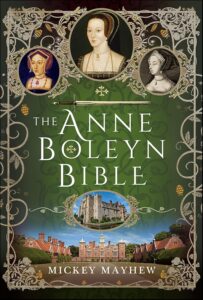
Mickey Mayhew is an historian and the author of The Anne Boleyn Bible.
Zeb Baker-Smith is a freelance journalist and Editor at Aspects of History.