
What first attracted you to the period or periods you work in?
My work has taken in many areas, but my focus has been World War Two and I suppose I have to ask myself where that interest came from. There’s no doubt I was influenced by what I read as a child – everything from Warlord magazine and Commando books to Alistair MacLean and Jack Higgins. But one of the things which ignited my interest in resistance and the evasion lines, in particular, was the BBC TV series Secret Army which hooked me as a child and which I still revisit every few years. My passion is story-telling, bringing people and events alive for modern readers.
Can you tell us a little about how you research? Has the process changed over the years?
Almost all my stories have started with a person – a meeting or an interview. I think that comes from my background in journalism. I need a human being to spark an idea and set me off on a story. The Nazi Ghost Train, for instance, came from my friendship with RAF evader John Evans who showed me a letter from a member of the Belgian resistance which referenced the train. From there, I began tracking down relatives and – even at this distance in time – two people who were on the train. Archives are, of course, essential: family archives and public archives, such as those at Kew and the Imperial War Museum. For this latest book I also spent time in Brussels and found a file on the train created by a wonderful man named Oscar Catherine. I bless his memory. Has the process changed? Well, of course, the internet can be a great help, particularly in finding where files are held and tracking down relatives of the people whose story I want to tell.
The common phrase is that history is written by the victors. Do you think this is true?
I think history is constantly being revisited, revised and reappraised, so I don’t think it’s a static thing, moulded and stamped in one moment of time. Plus, every country obviously has its own perspective. After World War Two, in Britain, there had to be a sense of triumph – overcoming the Nazis was an achievement which warranted celebration, and it was, especially in popular culture through war memoirs and, perhaps most markedly, cinema. Obviously, whatever period we are writing in, we are making a conscious decision as to which stories we tell, but the key is to tell them as best and accurately as we can.
Are there any historians who helped shaped your career? Similarly, can you recommend three history books which budding historians should read?
My writing room is filled with more than 1,000 books, many of which were written by veterans or historians in the 1950s, 1960s, and 1970s. Looking more recently, I love Helen Fry and Clare Mulley’s work – I think The Spy Who Loved is fantastic – and John Nichol and Tony Rennel’s Home Run, and Guy Walters’ Hunting Evil. As my passion is storytelling, I’m a big fan of Damien Lewis (no relation!) and Alex Kershaw.
If you could meet any figure from history, who would it be and why? Also, if you could witness any event throughout history, what would it be?
Well, I’m probably a bit of an outlier here. My passion is the story of ‘ordinary’ people. I’ve taken this ethos through journalism, ghost-writing, and my own books. I greatly admire many people in the resistance in Belgium and France. They risked everything – not only their own lives but those of their families too. And I’m not just talking about people who have justly had recognition like Jean Moulin but everyday working people like the driver of the ‘ghost train’, Louis Verheggen, who helped save 1,400 lives and went back into work the next day. An event? As a journalist, I’m going to say I would have loved to have been embedded with the men who took and held Pegasus Bridge.
If you could add any period or subject to the history curriculum, what would it be?
I’ve written some non-fiction books for children and have managed to include an RAF evader and a Far East veteran. Teaching is hard enough without me suggesting more subjects but what I’ve found from the experience of writing those books (which were supplied to schools) is that today’s children love a good true story of derring-do as much as any child ever did!
If you could give a piece of advice to your younger self, either as a student or when you first started out as a writer, what would it be?
I met and interviewed many war veterans for newspapers before I started writing books – especially in the 1990s. I should have taken a Dictaphone to those meetings. As someone who keeps and records everything this is a mistake which haunts me!
Can you tell us a little bit about the project you are currently working on?
A new look at the lives of some incredible prisoners of war for whom the war very definitely did not end with their capture. I’ve been given access to a most remarkable archive – plus several family archives. I’ve already uncovered the life of one of my new favourite people of the war. An astonishing, brave, and selfless man. No medals. Forgotten by history. My ambition is to bring him into the light.
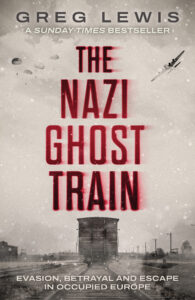
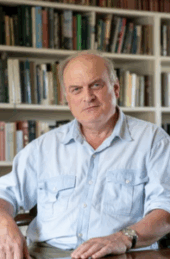
Greg Lewis is a writer with a keen interest in resistance, evasion, and escape, and the author of The Nazi Ghost Train, his most recent book.