
Peter Kasl, your memoir begins through the eyes of your eleven-year-old self. Was it revisiting childhood memories and those perception of the events surrounding your escape from Czechoslovakia that drove the writing of this book?
I remember all my experiences in that time like it was yesterday. I had thought about putting it all on paper for the last 20 years to recount the experiences. Life got in the way, but I finally had the opportunity to devote time and put the book together in 2025. It was a 6-month process.
The book tells of an environment of constant surveillance, pressure, and indoctrination. What were the earliest moments when you realised that your family was living under a system built on fear?
It was very early on, since my parents and grandparents were anti-communists even before I was born. When I was 8 years old, I already sensed hostility towards us. Parents had to re-educate and correct what was drilled into our heads in school. Yes, the indoctrination process in schools started very early. That was intentional and calculated.
The escape itself involved thorough preparation and significant risk for several families. How did your parents manage to balance secrecy with trust and what can you recall about the atmosphere at home as the escape plan was set in motion?
As I describe in the book, no one could know of our parents’ plans to escape. My brother and I were left in the dark and so were all relatives including the grandparents. If anything was mentioned by accident and just the idea of thinking about escaping, that was punishable by prison time. Having a thought of escaping was a punishable crime.
The journey to the West from your hometown near Plzeň sees you cross through forests and borders and stands out as one of the most dramatic episodes in the book. Do any particular moments during the escape still stay with you today?
Initially the sight of the sea for the first time (Adriatic Sea) was incredible for me. I remember every aspect of the escape but the most polarizing moment was when we were climbing the deep forest from Yugoslavia (now Slovenia) and standing on the edge of the border with Austria and looking down on the winery fields on the Austrian side. I had never seen wineries before, and the realization hit me at the time that we were not coming back. The front cover of the book illustrates what I had seen from the top of the hill.
Having reached the USA, you and your family faced the challenges of refugee life and rebuilding from nothing. What was it like to grow up as an immigrant in freedom of the West and how did those initial years influence the life you have since led?
The biggest challenges as being a refugee were in West Germany during the 11 months stay there, but once we came to the USA as legal immigrants, it got much easier. United States roots for your success. The country wants you to assimilate as quickly as possible and we did. We as kids learned English relatively quickly but it was little more challenging for our parents.
Those initial years taught me to have gratitude, respect for the country that offered us every opportunity by pursuing our personal and professional goals.
You returned to Czechoslovakia in the 90s – how bewildering was it to return after several years? Was it noticeably different to what you could remember of life behind the Iron Curtain?
Our first a visit in 1992 was eye opening. The country had deteriorated even more since 1983; we were in shock. The sheer despair in people and the surrounding areas was just beyond sad. Everything had gotten grayer and duller since we had seen it in the 80’s. Seeing our grandparents and other relatives was the highlight of our first trip back for sure.
The book draws parallels between the propaganda of the Cold War era and what you see as modern forms of authoritarianism. What lessons do you think might be most urgent for readers to ponder on in 2026?
History will repeat itself if no one studies the past. Unfortunately, the western world is flirting with the idea of having a more socialist/communism system under the name of equity. The same approach was used by the Communist Bolsheviks in the past.
Communism, Socialism, Fascism and other left-wing views always fail because it requires individualism to be suppressed at every aspect of life. Every aspect of their indoctrination had the opposite and negative effect on the society. The bigger the government, the smaller the citizen. Human beings have a God given right to pursue their dreams and ambitions by their means and abilities. That is a cornerstone of the US constitution.
Freedom is passed on by educating the future generation. We are only one generation away from losing it if not thought.
Once you lose it, it takes generations to get it back by sacrifice and spilled blood unfortunately.
What’s next for you after the release of Escaping the Grip of Eastern European Communism?
I am planning to write a new book with my brother as a co-author about the aftermath of post-communist Eastern European. We had the opportunities to visit that part of the world frequently in the 90’s and discussing the corruption, wild west mentality in people as Communism created a massive, chaotic vacuum and social instability.
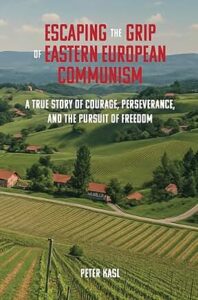
Peter Kasl is the author of Escaping the Grip of Eastern European Communism.