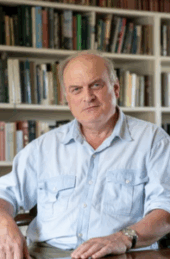

Melanie Singh Hughes, what first attracted you to the period or periods you work in?
The period from the end of WW1 to 1960 was one of tumultuous change. Old empires fell, new republics were formed, fascism and communism came into power, leading to genocide and huge social upheaval and change.
During that time women’s lives changed more than they had for centuries. The notion of women having free will and economic independence was fought for and won.
The life of Nita, the heroine of my novel War Changes Everything, like many of her generation, was one defined by war. Without WW1 she would not have been born, without WW2 she would never have travelled to India as part of a troop convoy. We see that war is a catalyst for social change.
Nita was a modern woman in a not yet modern age. She (and others like her) changed social mores, but there was no neat, clearly defined pattern to follow. They changed things with their lives, sometimes well, sometimes not. It was a life lived perhaps recklessly, full of love and loss and an embracing of experience. But without women like her, my generation would still be stuck in the strait jacket of rigid dependence and so-called morality that our grand-mothers suffered from.
As Nita says at the end of Midnight Legacy, having lived through the economic hardship of the aftermath of WW1, the rise of the fascist movement under Moseley in London in the 1930s, the Blitz, travelling across the Atlantic during the Battle of the Atlantic, living in India first in an air force base in Ambala and then as a free woman in Lahore, then the bloody civil war that was Partition,
“We are history’s heirs. The past defines us and we define the future. There is no escape from it.”
Can you tell us a little about how you research? Has the process changed over the years?
I have researched my three historical novels partly by luck and partly by effort! The luck was when my husband and I had the sad duty of clearing his mother’s flat after her death. We found an old suitcase that contained not merely the story of her life, but also that of her times. She kept everything. Copious diaries, letters, photographs, bills – you name it, she kept it. It was an absolute treasure trove. She had spoken, sometimes at length, of her past and we knew she had had a full and eventful life, but this was a revelation. And my great good fortune is to have a very generous husband who lets me plunder his family history and ransack his memories.
The effort came in when I read everything I could lay my hands on about the people, places and events of the times I was writing about.
I went to India to research and see first-hand the places I wrote about and I found there the wonderful Mr Bhola, in the bookshop of the Imperial Hotel in Delhi, who made it his mission to share his encyclopaedic knowledge of the Raj and Partition and found many of the important and obscure sources that are only published in India. You could also say it was luck finding him!
What proved inspirational for all three books about WW2, India during the Raj and then the terrible bloodshed of Partition, were the many books and articles I sourced online which were individual accounts of these events and provided a vivid kaleidoscope of the times they lived through and the events they witnessed.
The common phrase is that history is written by the victors. Do you think this is true?
Yes, undoubtedly. The victor controls the narrative. The truth comes later, if at all.
Are there any historians who helped shaped your career? Similarly, can you recommend three history books which budding historians or writers of historical fiction should read?
Well, I am not a historian. But, as a writer who is fascinated by how the past defines the present, I would recommend that anyone who is interested in India reads anything by William Dalrymple, not only for the depth of his knowledge and incisive overview, but for his empathy and understanding which evokes his subject with such power.
Also the Forgotten Voices books were an education and a source giving depth and colour to the times they describe.
If you could meet any figure from history, who would it be and why? Also, if you could witness any event throughout history, what would it be?
I would like to meet Krishna Menon. There is a lot about him in War Changes Everything.
He was the charismatic barrister who plotted the downfall of Empire from the Inns of Court. A man of many and varied achievements, brilliant barrister, co-founding editor of Penguin Books, instigator of the Travelling Library, he ran the India League. Totally non-violent, he was constantly tailed and harassed by Special Branch and bore it all with wry humour, offering the shelter of his umbrella and pints of beer in the pub to his unfortunate pursuers.
Lord Listowell, Viceroy of India, said of him “he suffered mere mortals not a lot and fools not at all.” He could be witty and sardonic, but also oddly sensitive and kind, though he hated being caught at it.
In my book I describe him as “Lady Bracknell in a lounge suit.”
I suppose I would choose WW2. Then I could better understand the aftermath and its abiding influence on our present.
If you could add any period or subject to the history curriculum, what would it be?
The history of the 20th century, a time when so much changed so radically that we still, in our present world, feel the aftershock. The actions of the super powers of today are rooted in the twentieth century.
If you could give a piece of advice to your younger self, either as a student or when you first started out as a writer, what would it be?
Be persistent. Do not give up or become disheartened. Nothing worth having comes easily or without a price. As Churchill said, “Keep buggering on.” Can I say that?!
Can you tell us a little bit about the project you are currently working on?
It is completely different. When I first started writing for Ken Russell on his film and BBC series Lady Chatterley – the filming took place in the beautiful house and park at Wrotham. Many films have been filmed there.
I wandered through that incredible house with its many artworks and magnificent landscaped grounds, marvelling at the knowledge and taste of the people who had collected the art and preserved this history. So, the story, a ghost story, is about them and a love letter to that place!
The shoot was such an unhappy one that to spend a summer walking through that enchanted house and garden was a consolation and delight.
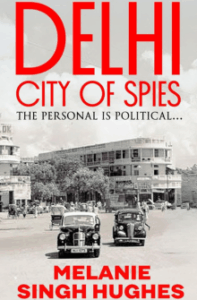
Melanie Singh Hughes is the author of Delhi – City of Spies, the true story of an unsolved murder set in Delhi in the 1950s, which was published in October 2025.