
John, many congratulations on the new book. Can you explain what inspired you to write about Sir Gruffydd Donne as the subject of the novel when there are so many better-known medieval Welsh figures?
The whole undertaking of research and novel-writing goes back to the Covid lockdown in 2020. Rooting around, I found a family history chart of my wife’s that went back to the fourteenth century, and was straightforward to confirm. This led straight to the large and ever present Donne family. To start with, I bypassed them as with the help of other researchers and the internet, the story went back through kings and rulers of Dyfed and the Menapian settlers from whom the usurping emperor Ceris ap Caradog (Carausius, subject of my last book) came. As a complicated, little known and dramatic period of history, that captured my interest first. I give a talk about that rebellion that leads through the Donnes on the way, and I realised in describing the various generations what a fascinating story there was there, too.
Why do you think Gruffydd Donne has been relatively overlooked in popular histories of medieval Wales?
Welsh history has always been peripheral to those outside Wales. My reading, particularly Sharon Penman, has taught me much about other men who called themselves princes of Wales, but most known, of course, is Owain Glyndwr, which in the end caused great traumas for the Welsh people. Gruffydd’s grandfather making the decision to support his uprising had the consequences told in the book. Glyndwr’s disappearance and death are based on rumour and add to the mystique.
What was the most surprising thing you discovered while researching the Donne family and did this reveal anything about the relationship between medieval Wales and England?
The size of this family over the generations and their relationship to events seen as English. Not just Gruffydd and Agincourt, but his son Sir John, who through his support for Edward IV in the Wars of the Roses allowed his burial at Windsor castle. The line of Sir John’s son, another Gruffydd, can be followed to our present king.
How did you approach writing a character whose life was caught between Welsh and English loyalties and what challenges did you face in balancing writing accurate historical events with making the story engaging as a novel?
Gruffydd was conflicted. It was expected that the family would give military service to the English kings. Before him, in campaigns in Scotland, Ireland and France including Crecy, these Welshmen were leading their soldiers and archers. I have endeavoured to make all the historical events accurate in place and time and sometimes bent the story around them.
What challenges did you face when reconstructing everyday life in 15th-century Wales and France?
One amazing benefit of the internet is that I could identify and visit all three of the great Kidwelly estates. Today they are functioning farms, but all have some fifteenth century traces. That fed my imagination.
Gruffydd’s family history was quite influential in contributing to his life. To what extent would you argue that Sir Gruffydd Donne is a product of his circumstances rather than a master of his own choices?
Gruffydd had to serve; there was no real alternative. Tainted by his grandfather’s treason in 1403, he was not formally pardoned until 1413. He was 8 years old when taken to view the siege of Kidwelly castle! He spent much of his adult life in France, being recalled and reposted to more and more important military and administrative posts.
Throughout this book, the conventional ideas of heroism through Donne’s character are challenged. To what extent does Sir Gruffydd Donne’s reluctance towards warfare challenge the importance of loyalty, particularly when his devotion to serving his king and country is placed under immense strain and there is a constant threat of being condemned as a traitor?
I have portrayed his military and emotional developments in parallel. He saw much wasted life, as the English hold on French territory slipped away. Richard, Duke of York, had awarded him many French estates, confiscated from enemies, but I think his Welsh roots drew him home, to a family he saw little of, and he cared little for France. His musings, as I have written, reflect on home lands, family roots and belongingness.
Sir Gruffydd Donne’s character is portrayed as brave, honest and compassionate, but did your view of Gruffydd change as you researched and wrote his biographical novel?
I think, probably as with all authors, you grow to like your characters the more you ‘know’ them. Obviously, his emotional responses have some similarities to mine.
Is there a particular scene or moment in the book that you found especially difficult or rewarding to write?
The romantic bits about Joan were fun to write, the denouement (spoiler alert!) where he discovers he is married to Owain Glyndwr’s granddaughter and the circle of history turns was also rewarding as that enabled me to develop the story of Glyndwr’s disappearance. Gruffydd’s death was harder as it was the end for me and our relationship, as well as him.

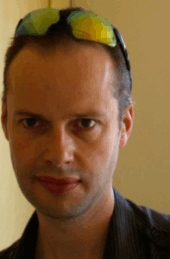
John Pitts is a retired doctor, based in Wales and the author of Sir Gruffydd Donne: Knight of Kidwelly.
Fiona Bicja is an Editorial Intern at Aspects of History.