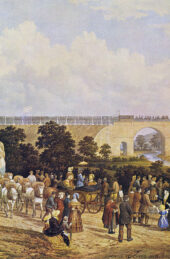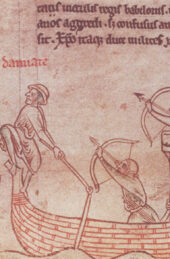
In April 1521, three famous subjects of the Holy Roman Emperor Charles V were risking their lives on three different continents. Martin Luther was standing before the emperor in person at the Diet of Worms, where he defied all the powers of Europe in the name of conscience and the Word of God. At the same moment, Hernan Cortés was closing the noose around the Aztec capital, Tenochtitlan, preparing for the final assault that would begin a few weeks later. And Ferdinand Magellan was establishing the first Spanish presence in the Philippines. He was the one whose luck ran out: he would be killed just over a week after Luther’s confrontation with their sovereign.
These stories are usually told separately. One of them we call ‘the Reformation’, the other two ‘European expansion’ or ‘the first global age’. The momentous religious divide which Luther provoked does not impact much on the way we think about global encounters. The empires which Cortés, Magellan and their successors established were assertively Catholic. European Protestants were late to the imperial race, and when they joined it in earnest, a century later, we see their efforts as different in mood: pragmatic, secular and commercial.
But we have been wrong to separate these two stories. Protestants in the sixteenth, seventeenth and eighteenth centuries were genuinely committed to taking their gospel to the world’s peoples. They were, as they saw it, trying to export Europe’s Reformation to the rest of the planet.
There are several reasons that historians have not really noticed this widespread, centuries-long missionary effort – fragmentary sources, misleading rhetoric at the time – but there is one above all: it did not actually yield many converts.
There were some: substantial Protestant communities amongst Native Americans, in Sri Lanka and southern India, in Indonesia, as well as promising communities in Taiwan, Brazil and elsewhere that were snuffed out by political failure. But given the vast scale of the effort, the harvest was pretty meagre. That’s what makes the story interesting. That failure shows us how Protestants were beginning to see the world around them, and reveals the imaginative leap that it took to preach their gospel across deep cultural gulfs in the poisonous context of early imperialism.
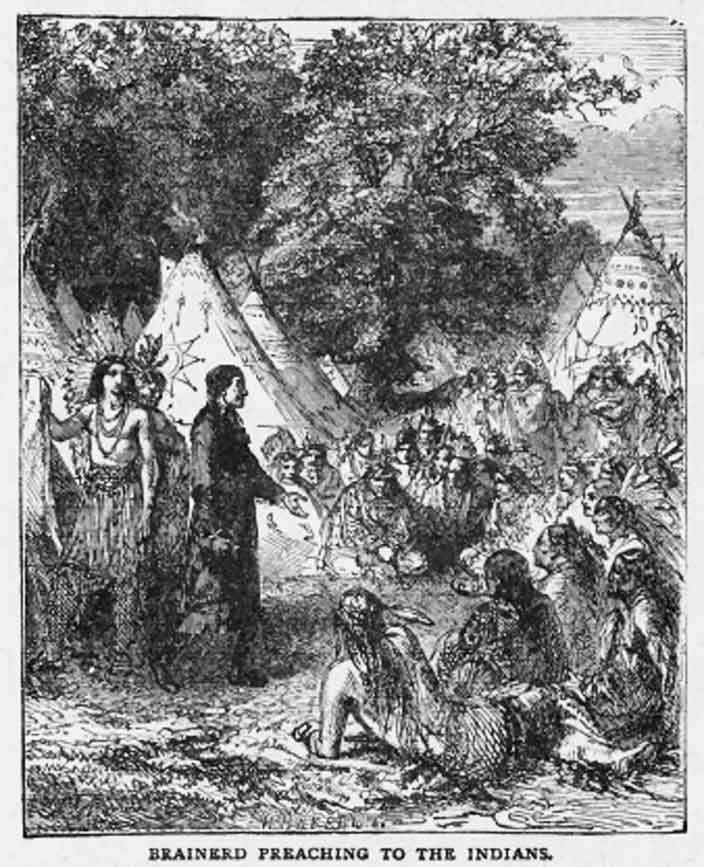
For example: take the most famous Protestant missionary of the eighteenth century, a sickly Puritan named David Brainerd, who spent three years preaching to Native Americans before his untimely death, aged 29, in 1747. The first two years of his mission were fruitless. He spoke no Native American languages and was subject to long bouts of spiritual depression. He was able, at best, to harangue audiences for their sins through an interpreter. But then, suddenly and unexpectedly, his preaching sparked a major religious awakening amongst the Lenape people of Crossweeksung, New Jersey. The flame burned brightly until his health failed the following year. After his journal was published, his story was treasured by evangelical readers who had no wish to explain the mystery of his success. It simply proved that God can work through even the weakest vessel.
But there is another explanation hiding in plain sight. When he moved to Crossweeksung, Brainerd had just changed his interpreter.
The new man, Moses Tatamy, was not only an excellent linguist; he was himself a convinced Evangelical Protestant, and he did far more than just translate. After Brainerd’s sermons, Tatamy would remain behind to explain what had been said and to counsel hearers individually. He was with them, Brainerd wrote, ‘day and night’. He also changed the substance of Brainerd’s preaching, steering him away from hellfire-and-damnation and towards an emotional focus on Christ’s sufferings. Brainerd himself fulsomely acknowledged his debt to Tatamy, though was still confident that he was the missionary and Tatamy merely the interpreter. In fact they seem more to have been partners, and Tatamy went on to become a preacher in his own right. But Brainerd’s hagiographers wrote Tatamy out of the story. Popular Evangelical drawings of Brainerd’s mission always showed him as a solo preacher.
Brainerd was, to be sure, a remarkable man. But he was also, like all of us, a person of his time. It was not easy for him to believe his Native American brothers and sisters in Christ could really be his equals and partners. The Evangelicals who celebrated his story were not ready to entertain such an idea at all.
His story is one of the compelling examples of what early Protestant missionaries achieved – and of what they left undone. We can condemn their for their blinkered failures of imagination, and heaven knows there was plenty of that: above all, their lethal refusal to see the evils of the slave trade for what they were. But we can also see these people just beginning to break out of their own cultural context and starting to see the world through other people’s eyes. If their failures seem obvious to us, that only shows how far their efforts changed the world that we now live in.
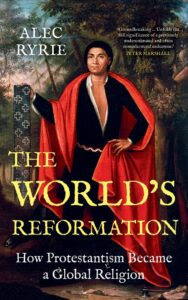
Alec Ryrie is a professor at Durham University and the author of The World’s Reformation: How Protestantism Became a Global Religion, published by Yale University Press.
You can listen to a full conversation with Alec here via the Aspects of History podcast feed.