Who was Edith Tudor-Hart? For a long time, and especially after the revelation of her crucial role in the creation of modern Britain’s most notorious spy ring – the Cambridge Five – she existed more as a cipher than as a real person. I first encountered her name well over a decade ago. At the time, only a few facts were known about this elusive woman: she was an outstanding political photographer and Jewish communist activist from Vienna who had studied at the Bauhaus, married an English doctor and emigrated to London in the early 1930s. She was also the person who, in 1934, had conceived the idea of recruiting Kim Philby – the husband of a close friend – as a Soviet agent. For this reason, in the much-quoted, enigmatic phrase Anthony Blunt used decades later when describing her to his MI5 interrogators, she came to be known as the ‘grandmother’ of the Cambridge spies. Yet these details – so often reiterated in espionage histories or mentioned in passing in discussions of her photographic work – failed to offer a satisfactory portrait of the woman behind the myth. In fact, the two defining strands of her story, photography and politics, were deeply intertwined; her biography hinted at a narrative far richer than most accounts suggested.
I began delving into her life for an earlier book I wrote about German-speaking émigrés who settled in London after escaping the Nazi threat, entitled The Exiles: Actors, Artists and Writers Who Fled the Nazis for London. One chapter focuses on Edith Tudor Hart and her younger brother, the photographer and cinematographer Wolfgang Suschitzky, briefly exploring their work in the context of this community. They both belonged to a group of young, talented photographers from Central Europe whose bold visual style offered a refreshingly modern way of portraying the world around them. Viewing Britain through foreign eyes, they depicted a socially divided and often eccentric country, steeped in age-old traditions yet also poised on the brink of profound change. In many ways, caught between the menacing rise of fascism and the danger of impending war, they were also responding to an emerging historical threat. This is particularly true in Edith’s case, as the originality of her gaze was coupled with a strong belief in photography as a political weapon and with her covert existence as an agent working for the Soviet Union.
Her conviction that the camera could fight social injustice and that communism offered the only remedy to poverty and capitalist exploitation had taken root in the Vienna of her early youth. Here, she had been exposed to some of her country’s most exciting artistic and musical trends, new ways of thinking about social issues, cutting-edge developments in psychology and science, and an intensely politicised atmosphere. In this respect, researching her Austrian background for A Woman Named Edith became a journey into an exceptionally vibrant environment, where a wealth of cultural achievements and radical ideas thrived alongside the destructive forces of growing anti-Semitism and the inexorable rise of right-wing political extremism.
Born Edith Suschitzky in 1908, Tudor Hart grew up surrounded by the books of her family’s socialist bookshop, as her father and uncle – the brothers Wilhelm and Philipp Suschitzky – were the founders of the city’s leading bookselling and publishing enterprise devoted to socially conscious literature and to the education of the proletariat. And there was more. Edith’s aunt founded and ran a renowned dance school rooted in the principles of the modern dance movement and partly inspired by Soviet political cabaret, while some of her cousins pursued careers as professional dancers and musicians. The family as a whole, though belonging to a middle-class, assimilated Jewish intellectual milieu, had established its sphere of influence in a large proletarian district, Favoriten.
The Suschitzkys stood firmly at the heart of Vienna’s left-wing circles during the nearly two decades in which an enlightened Social Democratic municipal government sought to lift the city out of the abyss into which the defeat of the First World War had plunged the once prosperous capital of the now-defunct Austro-Hungarian Empire. Initially inspired by her father, and then by a succession of bright, emancipated women who guided her towards a career in a progressive nursery school, where the latest trends in child psychology coexisted with innovative ideas – from the benefits of physical education to the importance of well-designed children’s furniture – at the age of 16 Edith qualified as a Montessori teacher. Soon, mesmerised by further defining encounters – not least with Arnold Deutsch, the immensely charismatic Soviet agent to whom she would eventually introduce Kim Philby – she embraced a far more radical identity, became a communist, and vowed to serve the Soviet revolutionary cause.
In this, she was by no means alone: many of her friends were also communist militants, risking their safety at a time when in Austria the Nazi movement was becoming increasingly influential and, from 1933 onwards, when a repressive clerical-fascist government outlawed all left-wing activity. Almost certainly an agent of the Comintern – the transnational organisation set up soon after the Bolsheviks seized power to coordinate communist movements worldwide under Soviet direction – she belonged to a circle of young people, many of them women, for whom the promise of a global revolution was both an urgent task and the only path to a brighter future.
What distinguished Edith, however, was an extensive social network and a commanding personality matched by a remarkable talent for inspiring others to act in pursuit of the communist dream that would eradicate poverty and inequality. Though at times brooding and melancholic, she was vivacious, unfailingly generous and much loved by her friends, and from an early age she displayed a striking natural authority. She was only 18 when she first joined the Communist Party of Great Britain and began to work undercover. Trusted by the party’s leaders, she was soon assigned the codename EDITH – a choice that may have reflected the sense that she was, quite simply, one of a kind. This capacity to command respect, together with the disciplined resolve with which she approached her clandestine role, partly explains why Anthony Blunt chose to call her ‘grandmother’ (a term actually coined by Guy Burgess), even though she was in fact only a couple of years older than him and his fellow spies.
Reconstructing the details of Edith Tudor-Hart’s life and of her career in the shadowy world of Soviet intelligence has not been easy. Only a handful of books published in the 1990s and early 2000s mention her role as a key recruiter and courier, drawing on material from Russian archives that are now inaccessible. Trained early in the craft of covert operations, she was intensely secretive and left no written record of her private life or political activities. During my research, much of what could be learned emerged gradually through the painstaking reconstruction of her movements and state of mind from the many reports in her MI5 file. The British Security Service monitored her for decades, intercepting her mail and phone calls and even bugging her flat, and these records, read alongside the files on her friends and associates, slowly began to form a clearer picture. That picture soon came into sharper focus through interviews with the few people and family members who still remember her, as well as through the thousands of negatives in her archive, now expertly preserved and made accessible by Fotohof, a non-commercial gallery and photographic library in Salzburg. The release of further MI5 files in January 2025 – especially the ones relating to Anthony Blunt and to Kim Philby’s first wife, Lizzy Kohlmann – shed new light on the story of Edith and her circle. Among them is the previously unknown transcript of a lengthy interview conducted by MI5 agents in 1968, a compelling read that reflects Edith Tudor-Hart’s character and resolve – qualities which endured long after her clandestine career had ended.
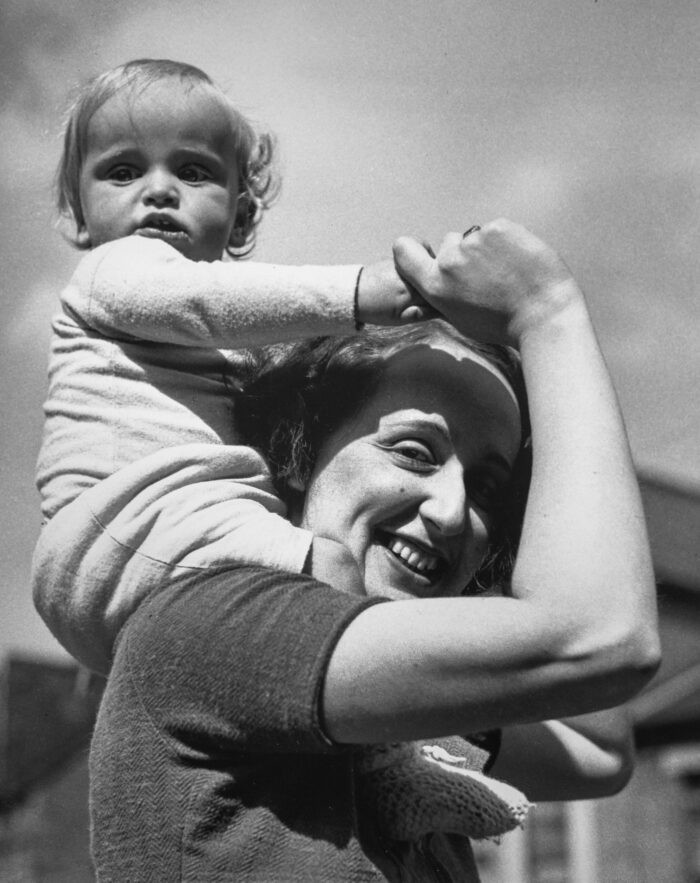
From the earliest stages of my research, I was especially struck by the extent to which her photographs revealed the powerful personality of a talented, passionate woman: someone whose vision was shaped by intense ideological commitment as well as by a belief in humanity and in the possibility of social progress. Her images of poverty and deprivation, of the intense political ferment of early 1930s Vienna and London, her records of modernist housing developments and pioneering schools and above all her many photographs of working-class women and of children – the latter among her favourite subjects – are never bleak or depressing. What struck me most from the first time I saw one of her photographs was her ability to combine a combative spirit of protest with a profound respect for her subjects, whose individuality she captured clearly and unsentimentally. Her pictures are consistently enriched by a keen eye for lighting and composition, sometimes combining unvarnished realism with daring modernist angles. More importantly, her images often possess a narrative quality which makes the experience of looking at them akin to reading a piece of fiction.
While writing the book, some of her photographs – such as the famous one with the little girl staring through a bakery window at a mouth-watering array of pastries just out of her reach – lingered in my mind for days. This talent to make her ideas resonate, both in person and through her camera lens, stood out as one of her most distinctive qualities. From the day she trained her brother’s young girlfriend, the Dutch photographer Puck Voûte, in the art of conspiracy – skills Puck would later put to use while hiding a Soviet agent in Nazi-occupied Amsterdam – to the recruitment of Kim Philby and, during the war, to convincing her then-lover, the Austrian scientist Engelbert Broda, to pass on atomic secrets to the Russians, her actions carried momentous consequences.
Sadly, her personal circumstances were far from fortunate. Throughout her life, Edith struggled. She separated from her husband after only a few years of marriage, barely had enough money to live on and, for ideological reasons, refused to take money from her Russian masters. Her other love affairs, intense and consuming, all ended in failure. Yet her deepest concern – what she once called her ‘personal tragedy’ – was her beloved son, Tommy, who was severely autistic and whom she raised alone whilst enduring the strain of living undercover. His worsening condition made her life exceptionally difficult, particularly in London during the war and, in the early 1950s, when she suffered a nervous breakdown as official suspicions about Kim Philby brought MI5 to her door.
And yet, while it is tempting to see Edith Tudor-Hart as a victim – she was often singled out by the British authorities as a foreigner, a communist, a woman and a Jew – the image that emerges from a thorough investigation of her life is one of great energy and intelligence. Driven by a strong sense of mission, she strove for the creation of a just society. The fact that such ambition was based on her belief in an oppressive political regime is a tragic contradiction at the core of her story. Infinitely more enduring is the sense of a person shaped by the turbulent history of the century in which she lived. From the earliest family portraits taken on the eve of the First World War, in which she looks confidently into the camera with bright, curious eyes, to her final MI5 interview two years before her death from cancer in 1973, when she still refused to reveal anything of her clandestine past, she emerges as a figure defined by the ideals to which she devoted her entire life. These are the humanist ideals of dignity, empathy and equality with which she approached the subjects of her photographs, and which resonate so powerfully to this day.

Daria Santini is an independent scholar and the author of A Woman Named Edith: Emigre, Photographer and Secret Agent – The Extraordinary Life of Edith Tudor Hart.