King of Kings begins the Brunanburh series, which recreates the events that led to the mighty battle of Brunanburh, and it’s aftermath. Why was this story so appealing?
There are rare moments in the history of Saxon England where we seem to have a lot of information about what was happening within England, and also in the wider sphere of the United Kingdom. The run up and aftermath of the battle of Brunanburh is one of those occasions where not only do we possess the information, but we also know a great deal about events in the kingdom of the Scots, the many Welsh kingdoms and in the Norse-held lands of Jorvik and Dublin. We know who was ruling. We know what befalls them, and even though we still don’t know all the details about the actual battle itself, it is possible to determine a probable path of events that led to the battle. It was too good an opportunity to miss.
While Athelstan, the king of the English, is one of the characters, there are also others. Why did you decide to write the story from multiple points of view?
A battle such as Brunanburh was not won and lost by one king or commander alone. There were many ambitious men who fought that day, and as it’s possible to trace the developments that brought them to the great slaughter-field (if not the precise location of the battlefield itself), it felt right to give them a voice. With the benefit of a thousand years distance, it’s not necessary to position one side or other as the virtuous victor. I wanted to provide each of these warriors with their own voice, ambitions and fears.
You’ve written a great deal about England in the tenth century, including your first non-fiction title about the royal women. Why is this period so fascinating?
I was first drawn to the late tenth century by my first historical fiction character, Ealdorman Leofwine of the Hwicce, who became ealdorman in 993. While I planned to tell the story of the final 100 years of Saxon England through his eyes and that of his family, invariably, I also found myself going backwards, seeking out the reason why certain events occurred. As I did this, I appreciated how overlooked the tenth century is, and how filled it is with fascinating characters, male and female, who’ve been largely ignored and overlooked because of the allure of the events leading to the events of 1066.
I began with Ealdorman Leofwine, I then wrote one of the first drafts for the Brunanburh series, and also moved forward to the 960s, to fictionalise the life of England’s first acknowledged crowned queen, Lady Elfrida.
As I ventured backwards and forwards, I appreciated how much is known about the period and how many fascinating events take place. Much of the period is thought of as reasonably peaceful, taking place between the end of the First Viking Age, and the beginning of the Second Viking Age, and certainly, there are few Viking raider attacks after Brunanburh and for about another thirty or forty years.
We have the wonderful figure of Lady Eadgifu, the third wife of King Edward the Elder, who lives throughout much of the period (c.902-c.966) and without whom I don’t believe the shaky House of Wessex would have survived. There are so many early deaths. Three of Athelstan’s half-brothers die quite young (Ælfweard, Edmund and Eadred) and Athelstan was only believed to be about 40 when he died, perhaps unexpectedly. Then, the next generation perish at a young age too (Eadwig and Edgar) and even Edgar’s son, Edward the Martyr, dies young (was murdered). It’s only with Æthelred II that England once more enjoys a long kingship which provides much needed stability for some of the time. Compared to the stability experienced elsewhere, this must have been an uneasy time for the fledgling kingdom of England. Coupled with the knowledge that there were many female figures keeping the kingship secure, I’ve continued to explore the period. Lady Eadgifu features in King of Kings. She provides much needed stability and continuity for the story as she did during the time she lived.
How do you research your stories?
I’ve been studying Saxon England for longer than I care to admit. I hold an undergraduate and graduate degree. Sometimes, I think I’ve forgotten more than I can remember.
Throughout that time, I’ve come to appreciate that to write historical fiction it’s necessary to know a great deal about the period, but also to interpret these events through the eyes of my characters as opposed to through the benefit of hindsight. So, I read a lot of books and have read a lot of books. I’ve also ventured into the archaeological experience and try to experience the lived experience as well, attending days where I’ve learned about the properties of plants, undertaken some Saxon-era embroidery and one day, I hope to have a go at forging my own weapons. I share much of my historical research on my blog.
How would you recommend readers access non-fiction about the period?
I think there’s too much to list any one resource here, but I would caution readers that I don’t believe an up-to-date account of the whole of Saxon England is currently available. There are very good books focusing on people and events, and also on archaeology as well as the written record. I would advise readers to decide on what fascinates them the most and go from there. I was always drawn to the kings and queens of the era and as such I read about Æthelred II, Cnut, Edward the Confessor and Lady Elfrida, before dipping my toe in subjects that were more diverse and more complex, as I also worked my way backwards.
Max Adams offers some very readable accounts on the era. Michael Wood’s In Search of the Dark Ages has recently been updated and reissued, and I always go back to my trusty uni text book by DP Kirby, The Earliest English Kings. Check out my blog for more guidance.
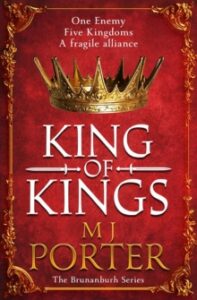
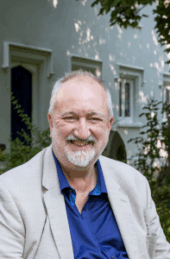
MJ Porter is a writer of historical fiction and non-fiction, and the author of King of Kings.