Lincolnshire has played a pivotal role in the history of England on more than one occasion with the Rising of 1536 being one such example which was itself a precursor to the larger Pilgrimage of Grace. Just over a century later, the county would again play an important if seemingly peripheral part in the early years of the Civil War confrontations.
And so it was that a few years ago I found myself standing by an information board situated by the side of a B road in the hamlet of Winceby looking over gently undulating farm fields with not another soul in sight. As I did so it was hard to contemplate the landscape as it would have been on 11th October 1643 when a bloody battle, or, more precisely, a skirmish, took place that almost changed the course of English history. But I did imagine myself back there as a witness to those momentous events on that fateful day and I brought to mind the somewhat unfortunately named Miles Hope, a fatally wounded Royalist soldier, who managed to flee the field and make his way as far as Hagworthingham before he died and was buried at the Church there.
“I thank thee for giving me sanctuary. I will not be a burden for much longer. I never saw a more terrible day as God is my witness and I know I have not much time left before I will be received by Him if my sins on earth be forgiven. Ye are a man of the cloth and I wish thee to hear my final words.
“We were making our way from Lincoln to lift the siege at Bolingbroke but we were met by the Roundheads. We were about equally matched in numbers but maybe they were better drilled than us as it was a rout, a massacre, all over in but half an hour.
“It was Cromwell himself who led a calvary charge right into the heart of our ill disciplined ranks. They cut us to pieces. I saw Cromwell have his horse shot out from under him but he was allowed to recover himself. That’s what true gentlemen do on the battlefield so they say. There be no such courtesy for the likes of me though.
“But defeating us was not enough. Their blood was up and they pursued us for hours on end afterwards. We reached a place where there was a gate; it only opened one way but there were too many of us pressed up against it and we were trapped. They slaughtered us as if we were no more than cattle. I was on the edge of it and managed to get away but not before I was spotted and hacked down. They must have thought I was dead as they left me to go after more of us. I managed to crawl away and reach this place. I feel my time will soon be at an end. May God have mercy on my soul and I weep for what we have become.”
According to some reports Sir Ingram Hopton did indeed behave like a ‘true gentleman’ and instead of slaying Cromwell as he lay stunned and defenceless on the ground Hopton allowed him to recover himself. If he had killed him when he had the chance then maybe the Civil War and it’s outcome, which resulted in an Interregnum that is so inextricably linked to Cromwell, then England’s fate could have turned out very differently indeed. Hopton was later killed in the same battle and given an honourable burial by Cromwell. There is a memorial canvas to Hopton above the font in St Mary’s Church, Horncastle and the inscription describes Cromwell as the ‘Arch Rebel’.
Cromwell however enhanced his already burgeoning reputation by playing a leading role in the battle which occurred after Royalist forces set off from Lincoln to lift the siege of the garrison at Bolingbroke Castle located only a couple of miles away from Winceby.
The Royalist side was under the overall command of the Earl of Newcastle and numbered around 2,500 cavalry and dragoons. However as they made their way to Bolingbroke they were intercepted by a similar sized force of Parliamentarians, whose commander-in-chief was the Earl of Manchester, just outside Winceby with Cromwell leading a decisive cavalry charge into the heart of the Royalist ranks.
It was all over in about half an hour but the bloodthirsty slaughter continued for many hours afterwards as the defeated Royalists attempted to flee the field of battle. Many of the Royalist forces were cut down at the so called ‘Slash Hollow’ as they were trapped against a parish boundary gate that only opened one way but the pressure of so many men made it impossible to open it. On the Royalist side about 300 men were killed in the actual battle whilst for the Parliamentarians it was only 20.
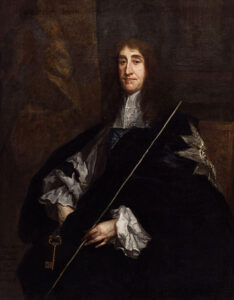
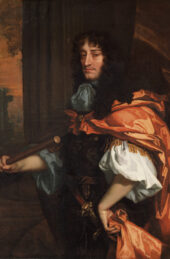
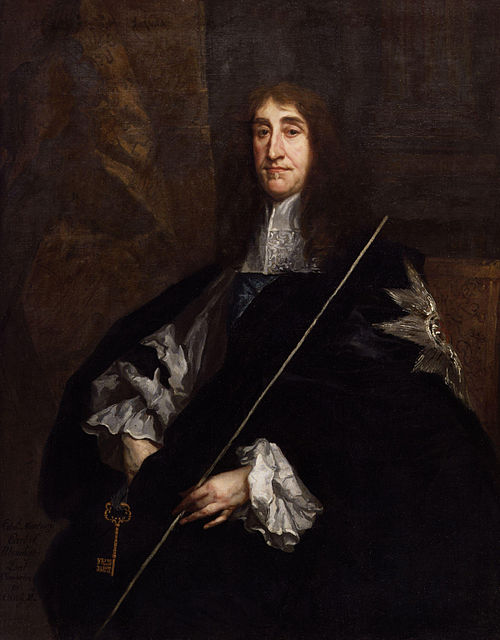
Edward Montagu, 2nd Earl of Manchester by Sir Peter Lely
Winceby played a key role in the Civil War because within weeks of the conflict the garrison at Bolingbroke surrendered which was then razed to the ground to prevent it being used again if it happened to fall back into Royalist hands. Lincolnshire and a vast tract of the east of England now fell under the Roundheads control as Hull also eventually conceded defeat after being laid siege to. Then of course the Parliamentarian side eventually triumphed in England’s Civil Wars under Cromwell’s leadership.
As I stood in that lay-by looking at those quiet and peaceful Lincolnshire fields it was hard to comprehend that a savage confrontation which took place there a few centuries ago could have such resonance not only for the eventual outcome of the Civil War but for the soul of England too. It’s another of the great what ifs of history. If Cromwell had not survived that day then would the Parliamentarian side have prevailed? Even if it did would King Charles I still have been executed? Would the political and social milieu that led to the Diggers, the Levellers, the Putney Debates and the world being turned upside down as that memorable broadside ballad and accompanying illustration put it still have prevailed? Would the witch hunting frenzy have been quite so powerful without the strange spirit of the times providing a raison d’etre? It was quite something to ponder as I drove away leaving behind the ghosts of Winceby battlefield.
Anyone wishing to read more should avail themselves of Betty Brammer’s wonderful book Winceby and the Battle.
Benjamin Peel is a writer of plays, monologues, short films and audio dramas, including Not a Game for Girls which has been produced five times. This article was originally published in Not Of This Wold II: A Second Anthology of Weird Lincolnshire Writing.