
‘Iconic’ is a rather overused and clichéd word these days. It’s probably quite helpful, then, to unpack exactly what we mean when we use this term for the architecture of the past or present – or rather, what we ought to mean. Many new buildings in Britain’s towns and cities which have been swiftly branded as ‘iconic’ by their architects or critics simply don’t deserve this singular accolade. The fact that the building is merely tall, or visually distinctive (and not necessarily in a good way), doesn’t automatically qualify it for elevation to legendary or landmark status. An iconic building has to do much more than be highly visible or stylistically diverse.
Crammed as we all are onto a relatively small island, British life is, perhaps more than that of most other nations, defined by our built environment. Those buildings which have, over the centuries, earned a special place in Britons’ architectural pantheon tend to simultaneously fulfil a number of criteria. These include not just how they were constructed, but also why: what they were designed to do, and what meanings and messages they were supposed to convey, at the time of their creation – and whether they were actually successfully achieved. It’s also important to consider what they represented to subsequent generations eager to assign a new function or add a new layer to their structure and story. Some designs may have been specifically designed to signpost, mythologise or reinvent British history in order to reflect alleged regional or national character. Others have had this thrust upon them. Maiden Castle in Dorset, for example, is one of Britain’s most important pre-Christian fortresses, but has long been appropriated by historians, writers, poets and musicians to bolster their own concepts of British national identity, most of which cast the Ancient Britons as a timeless symbol of national resistance and the castle as a cultural crucible for British ‘values’. The reason why the fort is there has been long debated, but the power of its allegory endures.
Iconic paintings remain what they are throughout their whole lifespan; iconic buildings not only have to serve the era of their construction but also to anticipate the future, forced to change with the times in order to justify their existence. Castle Bromwich Factory outside Birmingham may not be much to look at – it’s certainly no cathedral or castle. But it has an emblematic worth out of all proportion to its undistinguished aesthetics, as a symbol both of Britain’s victory in the Second World War and the nation’s post-war attempts to realign with new markets and horizons. As the place in which the war-winning Supermarine Spitfire and Avro Lancaster were built – and, more recently the classic Jaguar XJ6 – it surely qualifies for iconic status.
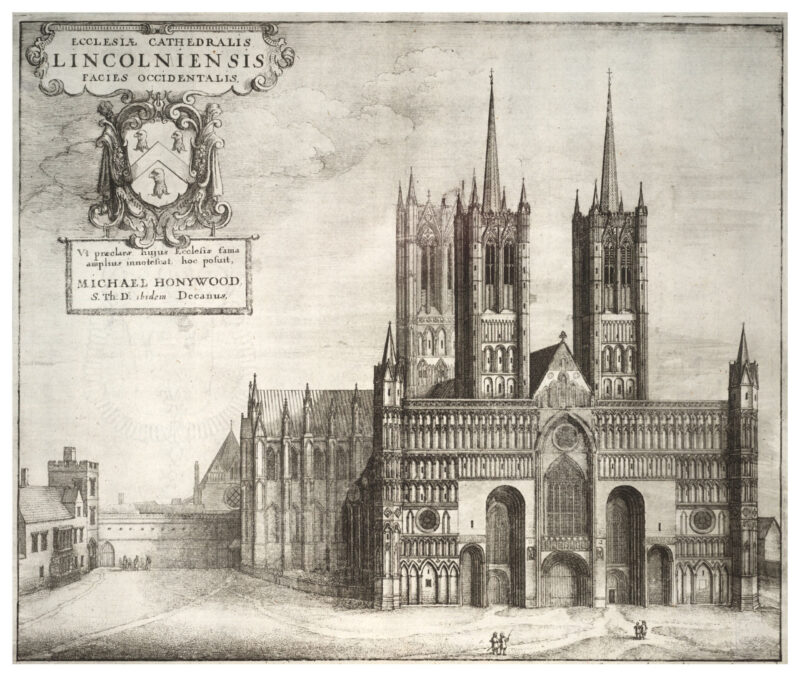
Iconic buildings must, to some extent, reflect and express their historical and social context. Ideally, they should say something about their town, city or nation’s history, or pinpoint a specific moment in time. Many of them also reveal something about both the era of their conception and the shifting ideological sands of a more recent past. And in order to last, iconic buildings need to have been robustly designed, encapsulating the latest technological advances of the day as well as more tried-and-trusted construction techniques. And yes, some of them can be tall. Lincoln Cathedral, for example, was a palimpsest of Medieval England: commanding the largest diocese in the nation, four of its bishops were leading English statesmen, while its design represents one of the high points of British architectural achievement: to critic John Ruskin it was ‘the most precious piece of architecture in the British Isles.’ Lincoln’s gifted master-masons introduced something wholly original into architecture: an English ceiling vault which was both aesthetically pleasing and structurally supportive, enabling the massive central tower to rocket skywards. The cathedral was also the tallest building in the world for 238 years – from 1311 until the central spire collapsed in a storm of 1548 – and, thanks to its prominent hilltop location, is an unmissable landmark for miles around. If Lincoln Cathedral isn’t iconic, nothing is.
In a similar vein, Chepstow’s Norman castle, situated high above the River Wye, not only physically dominates its geographical context but remains also a highly visible psychological reminder of the military subjugation of the indigenous Welsh by the Norman military machine and the comprehensive transformation of England and Wales through the Normans’ brutal imposition of the feudal system. The castle remained a potent symbol of regional policing until the 1680s yet today has metamorphosed into an incarnation of Heritage Britain as a major tourist destination and a popular film location.
Iconic buildings don’t have to be physically distinctive, and aren’t necessarily be the grandest or the most stylistically influential structures of their era. Instead, they should encapsulate their period’s social and technological aspirations while suggesting a wider socio-political resonance. Cromford Mill in Derbyshire may, at first glance, be just a large, plain mill block of 1771; but it is also a potent symbol of the industrial age as the birthplace of the modern factory system – for good or ill. Other buildings may, through their distinctive design and unexpected context, be acclaimed as ‘iconic’ at their birth. Bexhill-on-Sea may have been a quiet, reserved Sussex town in the 1930s but the landmark building opened on its seafront in 1935, Mendelsohn and Chermayeff’s breathtakingly innovatory De La Warr Pavilion, was instantly recognised as a pioneering beacon of Modernism as well as a building that showed how Britain was trying to come to terms with the modern world both at home and abroad.
Everyone will naturally have their own favourite iconic buildings. If not, why not take a minute or two to make your own architectural Desert Island Discs list? Any selection will, of course, be very personal; one person’s icon can be another’s eyesore. But some buildings consistently seem to transcend aesthetic prejudice. Anyone for Tower Bridge…?
Steven Parissien is an academic, cultural historian and the author of Building Britannia: A History of Britain in Twenty-Five Buildings, published by Head of Zeus.