Questions and myths about Subhas Chandra Bose, or Netaji, and the Indian National Army are of great interest in India today
India’s INA history is largely focused on Netaji. Indeed he did a lot, but he had a lot of help. The book shows that the INA was not started by him, but 18 months earlier by the little-known Captain Mohan Singh. Without Singh there would have been no Netaji legacy.
Another myth is about the size and impact of the INA in battle – it was actually very small, ill-equipped and not trusted – so not used to fight by the Japanese in 1944. It was miniscule, dwarfed by a Japanese army over 20 times larger at Imphal who did the fighting. Few died in combat, most of starvation or illness. Only in 1945 did Japan use it to fight, not to invade India but to defend Burma. For Japan that had nothing to do with Indian independence. Still ill-equipped, it was too late to make a difference. Again most losses were deserters and the sick.
Netaji took great risks in seeking Japan’s help to invade India, as they did not intend to let him rule occupied India freely. Pointed out to him repeatedly by Indians fearful of what would happen, he said ‘Leave it to me. I will handle it when the time comes.’ Fortunately, that time never came, and the INA succeeded instead in its propaganda role after the war.
My book tells story of brave INA soldiers, little-known today as focus has been solely on Netaji.
Through four episodes, the stories of Major Misra, Major Ram Sarup, Flying Officer Latif, Major Pritam Singh, Havildar Shiv Charan Singh & Havildar Abdullah Khan have been told for the first time (I did not choose which men to focus on, but which stories, and coincidentally the heroes turned out to be 2 Sikhs, 2 Muslims and 2 Hindus).
It tells us what the Indian sepoy thought about the INA (this has been covered in two books in last 15 years but remains unknown).
In reports of interrogations of thousands of INA men, we hear their voices. Many said they were coerced into joining, but an equal number did not care of the consequences when telling the British rulers of India. They did it for love of country. Some said they followed the herd, others to escape as soon as they reached Burma, or to protect Indian women from being ravaged by Japanese soldiers. One even said he joined as he hoped he could fund his opium habit! In most cases, it was a complex web of reasons, most likely a combination of all of these.
90% joined Mohan Singh. Only a third were equipped by the Japanese, and, from the rest, Netaji tried to recruit more when he arrived a year later, but less than 10% joined Netaji – an astoundingly low figure given his stature.
Equally important, we hear after the war from jawans in the army who had not been a Singapore POW, some of whom fought against the INA in Burma and many of whom had relatives in the INA. They said they should be let go, some did say that those who had killed Indian soldiers for not joining or deserting the INA should be hanged.
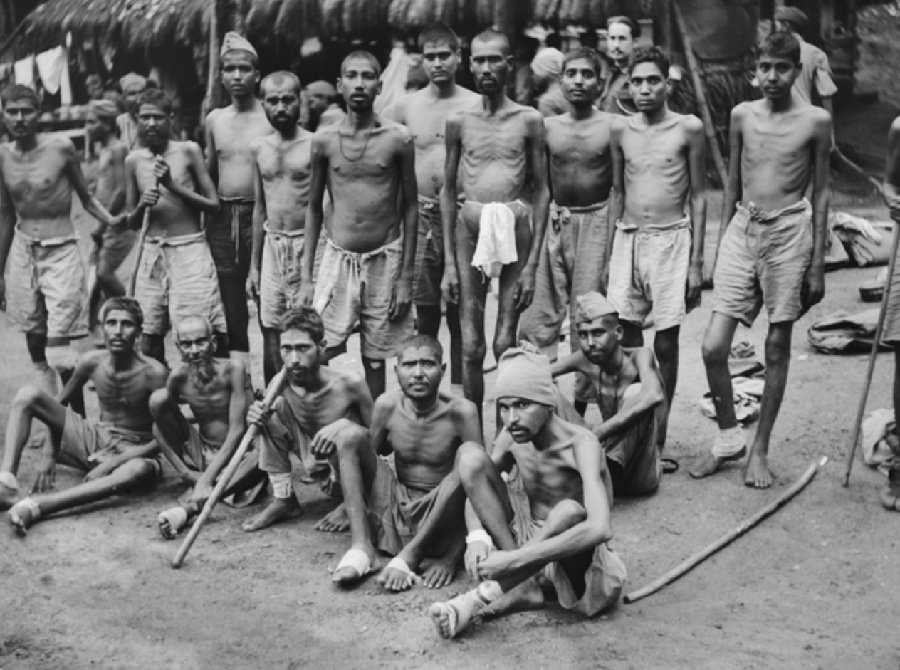
My book unearths the little-known saga of 10,000 Indian POWs who died in Japanese labour camps in Papua New Guinea, their hellish sea journey from Singapore that lasted almost two months, in crowded cargo holds with only crouching space & just a cup of water per day, the conditions they endured once they reached PNG and the great debt owed to Australia for how they sought justice for us by holding the Japanese to account through 100 war crime trials. Of those 10,000 deaths, 3,000 were at the hands of US submarines who sank any Japanese ship even if they knew there were Allied POWs on board. This may have been considered acceptable collateral damage, but these facts are not known and also not commemorated.
I tell the story, for the first time, of the audacious double-crossing of the Japanese by Lt Col Gill that turned into a triple cross of the British by his second-in-command Major MS Dhillon. Pieced together from dozens of interrogations of those involved and other British reports, we have an almost day-by-day account of this audacity, including the fears and hopes of the men.
Regarding the Great Escapes from Singapore, there are three books on these which are unfortunately not that well-known and also out of print. So although this story is not new, I hope to bring more light to it through my telling it here, which also includes new sources that add to the narrative.
Days after WW2 ended, the British lifted wartime censorship on the INA. Suddenly, news of its existence, along with stories of its valiant fight with Britain took India by storm.Though there were INA men who fought bravely when they got a chance, these were minor engagements of a few dozen men that had no impact on the overall battle that involved 300,000 Japanese and Allied soldiers. In fact, most of these minor fights were against fellow Indians in the Indian army , but portrayed as fights against the ‘enemy’ implying the British.
At the same time, Netaji had been declared dead in a plane crash on 18th August 1945 – together with his disappearance in January 1941 from Calcutta, an earlier announcement of his death in March 1942, his sudden reappearance in Berlin in May 1942, in Tokyo in May 1943, and with this crash in far-away Taipei – no one believed this larger than life figure had died, and conspiracy theories of his survival continue to this day. A third simultaneous event galvanised India – a trial in the Red Fort of three INA officers accused of treason. It was quite natural that, at the time, the focus of the press was on Netaji and the three officers, though it is sad that the seven INA deserters who were caught and sentenced to death by them have been unnamed untill now.
In post-war memoirs, INA seniors seem embarrassed to have joined Singh, but happy to have joined Netaji. Some even denied their early involvement, though the archives show they were enthusiastic participants under Singh from the start, and even if they had inner doubts about him (as some claim), they joined and not one dared to raise their voice when Singh was in charge. Singh was certainly no Bose, but why were they embarrassed? Was it because he was just a middle-class junior officer who had risen from the ranks, like a ‘chai-wallah’ of today? Another way of looking at this is revealed in a letter written by Singh in the 1970s to his post-war interrogator, Major Hugh Toye, where he provides an interesting insight – it could sound like jealousy (at being eclipsed) but to me Singh hits the nail on the head when he says the INA memoirists: “Must project Netaji as a superman.. to bask in his limelight, like a priest extols virtue of god to increase their importance.”
Post-1947 India’s focus was on the history of independence movement – my memory is not comprehensive, but as a student in a Delhi private school in the 70s and 80s, I recall 4 heroes – Gandhi, Nehru, Bose & Bhagat Singh. The narrative was that they worked in different ways to gain independence.
In 20th-century histories, many others were known in the Gandhi and Nehru circles, e.g Azad, Asaf Ali etc. However, those who wrote about the INA focused largely on the mesmeric Netaji who eclipsed everyone, not just the leaders before him like Mohan Singh, Rash Behari Bose, Giani Pritam Singh, but also the soldiers under him about whom we have heard nothing (so far). This does happen elsewhere, but nonetheless we must ask why?
The recent narrative continues this Netaji focus and adds an anti-Gandhi or anti-Congress element – saying Gandhi had no role in getting independence, only Bose, and that Nehru was an opportunist. Certainly the impact of the INA had a key role to play in Britain’s decision to leave India, but to say that Gandhi had no role is wrong.
Even if we stick to the INA, again Netaji’s predecessors and soldiers are ignored – it appears as if no one existed except him. Why and how this has happened is a mystery to me.

Gautam Hazarika is the author of The Forgotten Indian Prisoners of World War II, published by Pen & Sword.