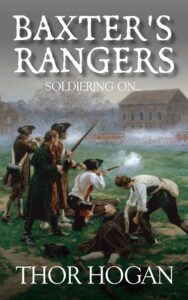
I have read Esther Forbes’ Newbery Medal-winning Johnny Tremain perhaps thirty times. It is the reason I fell in love with historical fiction as a child. But the book, for all its brilliance, left me wanting to know more. The novel is set primarily in the period before the American Revolution began, and even after the first shots were fired at Lexington, I wanted to know more about the critical action at North Bridge, Merriam’s Corner, and the Bloody Angles. Given that there are no recent novels in the vein of Sharpe’s Rifles or the Aubrey-Maturin series that cover these events, I wrote Baxter’s Rangers to tell the story of how colonial militia proved they could stand up against the most professional army in the world—and perhaps win their independence.
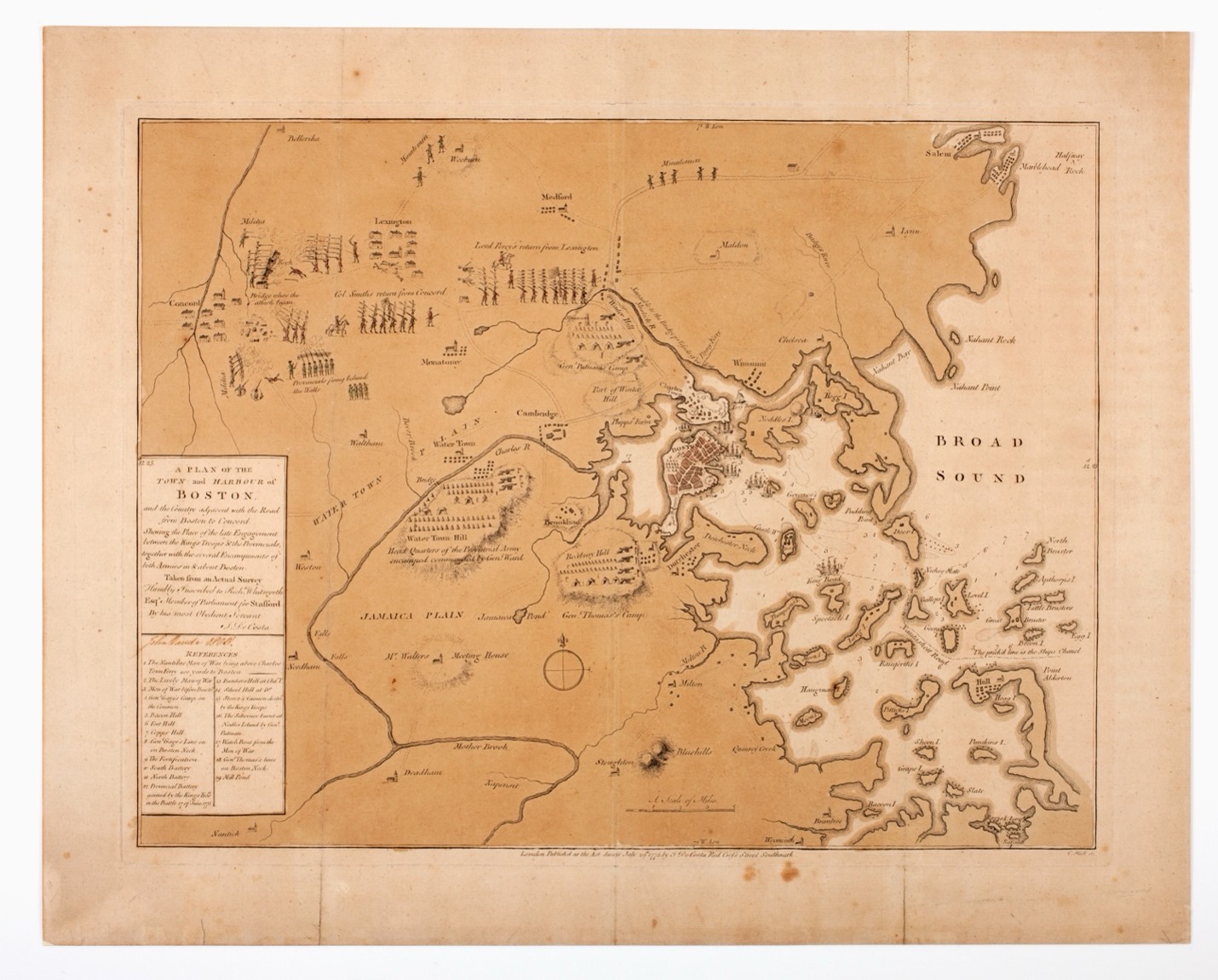
April 19, 1775, is often remembered for Lexington Green, where eight militiamen were killed in the early morning hours. But the more important fighting began at Concord’s North Bridge roughly four hours later.
By the time Colonel Francis Smith’s column reached Concord, minutemen had been gathering on the high ground north of town for hours. They watched as the British searched for hidden arms. But when the redcoats set fire to gun carriages near the town hall and thick smoke began to rise, they concluded that the town was being burned. Colonel James Barrett gave the order to march.
What followed was remarkable for its discipline and daring. Four hundred minutemen marched two abreast toward the bridge and ninety-six British regulars. Barrett’s orders were explicit: do not fire unless fired upon. Captain Isaac Davis of Acton, at the head of the column, called to his men: “I haven’t a man who is afraid to go.” This would become one of the enduring phrases of the Revolution.
The badly outnumbered British troops fell back across the bridge and opened a scattered, poorly coordinated fire. Davis was killed almost instantly. A private beside him fell as well. And then Major John Buttrick of Concord shouted the words that changed everything: “Fire, fellow soldiers, for God’s sake fire!”
The colonial volley was devastating. Three British regulars fell dead and four officers were wounded, and the surviving redcoats broke and ran—abandoning their wounded on the bridge as they fled back toward town. They were the first British soldiers killed by American fire.
Ralph Waldo Emerson would memorialize the exchange as the shot heard round the world. It was an organized military action, deliberately executed, by men who knew exactly what they were doing. The farmers and tradesmen on that hill—many of them middle-aged family men—had just chosen revolution.
What followed over the next eighteen miles was more remarkable still. As Smith’s column retreated, the countryside continued rising against it. At Merriam’s Corner, just a mile east of Concord, the road narrowed at a small bridge, forcing Smith’s flanking guards back onto the main road. It was the opening the waiting militia needed. Captain John Brooks of Reading ordered his men to fire, and the long-running fight back to Boston began.
A mile farther east, the road bent sharply north before turning east again through lightly wooded ground. The militia attacked from both sides simultaneously. These Bloody Angles proved the most lethal ambush of the entire day, where more British soldiers fell than at any single point. The brave column staggered forward.
By the time Smith’s battered force arrived back in Lexington, it was close to breaking. Lord Hugh Percy’s relief brigade—nearly a thousand fresh troops — saved them. But minutemen continued to pour in from across eastern Massachusetts, and the fighting remained intense through Menotomy and on to Charlestown, where the redcoats finally found protection under the Royal Navy’s guns as evening fell.
British casualties for the day numbered nearly three hundred killed, wounded, and missing. But beyond the numbers, April 19 demonstrated that colonial troops could fight and win against the redcoats. The war that London had expected to end before it began had just become something else entirely.
Baxter’s Rangers places Hob Baxter, an apprentice to John Hancock turned field commander, and his small company inside this fight—at North Bridge, at Merriam’s Corner, and along the road to Charlestown. Hewing closely to the historical record, it gives readers a ground-level view of a day that changed everything. It is the first in a planned series that will continue to explore the overlooked corners of a revolution that too many Americans know little about—unfortunate in the year we celebrate our 250th anniversary.
Thor Hogan is a professor of American politics at Earlham College, the author of Baxter’s Rangers and four non-fiction books, and created the Substack newsletter Thor’s Forge. Baxter’s Rangers was published in September 2025 by Holand Press.