Yale University Press

John Hardman on Barnave

Amie Strachan met with the author of a new book on the favourite of Marie Antoinette who lost his head in the Revolution.
John Hardman

John Hardman, who was Antoine Barnave? Barnave (1761-93)  was a young  barrister from Grenoble who gained national recognition in 1788  with pamphlets attacking the government. At the age of 27 he was elected to the estates-general and played  a prominent radical role...

James Davey on Tempest

James Davey on Tempest

Our editor met with the author of a new book on the Royal Navy during the French Revolutionary Wars.
James Davey

James Davey, we’re very used to seeing the Royal Navy as all powerful post-Trafalgar and 1805, but was this the case during the period in which you write about, the 1790s? In short, no! The Navy of the 1790s was wracked by a series of crises and it certainly did not...

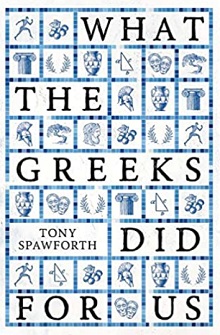
What the Greeks Did For Us, by Tony Spawforth

What the Greeks Did For Us, by Tony Spawforth

Fodder for all sides of the debate in the culture wars.

What The Greeks Did For Us, by Tony Spawforth. Any academic standing up for Classics (Latin and Greek, no definite article) in 2023 does so knowingly entering a minefield of epic proportions.  Since the Renaissance the appreciation of Classics has been a mark of...

Tony Spawforth on What the Greeks Did For Us

Tony Spawforth on What the Greeks Did For Us

Our editor met with the author of a new book on the Greeks and their impact today.
Tony Spawforth

Tony Spawforth, surely the impact on our world today by the Greeks is significantly limited - after all the Romans would surely claim the ancient influence, if there is any? In many ways the Romans were simply conduits for the older and greater Greek civilisation that...

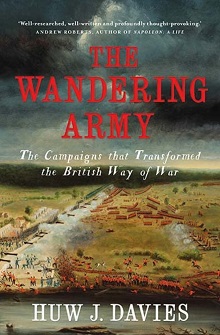
The Wandering Army, by Huw J. Davies

The Wandering Army, by Huw J. Davies

There are faint echoes of Iraq and Afghanistan in this study of the British Army of the 18th and 19th centuries.
Evelyn Webb-Carter

It was General Eyre Coote, an interesting man whose career came to an unfortunate end who coined the phrase “A Wandering Army”. The title presents us with the notion of The British Military Enlightenment in the 18th and early 19th centuries that was developed during...

Conquer We Must, by Robin Prior

Conquer We Must, by Robin Prior

A highly readable account of Britain's military history incorporating both world wars.

This is a superb and highly readable account of the development of the often tumultuous relationships between Britain’s political and military leaders over 31-years, starting with Sarajevo in 1914 and ending with Hiroshima and Nagasaki in 1945.  Britain and its empire...

Huw J Davies on The Wandering Army

Huw J Davies on The Wandering Army

Huw J Davies discusses developments in the British Army after fighting the War of Austrian Succession.
Huw J Davies

Your book opens with the Battle of Fontenoy in 1745 when the British, despite superiority of firepower, were defeated by Saxe’s use of the terrain and positioning of his forces. The use of topography by senior officers would seem to be rather an obvious ‘innovation’ –...

Robin Prior on Conquer We Must

Robin Prior on Conquer We Must

The distinguished historian discusses the relationship between generals and politicians in the first half of the 20th century.
Robin Prior

In the First World War mass casualties were suffered in the sluggish trench warfare of the Western Front. Did we see enough involvement by the politicians to attempt to limit those losses? During the First World War British politicians made various but only sporadic...

How the Redcoat Learnt the Art of War

How the Redcoat Learnt the Art of War

The lessons learnt in America led to victory over Napoleon years later.
Huw J. Davies

How the Redcoat Learnt the Art of War By May 1779, the American Revolutionary War had transformed from a regional civil conflict into a global war, and Britain faced French aggression in the West Indies and India. The British government was forced to redistribute its...

Britain in the World Wars

Britain in the World Wars

It was only towards the end of the Second World War that the British stumbled upon the ideal combination of general and politician.
Robin Prior

Three aspects of Britain in the world wars stand out. The first was the reluctance with which Britain entered both wars but then the implacable nature in which it fought them. In the First World War Britain was the last of the Great Powers to enter the war; in the...