Home » WW1 » Page 7

WW1

Britain in the World Wars

Britain in the World Wars

It was only towards the end of the Second World War that the British stumbled upon the ideal combination of general and politician.
Robin Prior

Three aspects of Britain in the world wars stand out. The first was the reluctance with which Britain entered both wars but then the implacable nature in which it fought them. In the First World War Britain was the last of the Great Powers to enter the war; in the...

Andrew Liddle on Cheers, Mr Churchill!

Andrew Liddle on Cheers, Mr Churchill!

The author of a new book on the great man talks Churchill's relationship with Scotland, his devolution plans and Dundee.
Andrew Liddle

Andrew Liddle, many congratulations on Cheers, Mr Churchill!. There are many Churchill histories out there – why did you write a new one? Thank you. It is absolutely right to note that the field of Churchill literature is extremely wide, but there is a notable absence...

AoH Book Club – Giles Milton on Paradise Lost: Smyrna 1922

AoH Book Club – Giles Milton on Paradise Lost: Smyrna 1922

Smyrna 1922 was one of the most tragic events of the early 20th century, and our editor interviewed Giles Milton about it.

The destruction of Smyrna in 1922, for which we’ve just seen the centenary, was an event that not only shamed the Turkish forces that carried it out, but also the allied navies that looked on as tens of thousands of innocent men, women and children were killed, and...

Churchill & Scotland

Churchill & Scotland

Winston Churchill's relationship with Scotland is very much misunderstood - until now.
Andrew Liddle

Scotland had a profound impact on Winston Churchill – practically, politically and personally. Practically, it provided the young Liberal politician with a constituency for almost 15 years, five election victories and a platform from which he could launch his cabinet...

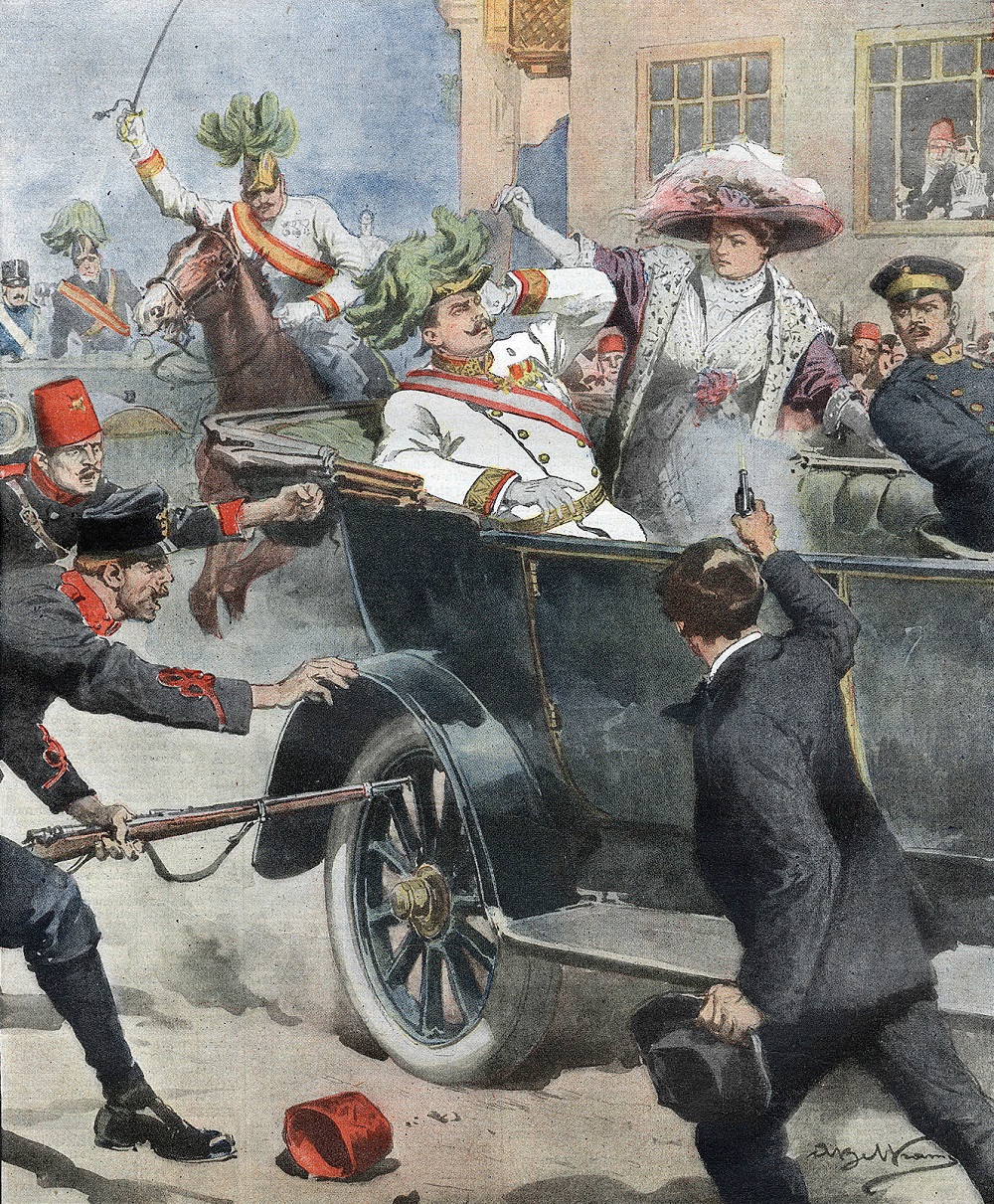
A Comedy of Errors: The Killing of Franz Ferdinand

A Comedy of Errors: The Killing of Franz Ferdinand

The assassination that sparked World War One was a series of mistakes and mishaps.

The assassination of Archduke Franz Ferdinand was one of history’s greatest turning points, but it happened by accident. Everyone knows the story ends with the death of the Archduke and his wife, Sophie, putting into play the diplomatic crisis that led to the First...

A Short History of War, by Jeremy Black

A Short History of War, by Jeremy Black

This short book contains astonishing facts and huge breadth.
Evelyn Webb-Carter

A Short History of War is indeed short at 240 pages, however I have learnt that it is extremely challenging putting a big story into few words and in this Jeremy Black has succeeded with distinction.  He writes in a snappy style with an abundance of facts to cover the...

War: How Conflict Shaped Us, by Margaret MacMillan

War: How Conflict Shaped Us, by Margaret MacMillan

Margaret MacMillan's latest book makes us ponder deeply war and its impact.
Charlotte Cowell

The primary lesson of War is that it has shaped human history since the mark of Cain condemned us to endless cycles of conflict and the gods urged champions onto victory from the vantage point of Mount Olympus.  The tangled roots of warfare are so densely packed it’s...

The Gallipoli Conspiracy

The Gallipoli Conspiracy

The stalemate at Gallipoli was precipitated by a conspiracy, and the novelist Alan Bardos used it for his second book.

Gallipoli Conspiracy Captain Reginald ‘Blinker’ Hall, the Director of British Naval Intelligence, launched an operation to bribe members of the Ottoman Government into making peace during the First World War. Hall hoped that would open the Dardanelles Strait to the...

Five Questions on War

Five Questions on War

Is war the natural state for humanity?
Margaret MacMillan

Five Questions on War: 1. Does our biology explain why we have war?  I say No: war is not engrained in us (but feel free to disagree with me and lots will).  Biology might explain why we sometimes lash out violently when we are angry or afraid, but not why we have...

The Harwich Striking Force

The Harwich Striking Force

The Beef Trip, not a steakhouse, in 1916 it was a vital part of Britain’s food security and the blockade of Germany.
Steve R Dunn

Beef and dairy products from the Netherlands, surplus to domestic requirements, had been sold to both Germany and Britain since the beginning of the war in 1914. But two years later, three issues made ensuring the smooth continuation of the Anglo-Dutch trade one of...