Home » Napoleonic » Page 5

Napoleonic

John Hardman on Barnave

Amie Strachan met with the author of a new book on the favourite of Marie Antoinette who lost his head in the Revolution.
John Hardman

John Hardman, who was Antoine Barnave? Barnave (1761-93)  was a young  barrister from Grenoble who gained national recognition in 1788  with pamphlets attacking the government. At the age of 27 he was elected to the estates-general and played  a prominent radical role...

The Real Press

The Real Press

The Real Press publishes fiction and non-fiction with a historical edge. We publish short books, ebooks and print-on-demand books that fit with our values and philosophy, and which seem likely to encourage debate about what really matters. These are available on Amazon and elsewhere, but also here in our shop.
Sharpe Books

Books Click on any of the books covers below to either buy or get more information on Amazon From the Publisher The Real Press publishes fiction and non-fiction with a historical edge. We publish short books, ebooks and print-on-demand books that fit with our values...

Tempest, by James Davey

Tempest, by James Davey

This new history of the Royal Navy is vital in that it provides insight into the third dimension of warfare

James Davey’s fascinating Tempest is set against the backdrop of Britain’s naval war against Revolutionary France of 1793-1801. In the Age of Revolution, it did not escape those below decks that while their enemy espoused liberty and equality their own condition...

2023 Summer Reads from Aspects of History

2023 Summer Reads from Aspects of History

Our authors and contributors recommend books to take on summer holidays.

Summer Reads from Aspects of HistoryAlan Bardos Author of The Dardanelles ConspiracyQueen High by CJ Carey is the sequel to Widow Land and a counter factual/dystopian novel; in a similar vein to 1984, Fatherland and Brave New World. It is set in a 1950s Britain that...

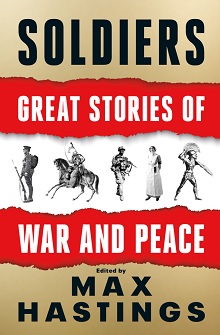
Soldiers: Great Stories of War & Peace, by Max Hastings

Soldiers: Great Stories of War & Peace, by Max Hastings

A delightful book that provides enormous entertainment.

Soldiers: Great Stories of War & Peace Most civilians have no idea how soldiers think, how they react or what motivates them, while journalists are constrained by deadlines and column inches and find it difficult to expand when presented with the broader canvas of...

James Davey on Tempest

James Davey on Tempest

Our editor met with the author of a new book on the Royal Navy during the French Revolutionary Wars.
James Davey

James Davey, we’re very used to seeing the Royal Navy as all powerful post-Trafalgar and 1805, but was this the case during the period in which you write about, the 1790s? In short, no! The Navy of the 1790s was wracked by a series of crises and it certainly did not...

Desperate Valour, by Timothy Ashby

Desperate Valour, by Timothy Ashby

A new novel set during the war of 1812

Desperate Valour is the sequel to Timothy Ashby’s 5* bestseller Ranger, though it works perfectly well as a ‘stand alone’. It follows the adventure of Major Alexander Charteris (known as ‘Chart’), a mixed-race, English-educated son of an aristocrat and a West Indian...

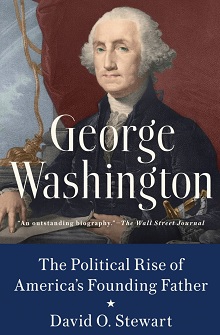
George Washington, by David O. Stewart

George Washington, by David O. Stewart

A new biography is highly readable.
Bruce Collins

David O. Stewart revisits Washington’s political career with two objectives. Half his book examines his subject’s personal and political development before 1775 to show how Washington developed impressive political skills and a clear political agenda. Although most of...

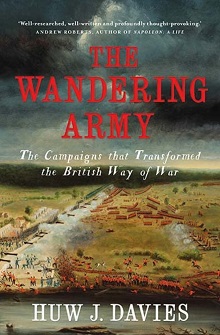
The Wandering Army, by Huw J. Davies

The Wandering Army, by Huw J. Davies

There are faint echoes of Iraq and Afghanistan in this study of the British Army of the 18th and 19th centuries.
Evelyn Webb-Carter

It was General Eyre Coote, an interesting man whose career came to an unfortunate end who coined the phrase “A Wandering Army”. The title presents us with the notion of The British Military Enlightenment in the 18th and early 19th centuries that was developed during...

Huw J Davies on The Wandering Army

Huw J Davies on The Wandering Army

Huw J Davies discusses developments in the British Army after fighting the War of Austrian Succession.
Huw J Davies

Your book opens with the Battle of Fontenoy in 1745 when the British, despite superiority of firepower, were defeated by Saxe’s use of the terrain and positioning of his forces. The use of topography by senior officers would seem to be rather an obvious ‘innovation’ –...