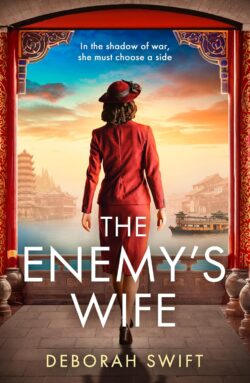
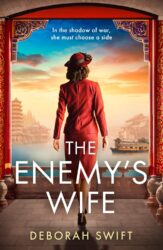
Although one character, Zofia, features in a previous story, Deborah Swift’s The Enemy’s Wife can be read as a standalone novel.
Swift has penned a compelling work about a perhaps not so well known arena of World War Two in that it is set in Japanese-occupied Shanghai. Zofia, a Polish Jewish refugee, is married to a man conscripted into the Japanese Imperial Army leaving her to survive as best she can along with a younger girl, also a Jewish refugee.
They seek shelter with Zofia’s American employee, Theo, until his house is taken over as the war’s grip tightens and all the characters experience its unflinching horrors in various ways. Eventually Zofia and Theo become separated and they both do their best to stay alive whilst facing humiliating degradations and threats. Swift then follows the various groups of characters as they try to navigate this new world order they find themselves in. The author also shows how Zofia’s husband frighteningly and rapidly descends from a loving husband to a sadistic army officer numbed to his violence by opium.
The author has done her research well and it shows, but never at the expense of slowing the story down as her descriptions of people and places are concise but evocative. I was really drawn into the Shanghai of the era she vividly paints with words. All the characters are portrayed realistically to that time with the various foibles, faults and flaws, as well as the positive traits that make up a person. She shows the consequences they are faced with in having to make murky moral compromises or in following orders.
Although having read JG Ballard’s Empire of the Sun many years ago, I had forgotten or was unaware of many details that are lightly conveyed in Swift’s prose such as the fact that Shanghai had a large population of stateless people with White Russians and European Jews fleeing conflict and persecution only to fall into it once more. Though the Japanese are shown as capable of acts of great cruelty, the author does mention how civilised their culture was before a war mentality took over.
Even though it is obvious where the narrative threads are heading, it does not detract from the denouement which involves heartache and sacrifice. Swift delivers a fast-paced story that not only shows the barbarism of conflict but also humanity and resilience in the face of such adversity. It is a deeply moving novel that explores the unimaginably devastating choices that war brings.
I look forward to reading the first novel which introduces the wonderfully resourceful and deeply determined Zofia.
Benjamin Peel is a writer of plays, monologues, short films and audio dramas, including Not a Game for Girls which has been produced five times.