
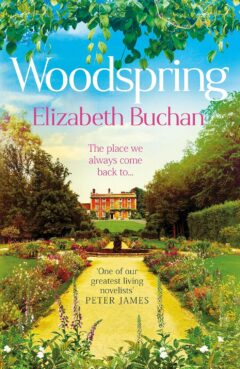
Set in three parts, Elizabeth Buchan’s latest novel Woodspring combines the stories of three separate people through its namesake – Woodspring House built in 1810. Though united in this way, each person and their part comes to Woodspring in their own way, and with their own experiences, feelings and relationships. We start off with Harry Dane, having lived in Woodspring happily until World War Two comes along. During army training in western Scotland, he meets a curious woman named Faith, and their relationship begins to blossom as the war does too. Harry begins to take on new ideas about what the war means for him, Woodspring, the daughter he insisted travel to the US with his ex-wife, and Faith with her own resolute ideas about purpose during times of war.
Just a snippet in time, we only find out what becomes of him when we enter the second part. His daughter Nell Dale, now charged with the care and ownership of Woodspring, has her own inner and outer worlds to tackle. Different circumstances, a post-war society and remnants of her all-too-distant father’s life move us into Woodspring’s latest era. And finally, we join Mia, an MI5 agent, and discover how her atypical life brings us again to the centuries-old house.
Despite the novel’s centring and the historical exploration applied through the use of an era-defying dwelling, what struck me was Buchan’s focus on the humanity of her characters. She communicates so fluently the difficulties of both the interpersonal and intrapersonal relationships of these individuals, that Woodspring seems to turn into less of a focal point and more of a backdrop to the intricacies of their lives and emotions. Each story is so cleverly intertwined with the next, yet each remains separate and somewhat detached – we are thus able to focus on how the exceptional events of their lives are not simply just events, but moments that influence Harry, Nell and Mia, and create their independent identities.
Buchan takes us through a whirlwind of heartbreak, fear, passion and devotion, yet it never feels like too much at once, and she is always considered when it comes to plotting, pacing and language. Though the experiences each character endures may be unfamiliar to a modern audience, their reactions to them and feelings about them are something we can all recognise. Woodspring is not only an historical narrative, but it takes on a philosophical lens at times as we move from 1940 to 1975 to 2005. The evidently substantial research behind the book allows readers to become easily immersed in the stories, each around 30-odd years from one another and allowing the space to grasp the protagonists intentions and to slowly unravel what Woodspring means to them; sometimes a burden, always a refuge.
This novel is the perfect example of the idea of a time capsule. No doubt many have sat in their houses and wondered who lived there before them, what sort of lives they led. Here is a rare chance to imagine it vicariously; it is not a stretch too far to believe that other British houses have had similar residents (though perhaps not as extraordinary!), and that they were affected by comparable experiences. A chance to dig up those buried moments in time.

Carmina Gallus is an Editorial Intern at Aspects of History.