
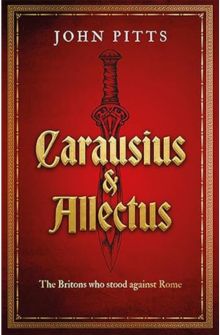
In Carausius and Allectus, John Pitts sets out to bring the world of Roman Britain to life through a narrative that is clearly grounded in a strong interest in the period. The novel draws on real historical figures and events, using them as a framework for a story that explores both the political and cultural tensions of the time.
One of the most notable aspects of the book is its sense of setting. Pitts takes time to establish the landscapes, settlements, and social structures of Roman Britain in a way that makes the world feel so immersive as to be almost tangible. This attention to detail allows the reader to engage fully with the environment in which the story unfolds, and it is particularly effective in the earlier stages of the novel, where the foundations of the narrative are thoughtfully laid out.
The use of the historical figures Carausius and Allectus, alongside Roman emperors like Diocletian and Maximian, helps to ground the novel’s fictional elements within a recognisable historical context. This blend of fact and fiction makes the novel ideal for lovers of classical history and general readers alike, giving the story a sense of authenticity, while filling in the historical gaps with a compelling story. It allows Pitts to explore the period and craft an exciting narrative, while bringing a certain level of informative context to a period which not many are well versed in.
Thematically, the novel is concerned with questions of identity, power, and loyalty, particularly in the context of Roman rule in Britain. The narrative is told through multiple characters’ perspectives, ranging from emperors to slaves, which is one of the strongest features of Pitts’ writing, as his exploration of these themes through such a diverse set of eyes necessitates the creation of a story which is recognisable as being distinctly human, often difficult to achieve when writing about such a distant period. The novel is also pleasingly thought-provoking as, through each of its non-Roman characters, the book considers what it means to exist within an empire while maintaining a sense of ‘otherness’ and cultural distinction. The characters of Carausius and Allectus are well developed, as the story follows them from boyhood until their deaths, and Pitts uses his creative license to paint a picture of their motivations and actions which is both compelling and believable.
The pacing of the novel allows the story to develop in a way that keeps the reader engaged, as the characters move between moments of thoughtful introspection and action. This balance ensures that the narrative remains accessible and interesting, while still offering enough depth to make the historical setting feel meaningful. The progression of events reflects the broader scope of the story, as it moves from more localised concerns at the beginning of the novel, to the larger political developments which gradually advance and take over.
In terms of style, Pitts’ writing is clear and descriptive, making it easy to follow the narrative while also providing a wealth of beautifully realised imagery. The prose supports the historical setting without becoming overly dense, and the action sequences are well thought through and easy to visualise, while Pitts’ dialogue helps to bring the characters and their interactions to life.
Carausius and Allectus offers a compelling portrayal of a fascinating and underexplored period, and it is certainly a worthwhile read for anyone interested in complex family dynamics, political schemes, or historical storytelling.
Jasmine Guama is an Editorial Assistant at Aspects of History.