When I first met historian Andrew Roberts, who wrote the foreword to my forthcoming book The Stay Behinds: Sweden’s Cold War Guardians, he asked: “How do you even research a stay-behind network?”
Highly secret stay-behind groups were established across NATO-aligned and neutral Western European countries during the Cold War, in response to the threat of Soviet expansionism. In the event of occupation, civilian stay-behind agents would aid escape and evasion, sabotage infrastructure, conduct partisan warfare and help sustain morale on the home front. As Andrew’s question implied, very little has been documented about these resistance forces – even today. Because of the perceived lack of sources, researchers have largely left the field to journalists and conspiracy theorists.
My study is the first scholarly book in English on the Cold War-era stay-behind phenomenon, using Sweden’s resistance organisation as a case study to illuminate the wider history—and to support the few credible research claims made about its counterparts elsewhere. It also offers a model for how to conduct deep research on stay-behind groups and other intelligence entities. In essence, I worked as a spy would, attempting to unravel the Swedish network.
As wartime propaganda posters warned, a spy can get far with just a few pieces of the puzzle from any one source. Gather enough of them, and a mosaic emerges. In my case, I draw on a rich and varied body of material: artefacts, documents, and oral testimony.
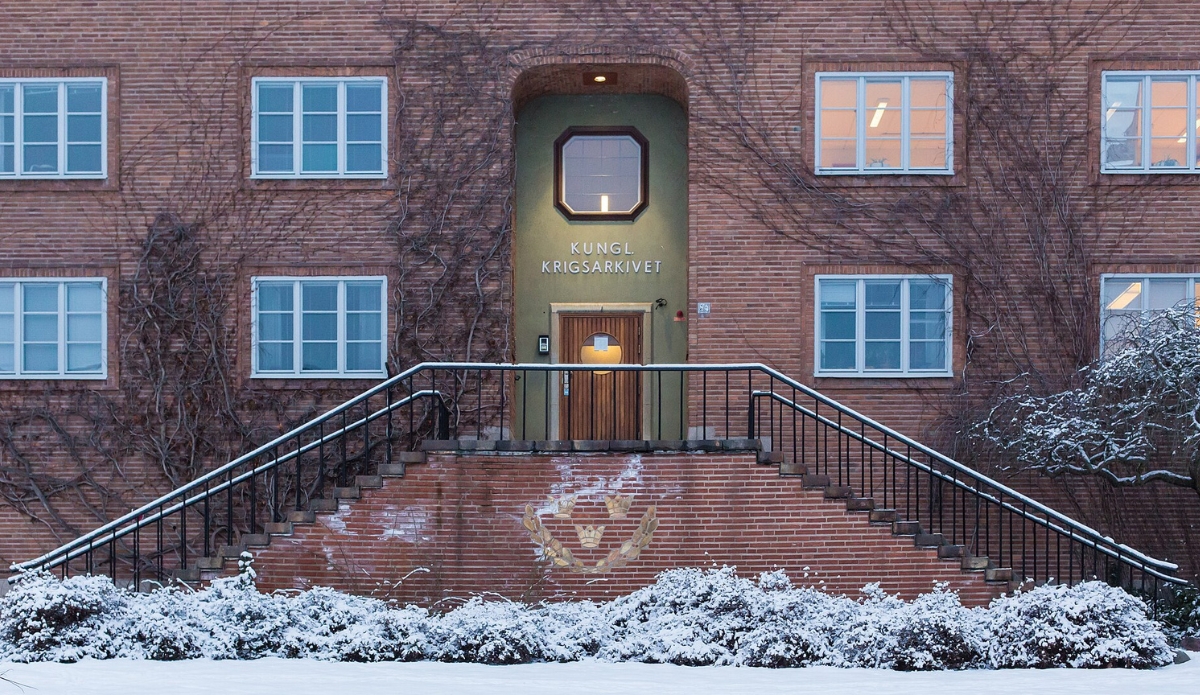
The most significant written source is the work diary kept by historian Thede Palm, written almost daily during his nearly two decades (1946–64) as chief of the intelligence service T Bureau. According to intelligence historian Wilhelm Agrell, it is “the most important and most fabled source material in the Swedish intelligence service’s modern history.” The diary is preserved in the Swedish Military Archives, where it was sealed, in accordance with Palm’s wishes, until 2016. Since then, I and a handful of others have been permitted to read the material for research purposes. Today, the diary is fully declassified.
What previous researchers have missed, however, is that it includes a description of the formation of the Swedish stay-behind organisation as seen from Palm’s perspective. (He was one of three operative directors from 1949 to 1966.) Although the diary reflects a single perspective, it is, as a contemporary document, an invaluable first-hand source. Among other things, it enabled me to establish a historical chronology and to map the organisation’s secret network of loyal recruits. The reason for this oversight lies in Palm’s habit of using code words—often highly enigmatic—in order to protect individuals, locations, and groups associated with his various activities.
By virtue of having gained access to the personal diaries and letters of stay-behind commander Alvar Lindencrona and other key figures (including Palm’s own correspondence), as well as other materials, I was able to piece together the puzzle and decipher the most important codenames. I was then in a position to read, in plain language, Palm’s account of the stay-behind network. I also relied on interviewees—some 30 in total. After I described my research project in a Swedish radio programme in December 2021, I was contacted by the relatives of resistance organisation members, both deceased and still living, whom I would otherwise have had no way of finding. I identified and got in touch with more centrally placed individuals on my own initiative. Although most had never spoken—or at least not as openly—about their knowledge of the resistance organisation, they were more willing to speak because the enquiry came from a researcher rather than a journalist.
With interviews, too, one has to think like a spy and proceed indirectly, allowing fragments to surface over time rather than forcing disclosure. One former intelligence officer told me I would have made a good military interrogator.
Oral history has an undeservedly poor reputation in social research. Historians of secret services and similar bodies are often forced to rely on spoken testimony, either because the activities in question are undocumented or because the archives that exist are jealously guarded by the authorities. In doing so, however, they are not merely making a virtue of necessity. In intelligence research, for example, initiatives such as the Belfast Project, which gathered testimony from Northern Irish paramilitary organisations, have shown that writing history on the basis of living sources can be valuable in its own right. My own project, it is true, has been able to draw upon an unusually extensive body of written material, but my account would nonetheless have been incomplete without oral testimony. As in any good spy’s report, the picture emerges only when fragments are assembled.
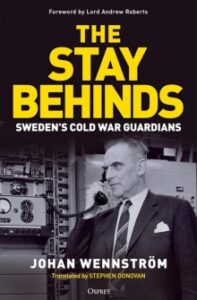
Dr. Johan Wennström is a research fellow at the Swedish Defence University and author of the forthcoming book The Stay Behinds: Sweden’s Cold War Guardians (Osprey/Bloomsbury 2026).