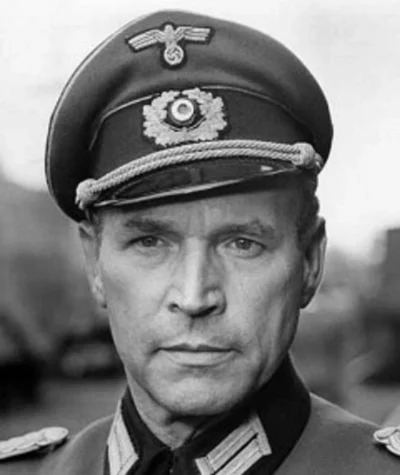
Duplicitous in Hannibal Brooks and Von Ryan’s Express, ruthless in The Train, thrown from a dam in The Boys from Brazil – but always a Nazi.
For decades after WW2, Wolfgang Preiss enjoyed an international film career which made him a regular in Hollywood war films.
But it was a career that started under the Nazis with the approval of propaganda minister Joseph Goebbels, who dominated film production via the Reichsfilmkammer to which every actor, writer, and filmmaker had to belong.
Goebbels, in effect, was Germany’s top film mogul, more powerful than any Hollywood studio head.
And, under him, Preiss moved from theatre to film, signing with UFA, the largest German studio, where, as with much British output of the time, the films were often war-themed but designed primarily to entertain.
And there is much in Preiss’ first major film, Die Grosse Liebe, which would have been familiar to a British wartime audience: camaraderie among airmen, a romantic pursuit, and the grumbling good humour of civilians under an air raid.
On top of that, the final song even predicts that ‘we’ll meet again’.
But the uniforms are different and, in one musical number, as members from each arm of the German military sing along to the music, they include a smiling SS man who laughs and claps.
The pianist, by the way, a central character, is played by Paul Hörbiger, who a few years later would charm audiences of The Third Man as the porter in Harry Lime’s apartment building.
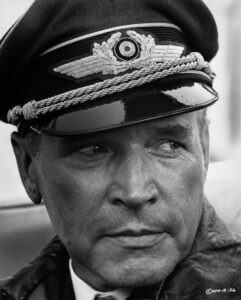 The film’s male lead character falls in love with a singer while on leave in Berlin but hides the fact that he’s a Luftwaffe pilot to stop her from worrying. Preiss played his friend, posted with him to the Eastern Front and doomed not to return.
Viewed today, it’s an engaging, often humorous, melodrama but, when a newsreel audience applauds a burning Hurricane or when the lead couple press their faces together and look adoringly at the German bombers flying by, its messages are clear.
Goebbels took a special interest in the film, visiting the set, insisting the director reshoot a scene where he felt a woman was shown behaving in an ‘unGerman’ way, and ensuring Hitler’s own bodyguard appeared as extras.
In 1942, 20 million Germans rushed to cinemas to watch Die Grosse Liebe, making it the Third Reich’s most commercially successful film.
Delighted, Goebbels commissioned a script for a ‘Hitler film’ to be made by the same team and featuring Preiss with, perhaps, the Führer playing himself.
Despite being written and then re-written as Germany’s war fortunes grew bleaker, the film was never to be made, primarily as it relied on a big finish which saw Hitler ‘saving the world’ by winning the war.
In 1943, while playing another Luftwaffe airman in Besatzung Dora, Preiss asked the director Karl Ritter if the ‘Hitler film’ would be made if Germany lost the war.
Ritter looked solemn, and said: ‘If we lose the war, we will not be allowed to make another film again because we have told Nazi lies and we will not be forgotten.’
And, for a while, that fate befell Preiss. After the war he was blacklisted from the screen but was allowed to act in the theatre and later to dub English-language films into German.
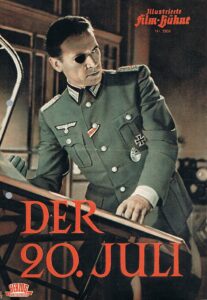 A new celebration of ‘good Germans’ in the 1950s gave him a way back into central roles, first in a biopic of Abwehr chief Canaris and then in Der 20. Juli about the plot to assassinate Hitler.
Within the space of a decade Preiss had gone from Goebbels’ patronage to portraying Claus von Stauffenberg, the man who tried to blow up Hitler.
And, fascinatingly, Preiss was directed by Falk Harnack, whose brother and sister-in-law had been executed by the Nazis and who – as outlined in Defying Hitler: The Germans Who Resisted Nazi Rule, my book with Gordon Thomas – was one of the few people to attempt to unite the various elements of anti-Hitler German wartime resistance.
Fresh success in post-war German cinema brought Preiss into international productions, from The Longest Day to A Bridge Too Far (as von Rundstedt) and The Winds of War (as von Brauchitsch).
A career which had begun with compromises and collaboration with Nazi leadership had seen him become one of the most recognised ‘film Nazis’ in the world.
Preiss always denied being a Nazi or antisemitic – and indeed would work for and with many Jewish actors and filmmakers during his career. But, according to Hitler and the Nazi Cult of Celebrity by Michael Munn, he recognised the stain his work at Goebbels-era UFA left upon his reputation.
‘Nothing could be done without the approval of Joseph Goebbels,’ he admitted. ‘And if you made films, you made them for the Third Reich.’
Having been so close to Nazi leadership and then having donned German uniform so often on screen, Wolfgang Preiss – who died in 2002, aged 92 – never quite left the war behind.
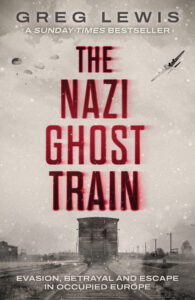
Greg Lewis is the author of The Nazi Ghost Train: Evasion, Betrayal and Escape in Occupied Europe.