On 28 June 1914, a collection of Bosnian terrorists gathered in Sarajevo to target the heir to the Austro-Hungarian empire, Franz Ferdinand. It was a chaotic operation, with the first go not even attempted. A later grenade missed the Archduke’s motorcar and instead wounded an Austrian soldier, before finally Gavrilo Princip, the successful member of the group, fired two fatal shots at Ferdinand and his wife Sophie, Duchess of Hohenberg. Factions within the Serbian government were behind the plot, and the First World War began one month later resulting in the deaths of around fifteen million people.
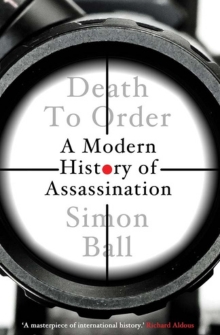
It is therefore easy to disagree with Benjamin Disraeli’s remark that “assassination has never changed the history of the world,” when speaking in the House of Commons after the shooting of Abraham Lincoln. Simon Ball has written the entertaining Death to Order, beginning with Franz Ferdinand’s, probably the most consequential, as we witness the stubborn resistance of the regime in Iran to repeated eliminations of its leaders.
Here in Britain the only successful prime ministerial shooting was poor old Spencer Perceval in 1812. Many have probably forgotten about the attempt on John Major and his cabinet by the South Armagh Brigade of the Provisional IRA in 1991. It was a contributing factor in shifting responsibility for Irish terrorism in Britain from MI5 to the Metropolitan Police, but, even as the garden was being re-landscaped, talks were ongoing behind the scenes with the IRA’s leadership. Mrs. Thatcher signed the Anglo-Irish Agreement in 1985, only a year after her own narrow escape from the Brighton bomb.
The big one is obviously JFK’s, prompting that famous question in the years following. Ball is interesting on the shooting, rightly refusing to engage in the conspiracy theory, instead highlighting LBJ’s response. Soon after he took office Johnson was keen to see CIA plans for offing Castro. These were serious, though unsuccessful due to Cuban intelligence and its stranglehold on the émigré community. The CIA has long enjoyed this particularly aggressive element of espionage. The Chilean general René Schneider refused to acquiesce when Richard Nixon demanded he step in when Salvator Allende won the close 1970 presidential election, and paid for the decision with his life.
Ball argues Ferdinand’s began a new era of assassination as the lone wolf was replaced by terrorist groups with terrible repercussions. Do the recent liquidations carried out so efficiently, but expensively, by the Israelis and Americans mark another phase? Perhaps technologically, but the question as to whether they succeed is one that will always be with us, and Bell notes only two periods where there were genuine consequences.
Death to Order provides a useful perspective to a vast number of political killings from 1914, but always questions their importance. The Iranians have remained doggedly resistant, for now. Reinhard Heydrich’s resulted in a large number of dead Czech civilians, but the Holocaust was underway and was not stopped. With no sign of their ceasing, indeed the rate seems only to increase, Ball has provided a valuable analysis now that we all live in a Trumpian world.
Oliver Webb-Carter is the Co-Founder and former Editor of Aspects of History.