We used to joke at Staff College when the command appointments for exercises were being handed out that at least we couldn’t be asked to command the rear guard on Napoleon’s 1812 retreat from Moscow. Of all the military operations in history, it is hard to think of any as demanding. That Ney managed to do so successfully and pull his remaining few hundred troops across the Niemen in the face of freezing weather, starvation, endless Cossack raids and an almost complete lack of support from Napoleon, has deservedly marked him as one of history’s great tactical commanders. It has become his most renowned achievement, although possibly his leading of the repeated but doomed cavalry charges at Waterloo is as well known.
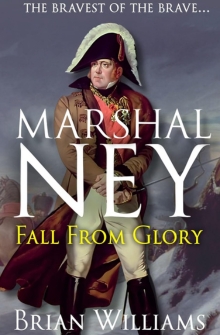
While these two episodes have come to define Ney’s legacy, he led French troops with equal distinction in many other battles in the Napoleonic Wars and one of the strengths of Brian William’s well-researched biography is that he tells us the full story of Ney’s early career. Rising to prominence in battles such as Elchingen, Jena, Eylau and Friedland, as well as in Spain, Ney became the empire’s best-known soldier. Distinguished by his exceptional personal bravery (it is astonishing that he managed to survive so long), his mane of red hair and ruddy complexion, he was affectionately known in the army as Le Rougeaud.
Coming from a relatively humble family, which was almost de rigeur for Napoleon’s marshals, Ney was brought up in Lorraine and was bilingual. He was always determined to be a soldier and joined the Old Royal Army in 1787. Rising quickly through the ranks as an NCO and subsequently an officer, he became one of the first marshals of France in 1804 aged just 35. His relationship with Napoleon was always complicated. While the Emperor described him as ‘the bravest of the brave’ and used Ney to firefight his seemingly endless crises, especially during his latter years, Napoleon, who rarely put himself in harm’s way, was jealous of his popularity and reputation. Napoleon, fairly, maintained that Ney was an outstanding tactical commander, but that he did not have the acumen to command at a higher level; a great corps commander, but incapable of commanding an army. For his part, Ney would always maintain his loyalty was to France not to Napoleon, leading to his muddled performance during the 100 Days. Blamed by Napoleon for leading the coup in April 1814 that led to his first exile, Ney then promised the restored King Louis XVIII that he would bring the ex-Emperor back to Paris in an iron cage after he landed in France in March 1815. While Napoleon never forgave him for these insults, when Ney reverted and supported him he was accused of treachery by the royalist government for which he was executed after Waterloo.
Williams’ account is an enjoyable and fast-moving account of this extraordinary soldier. It would have been interesting had he included a bit more about Ney’s actual tactics. The French army appears to have gone into something of a stasis after Napoleon’s great early victories and failed to take into account that their opponents had learned the lessons of their defeats. The performance of the Prussian Army in 1813, particularly at Dennewitz, where Ney was comprehensively defeated, and in 1815 at Waterloo, showed just how effective Scharnhorst’s post-Jena reforms had been. Ney’s approach to battle was much the same at Waterloo as it had been ten years earlier – mass shock action designed to overwhelm the enemy. The problem was that, by the Waterloo campaign, the enemy was wise to this. Arguably the French army had not learned this lesson even 100 years later.
Ney is something of a tragic figure, a point Williams makes well. His execution in 1815 divided French opinion as they struggled with the acutely sensitive question of national loyalty. Had Ney acted in the interests of France? The same question would be put to Petain 150 years later.

Barney White-Spunner is a former British Army soldier and the author of Nations in Arms: Five Armies That Made Europe.