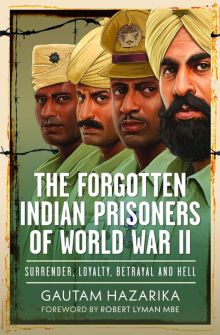
At a time when when India’s independence narrative centres on either the much acclaimed (especially by PM Modi) courage and vision of Britain’s implacable enemy, Subhas Chandra Bose, or else Gandhi’s non-violence and eloquence, writers and readers alike owe Gautam Hazarika profound thanks for The Forgotten Indian Prisoners of WW2. This fresh, original account revives a tale that is rather obscure in India and almost wholly unknown in Britain: the 1942 capture of many thousands of Indian troops by the Japanese. With great precision and telling moments of novelistic flair, Hazarika shows how these men’s choices reshaped history.
Hazarika’s groundbreaking work on those prisoners who chose to join the Indian National Army (later to be led by Bose) draws from untapped archives, diaries, and survivor testimonies. He opens with Singapore’s fall in February 1942, where over 40,000 British Indian Army soldiers surrendered, facing brutal marches, starvation, and disease in Southeast Asian camps. In vivid scenes from Changi Prison and Malayan camps, Hazarika details the INA’s recruitment methods, but also the resistance to these by Indian soldiers due to their loyalty oaths, family and regimental ties, or distrust of Japanese motives.
Hazarika innovates by probing these divides through individual stories – a Sikh officer balancing martial heritage and anti-imperialism, a Madrasi private navigating caste in the ranks. His colourful depiction of life and death in the INA covers training in monsoon-drenched Malaya, Japanese guerrilla drills, and the 1944 “liberation march” to Imphal and Kohima, meant as the start of a drive to Delhi itself. Initial euphoria – banners proclaiming “Chalo Delhi!” – gave way to disaster: shortages, floods, and Allied assaults claiming thousands of lives during long and painful retreats.
Hazarika’s memorable phrase, “a paper tiger in battle but a propaganda lion,” captures the INA’s legacy. It was militarily defeated – and easily – yet Bose’s broadcasts reached many Indians and, arguably, helped spark naval mutinies as the foolishly planned ‘Red Fort trial’ of his key commenders proceeded, all helping to accelerate Britain’s exit.
Hazarika is careful to qualify Bose’s outsized reputation whilst humanising a generation’s bravery and humanity, finding space to praise women like Captain Lakshmi Sahgal who led the Rani of Jhansi Regiment amid great privations. His research has unearthed many letters that reveal the soldiers’ awareness of standing at turning point, whether they wore the INA khaki or their old British uniforms.
We learn so much about the motivation – and the humanity – of this generation of Indian soldiers through this book, men and women who knew they were actors in a momentous drama and who displayed enormous bravely and determination, whichever route they decided to take toward a new India.
Phil Craig is a bestselling historian and the author of 1945: The Reckoning: War, Empire and the Struggle for a New World.