
John Reith was a model of late-Victorian rectitude: devout, driven, serious to the point of severity. He was also, in many ways, an appalling man, self-absorbed, obsessed with titles and money, often petty and spiteful, even childish. He was deeply sentimental and a domestic tyrant. And in the 1920s and 30s, he exercised a level of cultural power in Britain that was without precedent.
Reith was the fifth son of a Presbyterian minister, born in north-east Scotland in 1889. His schooldays were not successful – he was expelled at fifteen for bullying – and, much to his chagrin, he was not allowed to progress to university, becoming instead an engineer. He served in France in the First World War, until he was wounded by a sniper’s bullet, leaving a scar on his cheek which, with his six-feet-six-inch frame and glowering countenance, made him an intimidating figure. Winston Churchill referred to him as the ‘Wuthering Height’.
After the war, he managed an engineering firm, but it wasn’t what he was made for. ‘I still believe there is some great work for me to do in this world,’ he wrote in his diary in October 1922. The following month he replied to a job advert and was appointed general manager of a new enterprise, the British Broadcasting Company. He knew nothing of broadcasting, but nor did anyone else.
Radio was new and, the technology having been developed, there came the question of what to do with it. Who was going to transmit material of sufficient interest to warrant buying a receiver? The answer that the six largest manufacturers of radio sets came up with was the BBC, a joint-venture company awarded the exclusive broadcast rights in Britain for four years. In exchange, the government expected to raise revenue from this new medium; it put a sales tax on radios and took a cut of the ten-shilling licence fee. The rest of the licence went to the company as its sole income – there would be no advertising, no sponsorship.
The interest of the shareholders, therefore, was the sale of sets, not the content of the material broadcast, and the obvious approach to programming was to pursue popular taste. Reith, however, was not of that mind. The point was not ‘to give the public what it wants’, he declared, but ‘what you believe they should like’. He had a unique opportunity to shape an entirely new world, and his was a moral mission. Radio should be a force for good, he insisted. The task of the BBC was to inform, to educate and to entertain, but if radio aimed for entertainment alone, it would be ‘a prostitution of its powers and an insult to the character and intelligence of the people’.
At the centre of Reith’s work at the BBC was his faith. Do you, he would ask job applicants, ‘accept the fundamental teachings of Jesus Christ?’ The most obvious manifestation of this drive to godliness was the BBC Sabbath. Reith’s first instruction to the director of programmes was to ‘observe Sundays’. Only serious music was broadcast on Sundays, and a church service was transmitted in the evening. Many would have preferred dance bands and comedy, but the dissatisfied could only grumble in the letters pages of the newspapers, as did William Sheppard of Plumstead: ‘You plunge the whole country into gloom every Sunday.’
Consumed by self-confidence, Reith had no time for audience research, no wish to know how many people were listening. He was equally untroubled by all those who wished to shape what was to be broadcast: press barons, bishops, the entertainment industry. Even with politicians, Reith paid no more attention than was strictly necessary. In return, many held him in less than high esteem. ‘We English should have learned by now,’ fumed Labour MP Ellen Wilkinson, ‘that it is unsafe to give a Scotsman any opportunity for indulging his national passion of directing other people for their own good.’
Yet, for all his arrogance and self-regard, there was something impressive about Reith’s at the BBC. There was a perilous passage to navigate, and yet he kept a true course, inventing a form of public-service broadcasting that – with rare exceptions – avoided government propaganda, and that remained above mere commercialism.
The moment Reith knew that he and his company had arrived came when the BBC broadcast George V’s speech opening the Empire Exhibition in 1923. Shops and theatres in London installed speakers to relay his words, and there were further speakers in other public places around the country. The BBC estimated that five to six million in Britain listened to the King, with many more around the Empire. For the vast majority, this was the first time they’d heard a sovereign speak. It was ‘one of the greatest ceremonials in Empire history’, wrote Reith. ‘One can hear little children in far distant villages saying, “I have heard the King”.’
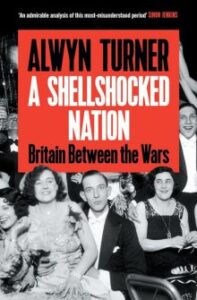
Alwyn Turner is the author of A Shellshocked Nation: Britain Between Wars, which was released last month.