The great boon of historical fiction is its ability to explore the historical record’s blank spaces: those gaps in our knowledge where sources are silent or non-existent. It might be that we know what happened – we know outcomes – but emotions, motivations and explanations elude us. To the historical novelist, this provides an irresistible chance to exercise the imagination using interpretation, speculation and psychological realism; and when it comes to Tudor history, few if any historical novelists are as adept as Philippa Gregory at providing compelling and convincing fiction to plug the gaps.
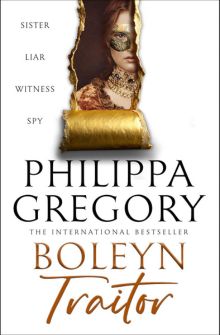
In the Boleyn Traitor, Gregory returns to the Tudor royal court and, more specifically, to Henry VIII’s magnificent, deadly Renaissance court. In what is simultaneously a standalone novel, a companion piece, and a sequel and prequel to The Other Boleyn Girl and The Boleyn Inheritance, she gives us privileged access to one of history’s most enigmatic and puzzling women: Jane Boleyn, Lady Rochford, sister-in-law to Anne and later lady-in-waiting to Catherine Howard.
What do we know about Jane? The historical record gives us tantalising glimpses of her actions (in the downfall of Anne Boleyn and in the alleged infidelity of Catherine Howard) but is, perforce, silent on what drove her. Gregory skilfully – as should be expected – breathes life into this shadow-figure: her Jane is intelligent, watchful, embittered, eager to please, increasingly cynical, and perennially betrayed. A woman looking for love, she finds it in short supply not just at the royal court but in her family and the clan into which she married. Yet she is no dull saint; self-aware, she knows that the court has shaped her into a betrayer and a spy and yet, born and bred a courtier, she is drawn, moth-like. to its lights. She makes for an engaging protagonist, her sharp eyes – useful first to the odious Duke of Norfolk and later to the smooth Thomas Cromwell – picking up on those details of Henry and his court that the novel’s research wears lightly (whether that be the king’s increasing baldness in the 1530s or the cheerless traditions of courtly Christmas gift-giving).
The writing is, as is usual with Philippa Gregory, witty (early on, Jane snappily notes that God must be attending a meeting when King Henry breaks off his prayers to interrupt an ongoing conversation) and memorable (“I was his greatest quest!” says the spiky Queen Anne, acknowledging her monarch’s and husband’s obsession with chivalry). The atmosphere is rich, sensory and, at times, stifling: Jane rejects rustication, where she is free to kick up leaves and while away hours in peace, in favour of a world of restriction, backstabbing, gossip, hierarchy and falsity. Without spoiling the ending (for anyone who doesn’t know the fate of these players), the novel thus unfolds as a grand classical tragedy; our deeply educated, intelligent, forward-thinking (perhaps too forward-thinking) heroine is doomed by her upbringing and desire for genuine affection into following a destructive pattern of behaviour in a golden, increasingly airless cage. The tension is taut, the prose sharp, and the novel un-put-down-able. Philippa Gregory has worked magic once again.
Steven Veerapen is an academic specialising in the 16th and 17th centuries and the author of Witches: A King’s Obsession, which was released in September.