

The two dominant strains in Richard’s character – an assumption of moral superiority combined with a painstaking and conventional concept of duty – do resolve the puzzling contradictions touching on his personal code of honour. He could denounce the Treaty of Picquigny as a betrayal of chivalry and yet usurp the throne over the bodies of the rightful heirs. He could execute the Queen’s brother, Earl Rivers, for treason, but he would not take the elementary precaution of marrying off the Queen’s eldest daughter whose eligibility was so crucial to Henry Tudor’s plans.
A ‘thirster after blood’ he was not. As Clarence’s death shows, the steady escalation of violence and betrayal that characterises the Wars of the Roses coarsened Edward IV’s amiable nature more than it did Richard’s. Buckingham’s rebellion was followed by less than a dozen executions, despite the fact that there was no pitched battle to take its toll of the king’s enemies. The 95 attainders that followed compare favourably with the 113 enacted by Edward IV’s Parliament after Towton in 1461. Neither Richard nor any of his servants exhibited the cold cruelty of Edward’s Constable, John Tiptoft, Earl of Worcester, who was nicknamed the Butcher of England and himself went to the block in 1470 asking that his head should be severed with three strokes ‘in honour of the Trinity’. If Richard had taken a tougher line with the rebel gentry of 1483, Henry would have had to do without a numberof the men who joined him on the road to Bosworth. These conclusions portray a Richard very different from the exotic ogre conjured up by More and Shakespeare. Yet the fact remains that he was defeated and killed by a rival with a shaky claim to the throne, a hazy acquaintance with the country he was invading and an inferior army at his back. Why?
The major calamity of Richard’s son’s death in March 1484 undoubtedly played its part. After thirty years of intermittent civil war, invasions and depositions the majority of the gentry, merchants and yeomen classes were more interested in a settled succession than in the claims of the opposing branches of Edward III’s quarrelsome family. When Prince Edward died there was little to choose between Richard and the unknown Welshman who had promised to marry Elizabeth of York.
Bad luck is only a part of the story. Despite the disappearance of so many famous names in the wars of Edward IV, it was still the élite of great magnates who decided the issue of who should be King, and it is his relationships with these men that reveal Richard’s greatest failing. ‘Old Dick’, for all his solid virtues as an administrator and his undoubted courage on the battlefield, lacked Edward’s knack of making friends. More’s observation that he had a ‘close and secret’ nature hits on an uncomfortable truth. Perhaps it stemmed from a basic lack of self-confidence in dealing with people. He never felt at home in Edward’s court circle, distrusting both the easy familiarity of men like Hastings and Dorset, and the waves of intrigue emanating from the Queen’s apartments. The extraordinary circumstances of Richard’s upbringing cannot have failed to leave their mark on him, just as they did on his brother George. But whereas George’s shallow nature gave way to a mixture of paranoia and bravado, Richard became wary, self-reliant and inaccessible. Louis XI, who was a shrewd judge of character, took an instant liking to Edward IV, but when he turned his charm on Richard of Gloucester he met with a total lack of response. Reserved and ill at ease with his peers, Richard chose to put his trust in boyhood friends such as Francis Lovell and Robert Percy, or able lieutenants, like Catesby and Ratcliffe, who owed their positions to his continuing favour. While he was Duke of Gloucester this self-sufficiency was a source of strength. But the king was a public figure whose words and gestures would be carefully marked. Richard’s curt treatment of Louis eight years previously was returned with interest in the form of resolute hostility from the French.
Much more damaging were Richard’s dealings with his own aristocracy. Temporarily dazzled by Buckingham he succeeded in driving Lord Hastings, his key supporter from the old régime, into the arms of the Woodville opposition. Henry Percy, his close associate in the North for more than ten years, was never cultivated. Lord Stanley was arrested, released, loaded with honours, kept close at heel for two years, then allowed to vanish to his estates on the eve of the Earl of Richmond’s landing with polite threats of retribution on his son ringing in his ears. It is no coincidence that the only magnate whose loyalty Richard retained was the Duke of Norfolk, an old warhorse whose outlook was as blunt as his King’s.
Richard was not, to his cost, a political animal. His penchant for direct action in place of patient diplomacy brought him to die in a battle that should never have taken place. Nevertheless, it is as well to remember that for all his political mistakes there was nothing pre-ordained about the Battle of Bosworth. With Northumberland and the Stanleys waiting on the sidelines, and Norfolk’s troops matched against Oxford’s, it was the superior generalship of the Lancastrian veteran and Richard’s impromptu cavalry charge that decided the day. Nor did Bosworth represent the verdict of the majority of Richard’s subjects. The general consensus of support that Richard enjoyed from his northern subjects, from his Commons in Parliament and from the country at large during Buckingham’s rebellion did not evaporate mysteriously on Henry’s landing.
In later years, Henry VII’s subjects might reflect that the change of kings wrought few far-reaching changes in their prospects or conditions. The personal style of government inaugurated by Edward IV and inherited by Richard, the techniques of estate management applied to Crown lands, the abandonment of chauvinistic and chivalric adventures overseas, the fostering of commercial interests abroad and at home, and the erosion of baronial power are as characteristic of Henry Tudor’s government as they were of his Yorkist predecessors. For others the advent of the Tudors became a cause for regret. Four years after Bosworth, Henry Percy was publicly murdered near Thirsk while levying a particularly burdensome tax for his new master. The Yorkshiremen thus delivered their own judgement on Percy’s betrayal of Richard and on the rapacity of Henry VII.
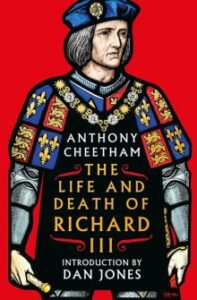
Anthony Cheetham is a publishing executive, historian and the author of The Life and Death of Richard III.


