
Yale University Press

Sea Power, Strategy, and Europe
By securing the Low Countries and maintaining control of the seas, British statesmen including Wellington created a system that balanced the continent's powers and preserved stability for a century until 1914.
While it is often thought that British military engagement in northwestern Europe ended with Waterloo in 1815 and resumed, a century later, with the First World War in 1914 – with a few periods of invasion anxiety surfacing around the middle of the 19th century –the...

Geoffrey Roberts on Kathleen Harriman’s Wartime Letters
The historian discusses the journalist, diplomat’s daughter and insider to the Allied leadership, her correspondence and daily life in London and Moscow during World War II.
Geoffrey – welcome to Aspects of History. Talk us through the story that led to you compiling and editing this collection of Kathleen Harriman’s letters together. As the tragedy of the 9/11 terror attacks unfolded, I was in the Library of Congress, combing through the...

Defending The Line
The construction of the Maginot Line fortifications forced the Nazis to invade France through Belgium, but the plight of their defenders evokes confusion, endurance, and divided loyalties.
"It is with heavy heart that I tell you we have to cease fighting. Last night, I asked our adversary whether he was prepared, between soldiers, after the struggle and in honour, to seek a way to end hostilities." These were the words of France’s new prime minister,...
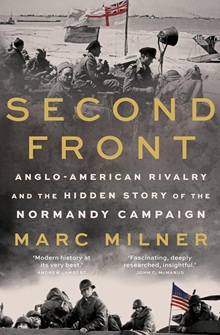
Second Front, by Marc Milner
A fascinating treatise with much truth that Canada’s economic and military contribution has not received the recognition that it deserves.
The subtitle of this book is ‘Anglo American Rivalry and the hidden story of the Normandy Campaign’ and the theme is American political and military machinations to ensure that Allied strategy in the Second World War was diverted to the support of American interests...

Who Will Rescue Us?
The story of the Jewish children who fled to France and America during the Holocaust
My recent book Who Will Rescue Us? represents over ten years of historical research on a group of primarily Jewish children who fled Nazi Germany and Austria. The goals of my study were multiple: I wanted to grasp- to the extent possible- what it felt like to be a...

Burying the Enemy, by Tim Grady
Tim Grady expertly guides readers on a historical journey in this moving and powerful book.
Imagine driving along a quiet countryside road in England or Germany. It is a sunny day, and the surroundings are calm, with only the sound of the car’s engine, birdsong, and the occasional gust of wind. Then you see a detour near a town or in a remote area pointing...

Tim Grady on Burying the Enemy
Tim Grady discusses the politics of burial, memory, and mourning, and why the past still shapes our present.
This book is a marvellous read, emotional and yet educative, clearly the result of extensive research, and you have a particular interest in British and German history. But one wonders, what sparked the idea for such work? Thank you, that’s very kind of you to say!...

Marc Milner on Second Front
Marc Milner discusses the overlooked truths of D-Day and the twenty-year journey that led to Second Front.
Marc, many congrats on the new book. It seems this is a book a long time coming – at least for me since Saving Private Ryan so outrageously dismissed British and Canadian efforts on D-Day. What was your motivation to write the book? Two primary motives, as outlined in...
Who Will Rescue Us?
The story of the Jewish children who fled to France and America during the Holocaust
My recent book Who Will Rescue Us? represents over ten years of historical research on a group of primarily Jewish children who fled Nazi Germany and Austria. The goals of my study were multiple: I wanted to grasp- to the extent possible- what it felt like to be a...