
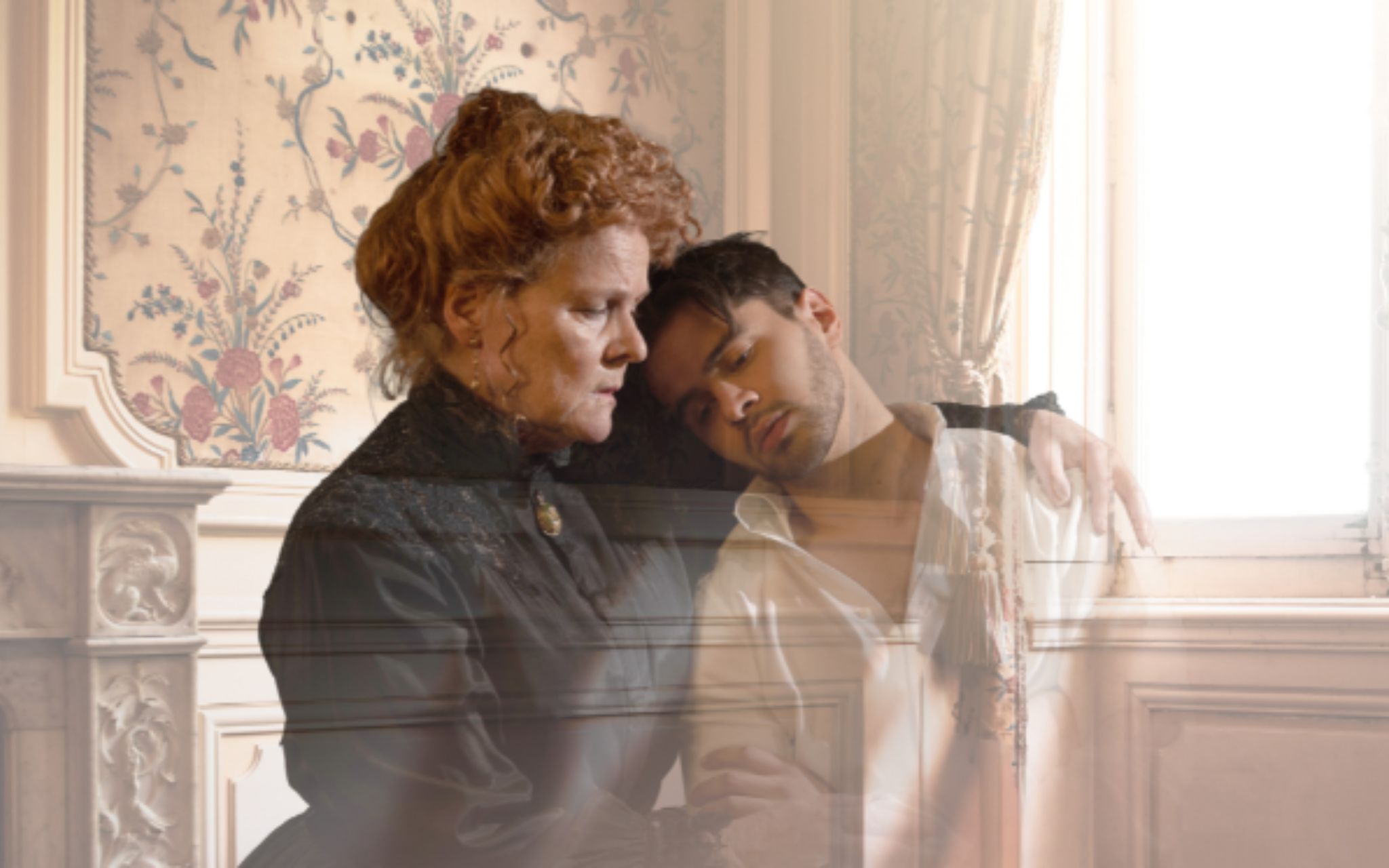
Henrik Ibsen’s Ghosts is not a play that tries to win you over gently, and the production at the Questors Theatre did little to soften its impact. Set firmly within the Alving household and unfolding without an interval, the evening pressed forward with an inevitability that mirrored the emotional pressure placed on its characters. By the time the lights faded out, there was a sense that something uncomfortable had been unearthed and left deliberately unresolved.
Caroline Bleakley’s Helene Alving anchored the production with a performance that was anything but restrained. Her portrayal was emotionally exposed and often forceful, allowing Helene’s inner conflict to surface plainly rather than simmer quietly beneath the text. Moments of anger, fear and resolve grew in intensity throughout the show with Bleakley’s masterful portrayal of a woman no longer able (or perhaps willing) to maintain the careful composure that has shaped her life. This openness makes Helene’s struggle feel immediate and volatile, and Bleakley sustained this intensity without losing clarity or focus.
Usmaan Khan, as Oswald, brought a restless physicality to the role that kept the audience alert and on edge. His Oswald was not simply a tragic figure; there was irritation and restlessness in his movements that made his fate feel all the crueller. The final scenes between Oswald and Helene were particularly moving, not because they were loud or melodramatic, but because they resisted an easy emotional release, and the actor’s employment of stretches of silence in the theatre at these moments felt very well executed.
Despite its bleak subject matter, the production was shot through with moments of humour that helped cut through the darkness. They were not cheap laughs, but brief flashes that offered relief while also deepening one’s understanding of character. Darren Chancey’s Pastor Manders in particular, provided moments of dry comedy rooted in his character’s unwavering moral certainty and, for the most part, charming social awkwardness. Martin Halvey’s Jacob Engstrand added a more cynical edge, his unpredictability prompting uneasy laughter that often felt as though it turned into something less comfortable.
The staging was very simple but certainly highly effective, allowing the text to do most of the work. The confined domestic space helped to reinforce the sense that the characters are trapped not just by circumstance but by ideas inherited and unchallenged. Lighting changes were subtle for much of the play, yet they marked the shifting emotions of the characters clearly, especially as the play moved towards its bleak conclusion.
What makes Ghosts an exciting play to watch is its refusal to provide any reassurance to the audience, and this production certainly honoured that refusal. There was no neat moral sorting, no comforting distance between the audience and the consequences of past choices. Leaving the theatre, one was left thinking not just about the powerful individual performances, but also about the uneasy questions the play insists on asking. Certainly, the Questors’ Ghosts succeeded not by simply entertaining, but by providing an experience that stays with you longer than might be comfortable.


