In the summer of 1870, France declared war on Prussia. Within weeks, it faced invasion by a Prussia-led German coalition that included both the North German Confederation that Prussia dominated and the southern German states of Bavarian, Baden, and Württemberg. The...
History
The History of England’s Cathedrals, by Nicholas Orme
If we set aside social and economic institutions like the family and work, cathedrals (along with bishops and dioceses) are the oldest organisations to function in England, with records of continuous activity going back to about the year 600. Nicholas Orme is...
Episode 138
Claire Derry on The Rome Escape Line
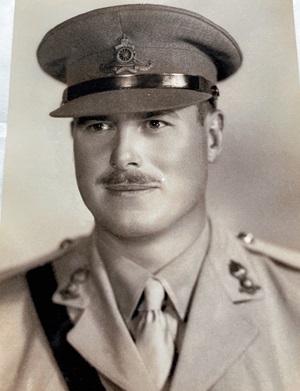
Your father, Sam Derry was an extraordinary man and his key role in The Rome Escape Line was just part of a number of impressive exploits. What else did Sam achieve in the war, after all he won both an MC and DSO? He started the War as a territorial officer with a...
The Other Renaissance
It is generally accepted that the European Renaissance began in Italy. However, as this developed south of the Alps a historical transformation of similar magnitude began taking place in northern Europe. This ‘Other Renaissance’ was initially centred on the city of...
Guilty Until Proven Innocent
The letter begins as an intimate billet-doux. ‘Oh Harry, my own precious darling, your letter today is one long yearning cry for your little love.’ But within a few lines, a more sinister story begins to emerge. ‘Yesterday, I administered the powder you left me . . ....
Episode 137
Great & Horrible News, by Blessin Adams
As a former policewoman, Blessin Adams is well aware of the human cost of murder. In Great and Horrible News, this moving nonfiction study, she investigates the crimes that shook Tudor and Stuart England. In doing so, she approaches her cases forensically: and what a...
Mátyás Rákosi: Committed Stalinist
The young Mátyás Rákosi (1892–1971) loved London. The son of a Jewish shopkeeper in southern Hungary, he had made his way there via Hamburg in 1913. Already a socialist, Rákosi had immediately joined the Communist Club in London’s Fitzrovia, whose Hungarian members...
Little Boney and the Satirist
It’s one of history’s greatest myths: Napoleon Bonaparte was short. This is not quite true. In 1815 an English captain described him as “a remarkably strong, well-built man, about five feet seven inches high”. He was above average height of the time, and would have...