The Victorians were good at what we might call ‘spin’. En masse, they’ve been remembered as prudish, reserved, industrious, God-fearing. Their political leaders, William Gladstone and Benjamin Disraeli, seen as giants, fighting battles to modernise the state, to improve society, to keep Britain ‘great’. The fact that many of them had dirty little secrets rarely breaks through to popular consciousness. Disraeli’s quip, allegedly spoken to the prostitute-infatuated Gladstone, that ‘When you are saving fallen women, save one for me’, is usually consigned to cheeky footnotes, when mentioned at all.
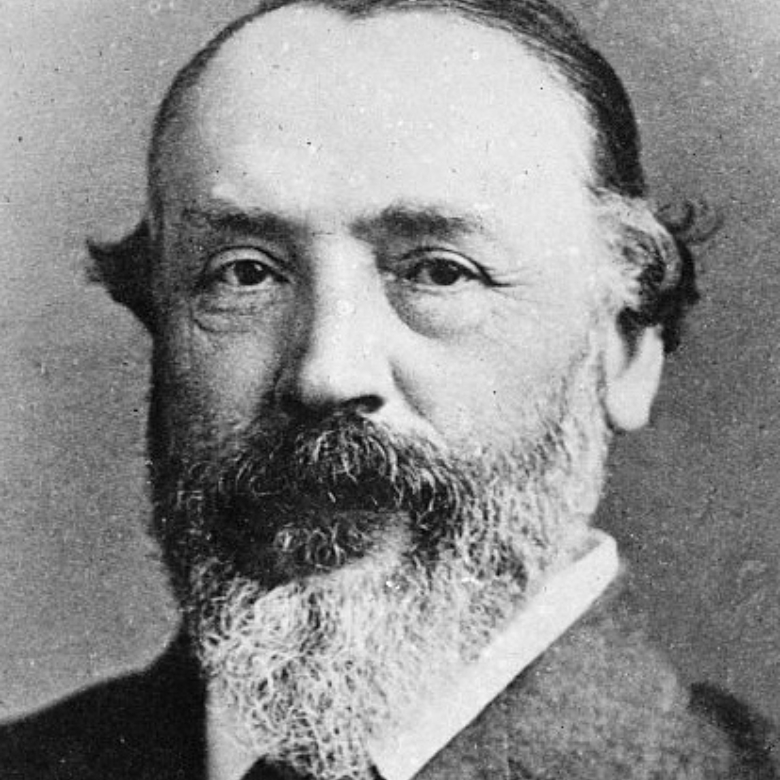
But Henry Du Pré Labouchère, known to all as ‘Labby’, was not like other men: instead of sweeping his faults – and his dodgy past – under the carpet, he seemed positively to revel in them. Rusticated from Cambridge in the early 1850s, Labby’s frustrated family had sent him to South America, hoping he would learn a sense of responsibility supervising their foreign business interests. They were overly optimistic. Trekking across jungles and mountains, falling in – and then out – with local bandits and tribes, and engaging in as many love affairs as possible, Labby had remained a free spirit. And when a performer in a travelling circus caught his eye, he abandoned all pretence of duty and approached the circus owner for a job. Nowhere near as athletic as a performer should be, Labby was nevertheless a quick thinker. ‘I specialise in standing jumps,’ he explained to the bemused owner when asked what on earth he could contribute. The ‘Bounding Buck of Babylon’ thenceforth travelled with the circus, collecting entrance fees and then, dressed in pink tights, amazing audiences by his ability to jump up and down on the spot.
Maybe because his legs grew tired, or possibly because he fell out of love with the circus girl as quickly as he fell in, at some point Labby had become bored of his pink costume and begun to wander on his own. In California he participated in a jury that condemned a man to be hanged by lynch law; in Minneapolis, he met members of the Chippewa tribe and spied on their sacred rituals; in New York he became a convinced republican. His long-suffering family, watching with increasing astonishment back in Britain, eventually decided he’d had enough of the itinerant lifestyle – particularly when they were funding it. Pulling
strings, they signed him up to the diplomatic corps, and it was with surprisingly good grace that Labby had accepted his position in Washington in 1854.
More surprising still, his diplomatic postings had been a success. There was enough variety and challenge to keep Labby entertained, whether it was sending a rapidly decomposing corpse in a box labelled ‘This side up – with care’ backwards and forwards between Washington and New York, or playing whist badly with the American secretary of state, or having imaginary trade treaties signed. From Washington he went to Turkey, to Russia, to Germany, and to Sweden – where he fought a duel ‘to establish an Englishman’s right not to fight duels’. Yet even this career couldn’t hold his interest forever. In 1864, while in Germany, Labby received another posting, this time to Buenos Aires. Writing back, he accepted the position, on one condition: that he be allowed to fulfil his duties from his current location. After ten years in the diplomatic service he was, at last, fired. Labby didn’t care, for he had turned his attention to another path: politics.
Considered a joker by his fellow MPs, and unable to stay in the chamber for twenty minutes together without nipping out for a cigarette, Labby nevertheless campaigned on serious issues. But with his dire warnings of involvement in South Africa laughed out of the Chamber, and his exposure to corruption, insider-trading, and embezzlement sickening him, he made his concerns public. In January 1877, he launched the determinedly modern gutter-press-style rag Truth. The public gobbled it up. Week after week, exposés rocked the political and business worlds, lawsuits were launched, careers were ended.
But underneath it all, Labby was not so different from his peers; his shortcomings exactly those of the men he disingenuously attacked. Through his newspaper he manipulated the stock market; used malicious libel to ‘bear’ shares; and, to support his lies, he committed perjury in court. He targeted people he didn’t like, while turning a blind eye to the misdeeds of friends. And despite all his claims to be a radical, he was vicious in his treatment of certain sections of society. So, for all the fun, the clowning, the appearance of virtue, Labby was, perhaps, just as Victorian as his contemporaries: putting on an outward show but driven, if not by greed, then by a belief in his own importance.
Indeed, Labby was no different from many a politician, before or since. As his biographer wrote, politics is ‘a dishonest if amusing game, in which a number of men whose brains should have been better employed were engaged in the silly business of obtaining distinctions or the shady business of getting money.’ Members Behaving Badly is the story of this game; the story of those far more preoccupied with helping themselves than the country and constituents they were bound – by duty and honour – to serve. And, as Members Behaving Badly shows, there were far more of them than you would ever imagine.
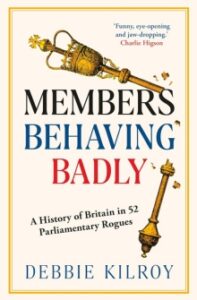
Debbie Kilroy is a writer, historian and the author of Members Behaving Badly: A History of Britain in 52 Parlimentary Rogues.