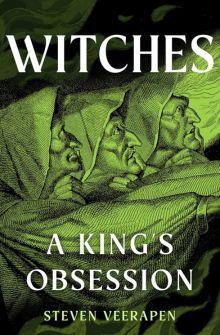
The concept of witches and witchcraft is ancient but this book concentrates largely on the explosion of mass witch trials which spanned the late sixteenth to the early eighteenth centuries. What were the reasons behind this? A conspiracy against women? A class war following social unrest? The fear of anyone not thought to conform to Christian orthodoxy? While any of these might have fed into the craze, Veerapen shows us that the underlying reasons for this centuries-long witch hunt were a good deal more complex.
From earliest times, the belief that the Devil existed and was an ever-present threat, was very real, not only among the peasantry but also among academics, clerics and the ruling classes. Even Henry VIII allegedly maintained that his marriage to Anne Boleyn had been brought about by bewitchment.
The author skilfully leads the reader through the history of witchcraft by pinpointing some of its key cases and personalities. From a papal bill in 1184 with a view to abolishing heresies, to Malleus Maleficarum on how to hunt witches, written by the Austrian friar and Inquisitor, Heinrich Kramer in 1486, to the legalisation of torture to obtain confessions and, during the late 16th and early 17th centuries to King James VI and l’s writings on and interest in witchcraft.
Much of this book centres upon the period when James was King of Scotland, a country he considered plagued by evil. His mission was to make it more godly and root out this evil, even presiding himself over trials of those considered possessed by or in league with the devil. Yet James is painted here as a sympathetic figure, highly intelligent, negotiating the ever-changing political pitfalls and the jostling of position by the powerful, surviving plots against him and an attempt on his life, kind to those he loved, or had loved, and keeping the peace.
During this febrile period, people were accused of witchcraft for purely political reasons or because of feuds and jealousies; though several members of the nobility were among these they usually escaped with their lives.
But the vast majority of those accused were among the lower orders and their cases make chilling reading. Stripped to identify a ‘devil’s mark’ and tortured beyond endurance these women (and they were mostly women) would confess to crimes they had not committed and name others with whom they were allegedly in league. Almost without exception they were executed, often strangled (not always successfully) and then burned.
When James finally inherited the English Crown his pursuit of witches lessened somewhat as he considered England less lawless than Scotland. Nonetheless, their persecution continued until well after his death (1625) and included witch hunters like the notorious Matthew Hopkins and John Stearne whose sole aim was to make money. They investigated accusations of witchcraft and for a fee would prove or disprove their veracity.
In 1735 the Witchcraft Act repealed existing legislation and made it illegal to argue in favour of the existence of supernatural powers.
The last trials for witchcraft in England took place in Leicester in 1717 against a woman and her children. They were pronounced not guilty.
In 1727, the last woman was executed for witchcraft in Scotland.
‘The King’s Obsession’ is a meticulously researched book and so well written as to be completely accessible to the general reader who is able to follow not only the history of witchcraft but also the political, religious and social conditions of the day.

Rosemary Hayes writes historical fiction. Her latest books are ‘The King’s Command’ about the terror and tragedy of Huguenots in Louis XIV’s France and ‘Traitor’s Game’ and ‘The King’s Agent’ the first two books in her ‘Soldier Spy’ trilogy set during the time of the Napoleonic Wars.