Welcome to Aspects of History, Carina. Can you tell me a little about your starting point for Mithim – did you begin from a place of historical rigour or mythic imagination?
Among various writing ventures it was definitely my stint reviewing for historical non-fiction publisher Chronos Books which peaked my interest and led me to writing about the 17th century. Titles included Catherine of Braganza: Charles II’s Restoration Queen, The Tragic Daughters of Charles I and The Caribbean Irish: How the Slave Myth was Made was made spring to mind.
Whilst reading, I was immersed in those times of war, plague, exile, dynastic ambitions, colonial expansion and continuous political plots. I was provided the building blocks for my novel; soon after I started writing it I then began weaving in another interest of mine, Irish mythology, into the fabric of the story.
Mithim’s isolation emerges from the bloody conquest of Ireland by Cromwell in 1649, yet you make it apparent that the events of the novel are invented. How did you negotiate that space between fact and fiction, history and mythology? Did the research ever become something you had to push against rather than lean on?
The opening scene of the novel, an isolated instance of a burning castle and a rogue band of soldiers is an invented scenario, however the vast majority of the story is based on actual historical events and political and religious dogma of the time. Once I had the historical framework in place and an idea of customs and dress, my characters began trying to navigate their way in this difficult period in Irish history; I imagine each and every one of them really existed in one form or another with the hope, dreams, and trauma of every generation. The mythology was just like an extra layer; writing the book was like baking and decorating a cake; every draft I layered it up with something new. As I was redrafting the novel, a lot of the research was removed, so yes, as I was finalising the novel I was pushing against it as my focus became the human element of survival.
Is there a certain magic about the early modern period that drew you to it?
Yes, as this period marks the end of the Gaelic aristocracy in Ireland. While there isn’t ‘magic’ in any sense of the word around cultural erasure and the brutality of colonisation, there is a certain nostalgia around a disappeared way of life; how much the Gaels revered trees and built a phonetic type ogham writing based on trees and plants (not uncoincidentally the English had as good as deforested Ireland by the end of the 17th century); the Gaelic education system – their Bardic schools and Brehon laws. How the different families were attached to familial trades e.g. The Ó hÍceadha (Hickey) were prominent medical families, the Ó HUiginn (Higgins) distinguished literary bards. Elite women were frequently multilingual and literate in Irish, French, Spanish, English, and Latin, often utilising their education to build castles, draft legal contracts, and broker political peace.
From Mithim’s multi-layered name, reminding us of myth and Meitheamh, Irish for midsummer, to her rigorous nomenclature of the natural world, name-giving seems to be a vital tool in the novel. How important are names to you in your conception of other worlds?
I’m really glad you picked this up; yes I use names as a powerful tool to explore storytelling and Irish mythology within the novel. The names I chose are old Irish names each coming with a background story from our mythological past, and I often attach the characteristics of these ancient beings as portrayed in stories onto my living beings.
You revel in the intricacies of Wexford forest and the delineation of flora and fauna, from An Dair, the Oak tree, to Fraoch, Heather, and the Spioróg, Sparrowhawk. Did you grow up immersed in nature and how essential is that connection to your writing practice?
Yes I did grow up in nature – I love wild flowers and plants. I am very aware in the loss of biodiversity and if my novel brings readers one step closer to nature or convinces them to be kinder to Mother Earth then I have achieved something.
The Irish language in Mithim takes on a numinous, incantatory quality, becoming a vessel for summoning up her noble lineage. What is it about Irish that carries that power for you, is it something rooted in folklore, phonetics, family or elsewhere? As an Irish author writing predominantly in English, how do you navigate that tricky, translational dynamic, steeped in colonial legacy?
In everyday phrases the Irish language is very connected to the landscape and geography so it felt like an obvious choice to intersperse Irish words, especially the Irish for plants, throughout the book to give my character some authenticity in her conversations as she was bilingual speaking both Irish and English. There is an expression in Irish “tír gan teanga, tír gan anam” – “a country without a language is a country without a soul.” I use a glossary for Irish words at the beginning which I think is helpful even though sometimes the word is self-explanatory in the text itself.
How important is it that we resurrect these kinds of stories, led by women like Mithim, from a history that so often relegates them to the margins?
There is much written about male figures in history, so in setting out to write a ‘herstory’ I was really thinking about all the Irish women that history forgot. What happened to Irish women when their men were butchered out of existence under martial law? The character of Mithim came to me. Many of the 17th century women I had read about in shockingly never even made it to the age of 30. From birth they faced uncertain futures due to complexity of political upheaval at the time of their untimely birth. Mithim came to me as just this, a young woman, uncertain of her life and future.
Mithim is an impressive debut. What are your plans for future writing? Will you be moving away from 17th century Ireland or is the process of excavating the past a never-ending project?
The process of navigating the past is a never ending process! At the moment I’m looking at early Irish Christianity and its manuscripts around the time of the fall of the Roman Empire, so who knows what will come next!

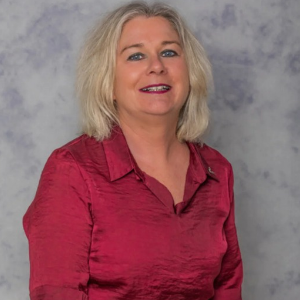
Carina McNally is a freelance journalist, playwright, historian and tour guide based in County Cork and the author of Mithim.
Sadie Souter is an Editorial Intern at Aspects of History.