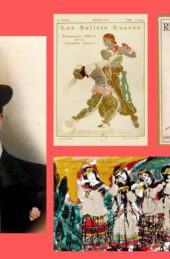
A recent article in The Guardian featured a new book of short stories by Colm Tóibín: “Tóibín’s short stories, particularly in his 2026 collection The News from Dublin, are fundamentally concerned with exploring the internal and external lives of characters living at a distance from home, family, and their former selves. These narratives often center on themes of exile, nostalgia, and the emotional, often silent, consequences of being “at one remove” from home, from loved ones, from the past.” For historical writers, these themes are the gift that keeps on giving.
Tobin’s lines encapsulate the history of millions of people in the twentieth century, displaced by war and revolution. My novel, The Bratinsky Affair, explores the issues of exile and loss in the persona of Countess Irina Bratinsky, and her need to rebuild her life and sense of self in exile, after the Russian Revolution. The unforeseen impact of displacement – and what the countess has to do to survive and thrive – intrigued me.
The historical thread at the heart of The Bratinsky Affair has its roots in 17th-century Ireland, when the aristocratic O’Rourke de Breffny family fled, first to France, and then to Russia, to escape the repression of the anti-Catholic Penal Laws. While Irina Bratinsky’s connection to this distinguished family is fictitious, the history is real. A descendant of the family describes growing up on the family estates, in what is now Belarus, and talks about how people never knew quite what to make of this family with the strange name, who were not quite Polish and not quite Russian, especially in the period between the wars when national borders shifted on a regular basis.
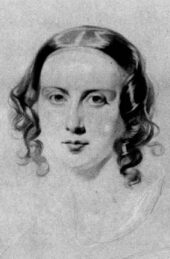
Countess Irina Bratinsky (née O’Rourke de Breffny) is born into an aristocratic world of wealth, status, and extreme privilege. Unfortunately for her, this magical world shatters with the outbreak of revolution. Irina’s father and brother disappear into the gulag, while she and her mother escape on foot, first to Finland and ultimately to France. Irina and her mother quickly discover that having class and an aristocratic pedigree is fine but doesn’t count for much unless you have cash to back it up. Not only has Irina lost her country and her social status, but she has also lost a sense of who she is as a person. When the marriage organized by her mother, to the supposedly rich fellow exile Count Bratinsky, proves a disaster, Irina finds herself living in a shabby attic apartment struggling to survive. A key element of Irina’s personal tragedy is that she is forced to fund her climb to success in a series of increasingly dodgy deals, losing her increasingly erratic moral compass along the way.
While Irina has been displaced from her home by the Russian Revolution, it is not simply a matter of crossing borders to another country. The social and political structures of the country she grew up in no longer exist. Her past has been obliterated. Her home has been destroyed and she has, in the truest sense of the word, been uprooted (déraciné). One scene in The Bratinsky Affair describes the burning of her family’s country estate. These country houses were burned down by local peasants to make sure that the family would never come back.
In the new Russia, Irina is displaced by her class and her aristocratic title. In France, she is socially and psychologically displaced, by being a foreigner, by being a divorcee in 1930s Paris and especially, by being poor. Despite her eventual success and high level political connections, she is, nevertheless, always slightly on the outside. Irina has a successful business in the elegant place des Vosges, an apartment on rue du Bac and a house in Ireland. But where is home? Home is the place she dreams about at night, when she remembers her father’s voice as he tries to reassure her mother, Anna, that everything will be all right.
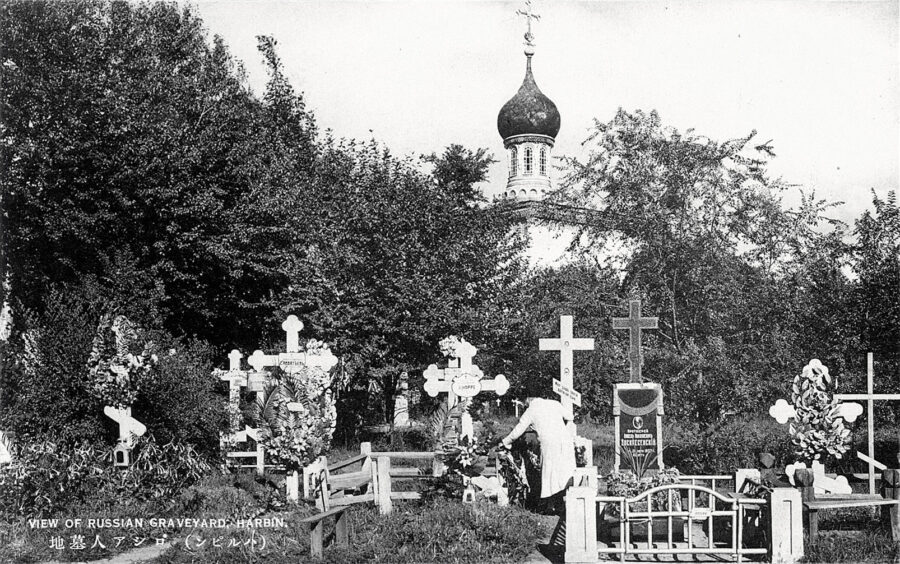
Irina is not alone in this situation. During the research for the novel, I learnt that between one and two million people fled Russia between 1917 and the early 1920s. Unlike Irina, most of them were not aristocrats, and few had a small fortune in jewels stitched into their silk underwear The one thing they did have in common was a nostalgia for home and a deep sense of loss. It is Irina’s mother, Ana, who finds true peace in her garden in Auteuil, growing vegetables and recreating the food memories of her childhood. Ana’s kitchen becomes a place of refuge for the many ‘lost souls’ who find solace in a bowl of soup.
Irina’s story benefits from a superficial glamour which does not reflect the experience of most of the people displaced by the first and second world wars. At the same time as Irina was building her successful career as a dealer in Fabergé jewels in 1920s Paris, an estimated one million ethnic Greeks were being moved from Turkey to Greece while, five hundred thousand Muslims were being displaced from Greece to Turkey. The 1930s would, of course, see the forced emigration of Jews from Germany.
Having survived a revolution and the First World War, Irina finds herself trapped in Bordeaux during the German occupation. If Irina’s moral compass was dysfunctional before the war, she now quietly disposes of it altogether, as money and success become her only goals. These black market deals put the sinister Gerard on her trail and when he blackmails her, he threatens to put her mother and daughter on ‘the next train to the East.’ While this reference to the deportations is an incidental detail in this story, between July 1942 and February 1944, 1,279 Jews were deported from Bordeaux to Dachau and Auschwitz. In fact, the last train to the East left Bordeaux on 9th August 1944, carrying a mixture of Jews, resistance fighters and political prisoners. This is the dark backdrop that forces impossible decisions and doom-laden outcomes.
Irina’s experience of displacement pales into insignificance when set against the reality for most displaced people. It is estimated that 65 million people were displaced by the Second World War, as people fled to escape advancing armies or tried to return home from concentration or labour camps. After the war, an estimated twelve million ethnic Germans were expelled from countries in Central and Eastern Europe, but few wanted to talk about them. The German government put the figure as high as fourteen million. There is a bitter irony in current European governments complaining of an immigration crisis in Europe, while dealing with infinitely smaller numbers of migrants.
It is Irina’s ultimate tragedy that her single-minded focus on money and status alienates her only daughter and granddaughter, while her moral awakening comes too late to save her, as the past finally catches up with her.
Meanwhile, my intrepid hero Tom O’Brien is a young journalist who dreams of escaping small town Ireland to make an international name for himself as an investigative journalist. Tom is also gay and is struggling to come terms with his sexual identity at a time, 1976, when homosexuality was not just a criminal offence in Ireland, but was considered by many as a societal aberration. While Irina is displaced by her status as an exile and refugee, Tom is in a kind of internal exile, displaced by his sexuality. In the small parochial town of Bray, where his father is a well-known local headmaster, Tom is conscious of having to live up to other people’s expectations.
When he stumbles on the body of the murdered Countess Bratinsky in a burning house in the aptly named Russian Village, he sees a chance to make a name for himself as an investigative journalist, an opportunity to break into the big time. When the murder turns into an international news sensation Tom sees a route of escape. As the investigation takes him, and Irina’s granddaughter Olga, first to Paris, and then to Moscow and Saint Petersburg, it also becomes a journey of personal discovery for Tom. Paris gives him the space to come to terms with who he is and, when the handsome Jean-Philippe steps into the frame, things change dramatically.
Tom is able to navigate this situation because he has the unconditional love of his father and the encouragement of Irina’s granddaughter, Olga, who asks him straight out if he is gay. It turns out that Tom’s father is fully aware of his son’s sexual orientation and is simply waiting for Tom himself to open up about it. Romantic and touching that may be, but for many people the reality was very different. Throughout the 1970s there was a steady exodus of young Irish gay men who went to London, or New York, to escape the stifling authority of the Catholic Church and the socially stagnant atmosphere of 1970s Ireland. Throughout the 1970s, Irish court records show that hundreds of men faced the criminal justice system, with 383 cases reported or known, 315 criminal proceedings commenced, and 135 men convicted on indictment (and 189 men convicted summarily) between 1970 and 1979.
The lines of history and memory fuse when the mysteries of Irina’s life are finally resolved with the emergence of her long-lost brother, Pavel, who has dealt with his own experience of trauma and loss by becoming a leading gangland figure in Saint Petersburg. It is a case of survival at any price, but for both Irina and Pavel trying to reconstruct the shattered mirror of the past produces a distorted and grotesque image.
It now seems that the theme of displacement will carry on into my new novel, Syracuse Will Burn, which is due for publication this summer. Timon is ‘displaced’ by the gift – or curse – of premonition which isolates him from other people. He may have saved the city of Syracuse from invasion by anticipating the Athenian attack, but his family no longer know how to relate to him, while others see him as a freak, whose powers of foreseeing the future are to be abused or exploited to their own advantage. War has once again raised its ugly head, as Greek Syracuse fights for survival against the might of Carthage. When the city of Akragas (Agrigento) falls to the Carthaginians, men are killed, women are sold as slaves and small boats, overloaded with refugees, sail towards the shelter of Syracuse. A depressingly familiar contemporary sight.
It seems that little changes, even in the elevated world of historical fiction, as we confront the endless cycle of man’s inhumanity to man. One note of encouragement did, however, appear in a recent interview with the Mayor of Syracuse, when he said: “The best guarantee of our national security is one word – ‘Welcome’.”
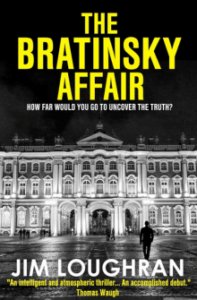
Jim Loughran is a writer of historical fiction and the author of The Bratinsky Affair, published by Sharpe Books.