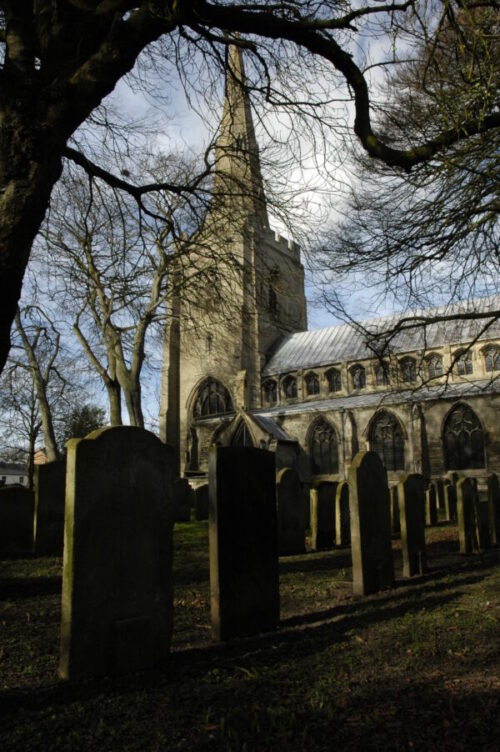
In 1783 (or in some accounts 1793), three men were allegedly playing cards in the Chequers Inn, Holbeach, and talking about a friend who had recently died and who used to make up a foursome with them. They hatched a plan that must have seemed like a bloody good one after a skinful of beer: they would play cards with (or at least in the presence of) his corpse in the church opposite the pub, for old time’s sake. In some renditions, his body was then disinterred from a freshly dug grave, though it is more likely that, if this happened at all, the corpse was already in the church prior to burial. The folklorist Maureen James presents an uncharacteristically cuddly version of what might have happened next: ‘Those gamesters suddenly saw clearly what they had done and ran to escape […]. Soon they were filled with remorse. They laid their friend to rest once again and tried to return to their former lives.’
Whatever the truth of any of this – and no newspapers reported on it – the episode soon firmly entered the realms of folklore, in which the severity of their punishments was ratcheted up to devilish proportions. One legend has it that passers-by after dark may see lights flickering in the windows, signalling the ghosts of the gamesters, who had been dragged to Hell by demons that fateful night.
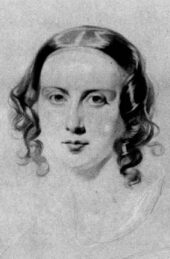
This all caught the imaginations of minor poets in the early 19th century. In 1800, Thomas Hardwicke Rawnsley, ‘one of the guardians of the Somersby children [including Alfred Tennyson], who tried in vain to persuade them to take up suitable professions’, penned in his youth a plodding ballad called ‘The Three Revellers, or Impiety Punished: A Legend of Holbeach’, about what allegedly happened that night after ‘Three revellers left, when the midnight was come’. The poem is summarised, essentially, in the above paragraph. A more intriguing counterpart is ‘The Sacrilegious Gamesters’ (1843), also a ballad poem, by the Chartist and once-popular poet Eliza Cook. Here, moral judgement is passed, and extends to the dead gamester:
He had died in the midst of his career,
As the sinful ever die;
Without one prayer from a good man’s heart,
One tear from a good man’s eye […].
One of the gamesters does indeed show a flash of conscience as they play with the corpse of this miscreant, and then also dies, but they are all presented by Cook as irredeemable scoundrels, symbolically compounding their sin of meeting ‘within these holy walls / to gamble and carouse’ by sitting on the altar-rail ‘with the Bible and the books of prayer / As footstools’. They all deserve what they get, she implies.
I disagree. This story is intriguing, and endures – retold on a board in the church and in several modern books – partly because their response to their friend’s death is at once deeply understandable and fundamentally grotesque.
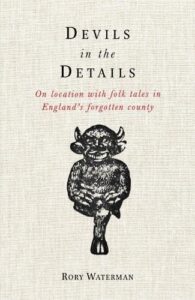
Rory Waterman is an academic specialising in folklore and the author of Devils in the Details: On Location with Folk Tales in England’s Forgotten County.