The 1920s and 30s were a golden age for American foreign correspondents in Europe. Until 1920, American newspapers had taken most of their international news from press agencies such as Associated Press. But during the 1920s, American papers started relying on their own correspondents for news.
There were three reasons for this. With widespread literacy and a booming economy, newspapers were making money; each large city supported several publications, and well-written foreign news articles became a key tactic to beat the competition. Secondly, many Americans felt that they had been hoodwinked by the Europeans during the Great War and they didn’t want to rely on foreigners to tell them what to think. And lastly, despite the flourishing of isolationism, many readers in the comfortable towns and cities of middle America wanted to read about the wider world.
These news stories were written by a gang of young, energetic men and women who arrived in Europe looking for adventure, a dollar or two and a bit of fun. They could write well, fast and accurately. They were gregarious and sociable, and some of them even learned to speak European languages badly. They drank a lot and slept with each other. And, occasionally, other people. They gossiped, argued, fought. They were fluent in the languages of Freudian and Jung psychoanalysis, in oedipal complexes, ‘Freudian slips’, transference and penis envy and acted out Freud’s theories on libido and sexuality. They watched as political parties in Europe lurched drunkenly from left to right, as Fascism emerged from the political chaos and as war took on a relentless inevitability. Although they were observers, they cared. They believed that by chronicling what was happening in Europe, the disaster that they saw approaching, they would wake up their compatriots to do something. It didn’t work.
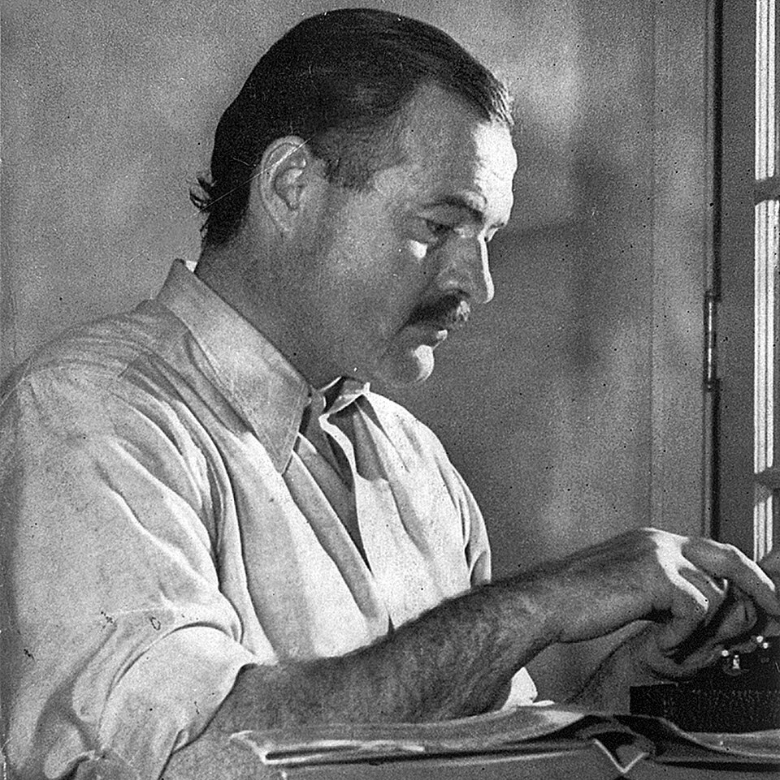
Who were these people? Their names may be familiar, even now: Dorothy Thompson, John Gunther, Jimmy Sheean, Frances Fineman, Bill Shirer, Edgar Mowrer, HR Knickerbocker, Ernest Hemingway. It turns out that they had many things in common: there was a ‘type’. Many came from poor lower-middle-class families in small towns in middle America: Edgar Mowrer came from Bloomington, Illinois; Bill Shirer from Cedar Rapids, Iowa; Dorothy Thompson from Lancaster, New York; Jimmy Sheean from Pana, Illinois. A number of them had useless or absent fathers but forceful mothers who were readers and instilled a love of reading in their children. By the age of 16, Jimmy Sheean had read all of Shakespeare, Dickens and Austen, for example. Rather than Ivy League universities, they attended places like Syracuse in New York, Coe College in Iowa, and especially the University of Chicago, where they wrote for the student newspaper, The Maroon.
Many travelled to Europe without a job or much money. But they hustled, they wrote stories on spec, they met fellow journalists in bars. Some of them became household names in America. Some of them never made it out of the bars: they appear as walk-on parts in memoirs and novels written by their more famous colleagues. They got themselves into all kinds of scrapes; dressing up was involved. In 1921, Dorothy Thompson inveigled her way into a Hungarian castle dressed as a Red Cross nurse to interview Karl Habsburg, who had just tried and failed to reinstall himself as king of Hungary. In 1925, in Morocco, Jimmy Sheean donned a white woollen djellaba and sneaked through the Spanish lines to interview Abd el-Krim, the leader of the Rif rebels. And Ernest Hemingway . . . Well, we all know what ‘Hem’ got up to.
They are an interesting bunch. They were observers and chroniclers, but they also made things happen and had things happen to them. Good characters for novels, in my opinion. No wonder Esme, one of the two amateur detectives in my Foreign Correspondent novels, wants so desperately to become one.

The first novel in Michael Ridpath’s Foreign Correspondent series, Operation Berlin, is published 12 April.